Showing posts with label Londoner. Show all posts

Friday, 18 February 2022

Diary of a Cycling Instructor 20th September to 1st October)

Cycling back to Edmonton and its incinerator
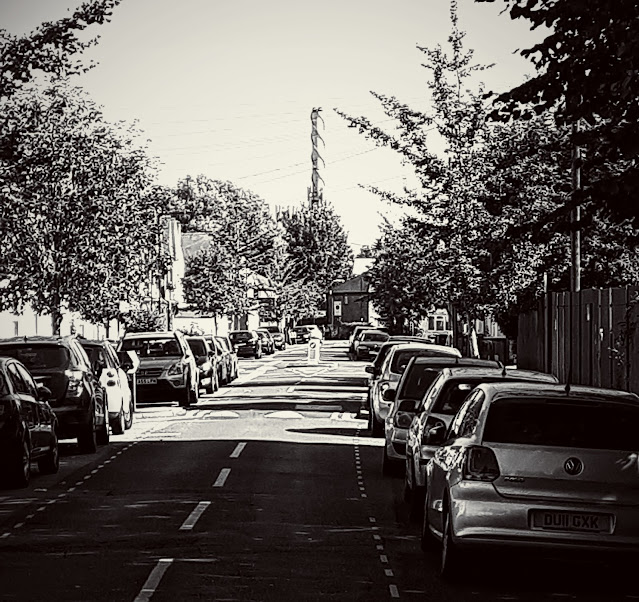
 

Phallic and menacing: the beast in the background (photo by the author)

Edmonton never stood a chance against Cambridge. Not as a vis-à-vis encounter. After all one is a ward and the other one a city. The imbalance was shown more in the way of how campaigns played out in each area and how effective they were.

It always feels strange going back to Edmonton. As soon as I cycle past White Hart Lane (or Tottenham Hotspur Stadium as it’s called now) and enter N18 territory a sense of nostalgia overcomes me.

I lived in this neighbourhood of Enfield for more than twenty years (my abode was in N9). Whilst some people have long had reservations about this part of north London (diverse, multicultural, working-class), I’ve got a soft spot for it. I was one of Edmonton’s residents, one of the many immigrants shopping in the Green, having my hair done (when I had long hair) at Victoria’s on Fore Street and buying jollof rice and chicken from Rebecca’s Kitchen.

But when I went back recently in order to deliver some cycling training at a primary school off Fore Street, there was another thought doing the rounds in my head. A Facebook friend of mine had just sent me a link a few days before to a BBC Sounds podcast. The programme – called “Power to Which People?” – focused on the planned expansion of the Edmonton incinerator, the largest of its type in Britain and a bone of contention for environmentalists and community groups for many years.

I had already moved to Edmonton and my son was still a small baby when I first spotted the monster in the distance. It stood erect, a carbon dioxide emission machine coughing up smoke continuously. I still remember that in those years we had someone from Greenpeace or similar outfit camp up in our fifteenth-floor flat for a whole day, monitoring the incinerator.

Since the news was announced, there has been a campaign to stop the extension of the incinerator. “Power to Which People?” touched on that. A village in Cambridge faced a similar issue. A developer wanted to build an incinerator in Waterbeach. Had they gone ahead with their plans, the new structure would have been taller than Ely Cathedral and visible for miles around.

The council stopped the project on its planning stages arguing that it would have a detrimental impact on the landscape and nearby historic buildings.

Sadly, Edmonton is not Cambridge. It is an urban, heavily populated and deprived part of the UK. There are historic buildings, however. Salisbury House, on the northern side of the A10, is a Grade II listed late 16th century three-storey building. The poet John Keats lived on Church Street with his siblings and grandmother. A blue plaque links his presence to the area. But instead of cathedrals, there are chicken shops, kebab joints and Poundstretchers.

Edmonton is already at the receiving end of a pollution onslaught. It’s surrounded by the North Circular to the west, the aforementioned A10 to the north (officially called Cambridge Road. Oh, the irony!) and Southbury Road (already Ponders End territory) to the east. To the south, Mollison Avenue completes what I used to call when I lived there “the square of death”. Lung-wrecking fumes from cars, lorries, vans and buses engulf the local population.

As I cycled away from the school the first day, I turned around, looked up and locked my eyes on the beast. The incinerator still looked menacing. Phallic and imposing, it was the tallest structure dominating Edmonton’s urban landscape. I set my pedal and rode off. Power to which people? My answer to the question is: power to the people trying to stop the incinerator’s extension.

Every school has them: the eye-rubbing, guilty-looking, late-running children pushed gently (and occasionally not so gently) towards the school gates by angry-red parents.

The location of a headteacher’s office tells you a lot about the way a school is managed. There are pros and cons when it comes to the headmistress/master’s office location. Put it in close proximity to classes and I can smell micromanagement a mile off. Place it away from the madness and it’s a hands-off type of SLT (Senior Leadership Team), trusting teachers to do their job.

Or a headteacher who doesn’t give two monkeys how the school is run.

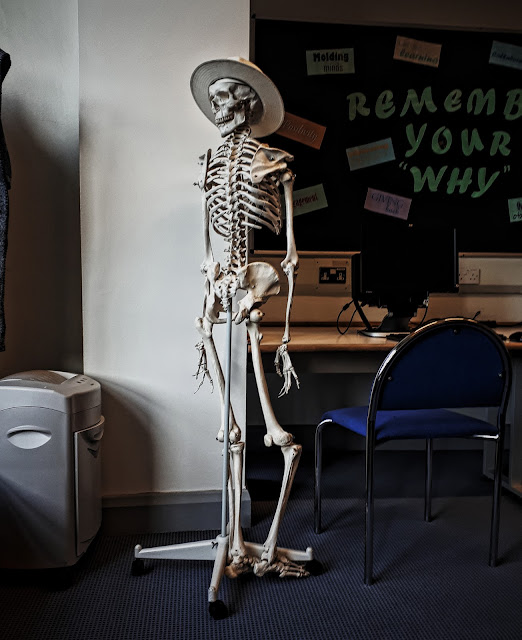
I love a staff room with a sense of humour: a hatted skeleton looking like a version of a mambo-dancing, “The Mask” era Jim Carrey is just the start we need every day.

It will probably have to wear a “mask”, being so close to the incinerator (photo by author)

...
“Cuban, Immigrant, and Londoner”, on sale now.

Wednesday, 16 February 2022

Chronicles of a Newly Published Author

Brixton: a cultural and intellectual powerhouse of London


Photo by Deborah Jaffe

One of the advantages we, immigrants, have when relocating to another country, at least at the start, is a lack of awareness of codes.  By this I mean that we are not conscious of local prejudices and hang-ups. The urban geography we slowly become acquainted with is just that: new territories to discover and new names to learn.

That’s how I found out about Brixton and its (unjustly deserved, in my opinion) bad reputation. In my early days at the travel agency where I worked for more than half a decade, I once mentioned to a colleague where I was planning to go later on that evening. He looked at me as if I’d just sworn at a client on the phone. Brixton? Are you mad? Do you want to get knifed?

Irony of ironies. My colleague (London-born and nearby Kilburn-dwelling) came from Irish stock and in years to come he’d relate to me tales of his parents (both from Northern Ireland) and the animosity and discrimination they faced when they arrived in the British capital. Yet, here he was, repeating the cycle. A cycle whose meaning I couldn’t grasp at the time but which was already making me curious.

Of course, I went to Brixton that night. As days turned into years and years turned into a couple of decades, I came to fall in love with SW9. I may live north of the river and hang out mainly in east London, but there’s something about Brixton that lures me back. It’s the crazy, organic and hard-to-define cultural and intellectual mix the place has to offer.

I saw a post-Baduizm but pre-New Amerykah Part One Erykah Badu at Brixton Academy (before it became O2 Brixton Academy) in the early noughties. I’ve raved to anyone who will listen about Fish, Wings and Tings, one of the top street food joints, not just in London, but probably in the country (pre-pandemic I’d already been to the place about half a dozen times. I can’t wait to go back). I danced my head off to the beat of master percussionist Kevin Haynes’ batá drums outside Habesha, an Ethiopian restaurant in Brixton Village on a sultry summer evening a few years ago.

At Pop Brixton I enjoyed an excellent dance-heavy set by the bandleader, pianist and producer Eliane Correa’s band, Wara, in the summer of 2018. And at the Electric in 2017, I was reunited with the music of one of my salsa heroes: Isaac Delgado. Along the way from that evening in the late 90s up to now, I’ve caught up with the history of the place. From the controversial sus laws to the Brixton riots, I’ve been filling up the gaps my university degree never addressed.

In the summer of 2015 when I embarked on a three-market bicycle tour (Borough, Brixton and Portobello), it was in the second one where I stopped and spent more time. Whether speaking in Spanish to the many Latin Americans who have stalls or work in the area, or waxing lyrical with the elders on Brixton Station Road, this was me taking full advantage of the culture London had to offer. The difference was that this time around I was aware of the code system. And I didn’t give two monkeys.

So, piece of advice for any fellow immigrant newly arrived in London. Go wherever the hell you want to go. Codes are meant to be broken and postcodes to be travelled through. You could even start in SW9. I know it will welcome you with open arms.

...

“Cuban, Immigrant, and Londoner”, on sale now.


Friday, 29 October 2021

Why I Wrote "Cuban, Immigrant, and Londoner"

 My book is a call to strengthen the bonds that unite us

Photo by Deborah Jaffe

Published by Austin Macauley, supported by an Arts Council England grant and with photographs by the excellent Deborah Jaffe, my first book, “Cuban, Immigrant, and Londoner” hits the shelves this week.

Somewhere towards the end of my book, I write “This is what writing from an EAL immigrant’s perspective represents. Shards of glass that amount to nothing more and nothing else than the imperfect creation of a glimpse into the life we’ve lived, the one we have yet to live and the experience that has accompanied this process.” The “shards of glass” are a reference to an image produced by the photographer Gillian Allard in 2017 for one of her challenges on the Sky Arts show “Master of Photography” (Gillian went on to win the competition).

Shards tend to be seen mainly as broken pieces of glass and therefore they have a negative connotation. For instance, you can get cut if you walk on them barefoot. For me, though, shards and the distorted image they return, represent the various ways in which our lives as immigrants play out.

That’s why I decided to split “Cuban, Immigrant, and Londoner” into five different chapters. They each deal with five different identity markers. Cuban, Immigrant, and Londoner was the trigger to write the book from a self-proclaimed Londoner’s perspective. A Cuban in London and London in a Cuban is a collection of 250-/300-word light-hearted vignettes depicting those little moments that enrich an immigrant’s life. As the Land is the Language is a reflection on our relationship with the English language as immigrants. From Here and There is a compilation of the articles I’ve published in newspapers and magazines in the last fifteen years. The closing chapter, An EAL Immigrant Writes, seeks to explore the ways in which we, non-native speakers, express our ideas and thoughts in our adopted country’s language, in this case, English.

The main aim of the book “Cuban, Immigrant, and Londoner” is to serve as a platform for fellow immigrants to share our experiences. Furthermore, through the book I would like to start a much-needed conversation with the wider public in the UK on the contributions made by immigrants to this country.

The ideas behind this book have long been in gestation. Some come from my professional life. An example of this was a First Light-funded, EAL children-supporting project I managed at two primary schools in 2009. Another film-related project I managed years later, in 2014, sought to delve into issues related to identity and belonging.

Above all “Cuban, Immigrant, and Londoner” is part memoir, part autobiography and part reflection on an Afro-Latin Caribbean immigrant’s life in London for more than 20 years. It’s a journey that’s barely begun. Welcome aboard and enjoy the ride.

Sunday, 5 April 2020

Writing in the Time of COVID-19


The reporter, staff writer and non-fiction author Deneen L Brown has an invaluable piece of advice for writers. She says “The hardest thing about the beginning is the blank screen. Writing is like scraping off a piece of yourself, people can see beneath your skin.”

Continue reading by clicking here.

Sunday, 29 March 2020

Writing in the Time of COVID-19

A deserted Long Acre, Covent Garden, London


In my previous column, I wrote about freeing up our creativity while self-isolating. This one will deal with what happens when we’ve managed to complete that much-longed-for first draft.
Imagine your name IS NOT Steve. Or Martha. Imagine you are the editor of a prestigious publication. And now imagine a freelance writer submitting a piece addressed to Editor-in-Chief Steve. Or Martha.
Yeah. You, aspiring writer, cocked up big time.
(Continue reading here)

Wednesday, 20 September 2017

London, my London

Wood and coal were transported along the river Lea, in Edmonton, north London, in the 19th century. Coach-building featured highly amongst the industries that made this manufacturing area popular. This is the reason why back in the summer I cycled up the River Lee Navigation to meet Alejandro, one of the co-founders of Building Bloqs, one of those forward-thinking organisations that make London one of the main hubs of creative power in the world.

But instead of me telling you the story of Building Bloqs, I will let Alejandro do it. My thanks to both Alejandro, Andrew and the rest of the team for allowing me to disrupt their very busy working day (and it was busy the day I went!) to do this interview. I hope you enjoy it.

LinkWithin

Related Posts Plugin for WordPress, Blogger...