Some artists manage just one Killer Opening Song in their whole musical career. Some others get to release just a handful. But there are performers for whom KOSs are part of their DNA. Step forward, Queen. Carry on reading here.
Guess what. My son just turned seventeen recently. Hopefully he won't want to "disappear" any time soon but I know he has a lot of "space between his ears". What goes on there, I've tried to fathom over the years but the reality is that I'm none the wiser. Which is the way it should be sometimes.
As I was looking at him the other night I thought of an old column I wrote about a trip he and I undertook almost eight years ago. It was the first time he and I were going to be on our own. The trip was organised by our local branch of the Woodcraft Folk and... Well, read my account below, first published in September 2007 and then reprinted a couple of years later. And now, almost eight years later I am posting it again before my beautiful almost-man "disappears" into adulthood.
The coach finally got underway a quarter of an hour later than planned. The sun, streaming through the windshield, bifurcated the vehicle in two. I remained in the section kissed by it. I read my book whilst my son talked to his friend J. My son. It was the first time that father and son would be on a holiday together, although only for a weekend. To me it felt like a rite of passage, like a secret fraternity that we both suddenly found ourselves in. Father and son. The phrase, cliche-tainted, had never occurred to me before. After all, we've always been a compact family together and I try to not make distinctions between son and daughter, age gap and gender notwithstanding. As the coach smoothed down the A406 eastbound, I suddenly thought of Steve Biddulp's book 'Raising Boys'. 'Sport offers a boy a chance to get closer to his father, and to other boys and men, through a common interest they might otherwise lack'. Well, this was our chance. Woodcraft Folk had arranged a whole weekend full of activities at Shadwell. These included kayaking and canoeing. I was looking forward to seeing my son interacting in a different medium almost on his own.
We arrived at the centre just after eight and immediately we were shown our sleeping quarters. These consisted of nothing more than a long room where we had to lay our sleepings bags and mats. Boys and men would sleep in this room, whilst women and girls would take over another room opposite to ours. The excitement coursing through our bodies was palpable to all present there. Games were produced, pizzas were cooked and the joie de vivre did not leave us until the small hours when I finally realised that I had to pump both my son and mine sleeping mattress and steer him to bed. The latter was difficult to achieve as he was high on energy but once he fell in the bed brought to life by me, but deficiently, Orpheus cuddled him and fed him the beautiful dreams we all want our offspring to have. I watched him in silence as his tiny curls moved hither and thither and suddenly it dawned on me that I was the happiest father in the world. I was witnessing innocence asleep. I kissed him on his forehead and sneaked into my own sleeping bag on my very deficient and below par mattress.
The morning found me in high spirits. In the absence of curtains in the room where we were sleeping, we were all woken up by a sun curious to know how our night had been. My son was playing cards with his friend J on his bed and upon seeing me awake he jumped onto my mattress and gave me a huge hug. After my morning exercises we both helped make breakfast for everyone in the centre. Later it was time to get in the water and I could not wait to see him donning his wetsuit and manoeuvring his kayak. After an introductory session from his tutor, who turned out to be a very no-nonsense kind of fellow, all the children went into the water. Bar a few mishaps at the beginning, he got the hang of it pretty soon. At some point they formed a circle and watching him laughing and so full of mirth I was compelled to ask myself: 'How am I turning out as a father?' And more pressing, how am I turning out as a father to a boy? Questions that could look lofty and pretentious for some take on a special meaning when you are born in a different country and the colour of your skin seems to be an excuse for abuse rather than mere pigmentation. Black, Afro-Caribbean fathers have long had a stigma attached to them that makes it hard to argue for individual analysis rather than the lump-them-all-under-the-same-umbrella dissection. As my son spun around on his kayak and joked endlessly (without falling in the water once) I wondered what my expectations were when I was his age. True, we look at our childhood through the eyes of nostalgia and melancholy most of the time. Sometimes with rage, sometimes with candour. But we always look back. What we don't do, what we can never do, is look at the present as we're living it. On the one hand we lack the capacity to apply many of the concepts we'll develop in later years to our infantile understanding of the world. On the other hand, even if we were to question the functionality of our surroundings, we would need a catharsis to effect change. My father never played with me, there was never a throw-around with a baseball, or a kick-about with a football. It was piano from the age of five, school homework to be completed by the end of the day and a strict system at home in order to attain academic achievement. In a way my son's own short life so far has mirrored mine, piano from an early age, good reading skills and an avid reader, good sportsman, talkative, confident, shy at times. During that weekend at the Shadwell Centre, two of the three girls there took to playing with his curls and sought him out more often than his mate J. This demonstrated his social skills and his popularity with people. Everyone was amazed at his bilingual abilities. I could see myself in that nine-year-old. Even down to his overbearing Dad. Am I? Yes, it pains me to admit, but yes. I am. But the main reason is that I love him, I love him to bits and when the time came to jump into the water and get soaked, he wouldn't do it at first (who knows, stage-fright maybe?), until I re-assured him that it would be OK, that he could, that he would love it. And he did. He just did. And I was laughing. And so was he.
On the way back we occupied the same seats, with the sun playing shadow play. Its illuminated backdrop was the perfect setting for us opaque moving images. My son was reading a book in Spanish before turning to his mate J to pick up the thread of the conversation they'd left unfinished back at the centre. I listened in whilst pretending to read (I swear I can do both) and the innocent tone of it brought back memories of chats under mango trees in my uncles' and aunties' when I was a teeny weenie prepubescent boy. It brought back the smell of September mornings in Cuba as summer still lingered behind for a little sleep-in but autumn was already announcing its grand entrance. There were not coming-of-age ceremonies over that weekend at Shadwell, no titanic feats to accomplish, but on that late summer afternoon and on the two days that preceded it, my son and I grew to the same height together, hand in hand, together.
Copyright 2007 Next Post: "Urban Diary", to be published on Wednesday 21st January at 11:59pm (GMT)
A rolled down car window open to the elements on a cold autumnal evening might not be the first place one thinks of when it comes to finding a common bond with our fellow humans. But that was exactly what happened a few weeks ago as I was cycling home from work. For a fleeting instant and for less than twenty yards, a car and my bike found themselves almost side to side. Just as the vehicle was about to turn left, through the rolled down window I caught the notes of a melody I had not heard for many years...
“... my lips search for your lips/and I’m hungry for your touch/there’s so much left unspoken...”
... and I’m falling apart all around you/and all I can do is surrender... I automatically finished the rest of the verse in my head as I cycled on.
Queen’s One Year of Love was the third track on their highly successful album A Kind of Magic from 1986 (it was also part of the soundtrack of the movie Highlander). Perhaps less known than the record’s standout hits One Vision, Friends Will Be Friends and the title track, it is still a beautiful song in its own right. It is also a cheesy melody. Even I, long-time Queen fan (as in real Queen fan, album tracks Queen fan as opposed to Greatest Hits Queen fan), have to admit that One Year of Love has “cheesy” written all over its schmaltzy face. But I never cared before and I still don’t. And on this chilly November evening I cared even less. The serendipitous combination of car and bike pulling up together at the junction, turning to the same side and the open window through which the lines “...and no one ever told me that love would hurt so much/and pain is so close to pleasure...” wafted into the cold early evening air made me believe that here was another human being connecting with me somehow on a deep musical level. It is not that I was surprised that someone was listening to Queen, it is simply that not many people would listen to this particular track at all. Most of the music that blares out of car stereos, flats and shops in my little patch in London, falls under two categories: chart/hip hop music or non-Anglo-Saxon tunes. The latter are usually Turkish, Kurdish, Somali, Hindu, Greek and in recent years Eastern European songs. Occasionally some reggae joins the chart/hip hop duopoly, played mainly by the guy who runs the bike shop just down the road.
An open car window, a handshake of the soul
I couldn’t see if the driver of the car next to me was a man or a woman, what s/he looked like or even what type of motor s/he was driving. The one, single element that stayed with me was this song that united us both for a few precious seconds. When people ask me what makes me a humanist I point at examples like this one. They might be seen as simple, but in their simplicity lies a more complex understanding of the ties that bind us, humans, together. A few days after my musical experience I came across a column by the priest-in-charge at St Mary’s Newington church, Giles Fraser, on humanism. I like Giles’ writing and I tend to agree with a lot of what he says but on this occasion I thought he was slightly wide of the mark. He cast doubts on humanism’s ability to value irrational beings in the same way as rational ones. I do not think that his comments were fair on humanism or humanists. To me humanism seeks to establish a common identity amongst all those who inhabit this planet, rational or irrational. Of course, we, humans, can make sense of this/these identity marker(s) consciously whilst cats cannot, or willows for that matter. That does not mean we think less of then; it only means we see them in a different light, but we still value their contribution to our world.
It is strange what a rolled down car window open to the elements on a cold autumnal evening can do to one’s intellect. But combine that with an unexpected song and you have yet another reason to believe that we have more traits in common as humans than some might think. Let’s have a toast to that, shall we?
This is my last post before I disappear for a month as I always do at this time of the year. It has been a very good twelve months during which I have listened to some fantastic music, read some great books and watched some very interesting and thought-provoking movies. Of course, I have also visited many good blogs on which I have seen some breath-taking photos, read some amazing poetry and well-crafted, entertaining posts. One of the reasons why I continue to blog after seven and a half years is that I feel part of a big family, an accepting family that keeps growing and getting stronger. Thank you all for your continuous feedback and support. And thank you for existing, too.
I had a very interesting experience recently. Interesting and a bit scary. I had to conduct some official business for which proof of identity was needed and without any second thoughts, I produced my driving licence. Sweet’eart, the Jamaican-accented lady told me, your licence expired three years ago. Dincha know? Cue jaw hitting the floor (mine), eyes wide open (hers) and much laughter and mirth (both). Three years! Just to give you an idea of why I was laughing so much here’s a quick rundown of what I have done during these three years and how my driving licence has been involved. I have rented cars in Italy and Cuba (2012 and 13 respectively) and I have been the main driver. That means that my (ex) driving licence has been photocopied and kept for their records. I have been one of the designated drivers of two minibuses hired by the school federation for which I used to work. Obviously, before being given the keys to the vehicles I had to submit a copy of my driving licence. And, of course, I have driven. I have driven everywhere. Cornwall in 2011, Shropshire, summer last year. But this is the best bit, or the scariest one. If I had been caught by the police with an out-of-date driving licence I could have been fined up to a thousand pounds.
Makes you wonder, doesn’t it?
Anyway, this column today is not about officials failing to realise that I held only a provisional licence for more than seven years and for three of those years this document was not valid (I have since renewed my licence, by the way, so if there’s a copper reading this, I’m all right now). What I would like to write about today is my love of driving.
But what if it's expired?
It is ironic that through this blog I promote a greener and cleaner way of living, both consciously and unconsciously. I strongly believe that our planet would be better with fewer cars around. At the same time, though, I can’t deny that I get a big kick out of being behind the wheel, on the open road, going on a long journey somewhere interesting.
I used to write a section called Road Songs years ago when I first started blogging. It was a way of romanticising what I saw as the “art of driving”. Unlike other people my early childhood perceptions were not shaped in the back of a car, but in the middle of a crowded bus in downtown Havana. So, recreational driving was not a part of my upbringing.
That is why as soon as I learnt how to drive and got my licence I became the weekend driver in the family (except for my daughter’s last two years in primary school when I used to do the school run every day). Weekend driving is different to its weekday counterpart. You don’t go somewhere because you have to clock in and out. You go places because it is a pleasure.
Road Songs was never about melodies that mentioned motorways and cul-de-sacs. As a section I wanted it to encompass the feeling that driving awakened in me. The beauty of a bend on the road, the exhilaration of letting the wheel slip through my fingers as I turned it, the art of braking. All these aspects of driving were included in this short-lived section. For all blogposts I sought clips that somehow encapsulated my feelings about being in control of car.
Whilst writing this section I came to the conclusion that perhaps my only gripe when it comes to driving in Britain, if gripe is the right word, is that the UK doesn’t boast iconic roads. Yes, we all know about the M25, but is it the same as Route 66 in the US? And would a motorway running from Scotland to south-eastern England inspire a Dylan-like British singer songwriter in the same way Route 61 inspired Bob to write Highway 61?
That doesn’t mean there’s no poetry in driving. There is, because the car symbolises freedom, if not, ask Bruce Springsteen who has made a whole musical career out of it. Even the shortest car journey has a certain sense of leave-taking about it. You are going somewhere and leaving something or someone behind. Even if it is for eight hours. Then, there’s also the interaction with the machine. The process of learning how to listen to your car’s engine, how to recognise its moans and complaints. That is why Roger Taylor, Queen’s drummer, wrote I am in Love with my Car, because he fell for his motor’s carburettor.
Yes, this column is a bit of a contradiction today. I am on two wheels five days a week. I can’t praise my bike enough. Especially because being a rusty, second-hand one, it’s gone beyond its sell-by and use-by date and it's still going, carrying me on its saddle. Yet, as soon as the weekend arrives I can’t wait to get inside my four-wheeler. The episode with my (ex) driving licence made it clear. I’m in love with my car. Even if I might not have the valid documentation with me sometimes.
Humourous as this news was, it also made me think about theatre protocol. Especially those other instances when uncertainty gets the better of us. For example, when to applaud.
A few years ago I went to a Saturday morning classical concert at a church near where I live. This was part of a series of events organised by the local community in conjunction with the religious authorities based in the building. On this beautiful summer morning we were treated to works by Beethoven, Mozart and Liszt by a highly professional and successful quartet of strings and piano. I enjoyed almost the whole concert. The key word here is “almost”. What stopped me from getting lost completely in the music was the applause given by some members of the audience after each movement had been played.
Honestly I felt at a loss then. I had always believed that at a classical concert one clapped only after the whole piece had been performed and not in between movements. Plus, the “happy-clappers” were of one or two generations before mine. They were the same ones who had given me the “what is he doing here?” stare minutes before (let’s not go there, shall we? I’ll leave that one for another post) and therefore I assumed that they would have been well versed in the arts of when to applaud and when not to.
Another theory that sprung up in my head was that this was a British custom. I dismissed that one quickly, though. Neither my mother-in-law, nor my wife had put their hands together.
Applause in theatres is one of those areas I am never sure about. Take ballet, for instance. From the moment I became a fan in my mid-teens, I knew exactly when to clap and when to keep quiet. Not that it was always that orthodox. With a soloist or a pas de deux it was easier; once he/she/they finished doing their turns and the man and woman alternated showing off their prowess, it was the audience’s turn to reciprocate. Occasionally, though, a dancer performed an amazing move and the public broke into spontaneous applause. There were other times when we did it to show sympathy. Many years ago, my favourite ballerina ever, Lorna Feijóo, slipped calamitously during a performance of the Swan Lake. Suddenly there was a sharp intake of breath amongst the attending public. Lorna got up, dusted herself off - literally, by the way, oh, yes that was my girl! - and performed the thirty-two fouettés of the Black Swan as if nothing had happened. Well, we all went wild at the Grand Theatre of Havana.
Another time, if my memory serves me right, it was a play, not a dance, that got the audience on their feet and clapping like mad. It was during the premiere of Manteca (Lard), to me, the most radical play of 90s Cuba. Jorge Cao, one of the three actors on stage, turned towards the audience and delivered what seemed to me at the time a very clear and unsubtle message: He’s always there, wherever I go, he’s always there. We have to do something. If you (turning to the actor playing his brother) don’t do it, I’ll do it. I’ll have to... The public didn’t let him finish. In the small space that the Café Teatro Bertolt Brecht afforded us we all rose in unison and put our hands together in a compact and solid applause for what we thought naively was a critique of the then president Fidel Castro (spoiler alert! It wasn’t, the play centred on a pig the family was torn between killing and not killing for New Year’s Eve). The three actors (two men and one woman playing their sister) froze mid-action until the applause died down.
Was it good etiquette? I’ve no idea. And neither have I any about the half dozen elderly citizens who clapped after each movement at that Sunday morning concert I mentioned before. On that occasion, however, I felt inconvenienced. Maybe I should have worn my royal clothes, including crown and sceptre.
I thought that by now the red, white and blue bunting would have come down but then I remembered that we still have the Euro Cup and the Olympics coming up. So, it will be a while before the colours that identify the Union Jack are put away. Not that I mind, though. They're also the colours of the Cuban flag.
Anyhoo, I hope Lizzy II had a jolly good time. It was a pretty decent shindig by the looks of it, even if it ended up costing us, taxpayers, £1.4bn according to Simon Jenkins in The Guardian, half of which came from lost production because of the long weekend bank holiday.
What I've seen in Britain so far is a love-hate relationship with the Queen. It's hard to fathom that the amount of people who turned up for the Jubilee concert on Monday (10,000 balloted ticket-holders inside Buckingham Palace, plus a further 250,000 in the park outsidet) was roughly the same number who marched against the invasion of Iraq in 2003. So, one could say that the country dances to the tune of "Not In My Name" on the one hand and Cliff Richards on the other.
To say that opinions were divided on the matter of the royal hootenanny is the understatement of the century. But to say that the rift was obvious is going a tad bit too far. Probably the most conspicuous opposition came from BBC4 which broadcast the first installment of its three-part series "Punk Britannia" the day before the pageant. Yet, even that was somewhat toned down by the fact they omitted The Sex Pistols' anthemic God Save the Queen (God save the queen/She ain't no human being/There is no future/In England's dreaming). Maybe Prince Charles called Auntie to tell them to treat Mummy well.
Apparently it's a good time to be a royal right now. Their PR machine has been gaining ground ever since that "small business" with Diana made Elizabeth II seem a little out of touch with her subjects. To neutrals, this whole aristocratic revival and the various reactions to it, is like mana from heaven. It provides an invaluable update on current British attitudes towards the monarch and her progeny.
The British and Cuban flags: they share the same colours and not a dragon in sght
Of course, I'm talking from a London-centric point of view. I doubt the denizens of Wales share the same impartial opinion. For starters the Union Jack, created in 1606, includes Scotland and Northern Ireland, but no Wales, as the latter had already been part of England since 1282. Never mind, my dear Cymru chums, there's no dragon in the Cuban flag, either, and we share the same colours with the Union Jack. Plus, we were a British colony for eleven months back in 1762. And you know what? I don't harbour any hard feelings towards her majesty. Here, dear, have another jubilee-themed cupcake.
Going back to the PR machine that's put he royal family centre stage again, I think that they've pulled it off. Talking to older British people, I get the impression that it's a new type of monarchy that's coming to the fore. Prince Charles turns up to read the weather with his wife in tow. Last year his elder son, William, married his longstanding girlfriend, Kate Middleton, someone who would have been considered a "commoner" years ago and no one bat an eyelid. In fact, we, taxpayers, paid for their lavish wedding. And I didn't get an invite. Maybe, the Welsh have a point. Prince Harry goes from a swastika-wearing 20-year-old to a faux-Jamaican-patois-speaking Usain Bolt admirer. Whatever Clarence House is doing, it is hitting the target right in the middle. In austerity-ridden Britain, people came out on the streets in their thousands, if not in their hundreds of thousands, to celebrate the sixty years on the throne of a woman whose husband, Prince Phillip, once asked the black politician Lord Taylor of Warwick: "And what exotic part of the world do you come from?" And yet, there was more concern for the poor, old codger's bladder last weekend than for the 30 upaid jobseekers left stranded under London Bridge before the river pageant on Sunday.
How to interpret the reactions to the queen's jubilee? I don't know. That's my honest answer. The majority of people I've spoken to, seem to be quite blasé about it. In fact they go as far as saying that it's better to have a queen who doesn't seek publicity (she doesn't give interviews) than politicians who whore themselves out in public in an attempt to seem "normal". I have to admit that these people have a point. Standing alone, sans husband on the balcony of Buckingham Palace on Tuesday (her consort was rushed to hospital on Sunday), Lizzy II's grin cried out "The Loneliness of the Long-Reigning Monarch". And yet, she soldiered on.
That last element, resilience, might be the key factor in this royal renaissance. One image from Sunday's jubilee pageant is still engraved in my mind. It is that of the members of the Royal College of Music chamber choir standing on the deck of the Royal Philharmonic barge, singing their hearts and souls out whilst the rain lashed down on them. That, as many of those interviewed averred, is the image the queen conveys, despite the fact that she's not one of the 99% who're bearing the brunt of the cuts introduced by a coalition with no mandate to do so. I would go so far as to say that many people in the UK do not expect the queen to rule, just to entertain them. And based on the spectacle of the last few days, that's reason enough to get the bunting out.
I have never read a novel by Philip Roth. I recently opened the first page of Joyce's 'Ulysses' and closed it again. It can wait. Especially when the introduction runs almost as long as Sylvia Plath's 'The Bell Jar'. I have yet to read Don DeLillo's 'Underworld' despite many people's claim that it contains one of the best baseball scenes ever written, and I am a fan of that sport. In my early twenties I opened and closed in succession, without reading, the following 'masterpieces': 'La Casa de los Espíritus', 'Steppenwolf', 'Death in Venice' and 'Cien Años de Soledad' (since then opened, read and closed but not liked).
In the meantime, though, I have devoured almost all of Milan Kundera's novels, become acquainted with and enamoured of Margaret Atwood's oeuvre, delighted in Salman Rushdie's fiction and become a fan of Zadie Smith's novels and essays.
So, when my Literary Judgement Day arrives what will I declare? What will my excuse be for not liking 'Don Quijote de la Mancha'?
I'm only asking because it seems to me that ever since papyrus was first used during the Early Dynastic Period in Egypt, there has been a need to have a 'must-read' canon to which we, avid bookworms, must kowtow if we want to be accepted in the lap of literature's gods. This attitude, which I shall call 'the dictatorship of the classics' does not take into account human life span, basic needs or cultures. No, the classics' tyrant's only concern is what he/she calls good literature and our incessant pursuit of it.
And what is good literature? By no means I am attempting to replicate Zadie Smith's magnificent fifteen-part essay which I have been uploading on this blog weekly since September and whose latest instalment focused on the 'corrective critic'. But the question of what good literature is has been roaming my mind since many years ago an acquaintance of mine said to me with a frown on his face and a scold in his voice: 'I can't believe you have not read (insert famous novel title here) yet! But you like reading so much, I always see you with a book. You are so eloquent and passionate about literature. I would have thought you already had (novel title again) under your belt.'
Well, for starters I don't wear a belt most of the time. But what most intrigued me and, I confess, annoyed me from my acquaintance's tirade was the surprise on his face that I had not read this 'classic'.
I don't know about your reading habits, my fellow bloggers and readers, but mine are as follows. I have always had a list of books I wish to read out of pure enjoyment, regardless of their literary merits or lack of them thereof. But sometimes, even if I like the author and I am familiar with his/her work, I hesitate before delving into the narrative they offer me. This uncertainty is mainly based on circumstances rather than volition. The will is there, but the spark is missing. The opening sentence is not enough bait for me to swallow the hook. There are exceptions, though. I started twice and put down the same number of times two Toni Morrison's novels: 'Beloved' and 'Jazz'. The third time around I stuck with them - on separate occasions, mind - and I was rewarded with two magnificent literary behemoths, which I am planning to re-read very soon. But my habits, on the whole, remain the same. I am attracted to a book, be it a novel, essay or poetry collection, for its (potential) literary merit rather than its cultural impact. That the two of them coincide oftentimes these days is more down to the fact that I have fine-tuned my search for good books in the last fifteen years and become choosier.
And economics plays an essential role in that decision. I referred to three elements that 'classics tyrants' overlook when it comes to evaluating a work of art: the length of human life, basic needs and culture. Let's examine each of those aspects separately.
From an early age you will be exposed to a lot of reading material. And bar the small fact that your parents or carers will choose the books they'll read to you when you're little, you will be free most of your teenage, young adult and mature life to pick out which novel or poetry collection you want to read. Assuming that you're not a book reviewer - minority -, your main incentive for reading will be to enjoy the work in front of you. And that's without taking into account the literature you will have to read through your student's years or as part of your job. That means that a novel like 'War and Peace' might not be as appealing as, say, a collection of short stories by Edgar Allan Poe. The seven volumes that make up 'À la Recherche du Temps Perdu' will look like a waste of time and money when you realise that it will not take you as long to read Nadime Gordimer's entire catalogue and still have time to enjoy 'Telling Tales', an excellent compilation of short works by some of the foremost authors nowadays edited by the South African writer; I strongly recommend it. But the classics' dictator will have none of it. To him/her (although it's more 'him' than 'her' if truth be told, so I will start using the masculine from now on), to this person, Proust is the apogee of good literary taste. His is the most beautiful type of literature there is and the fact that not many people can 'get' him is evidence of the critic's own infallible ability to judge what's good and what isn't. Some people call this attitude snobbery. I have a stronger word for it which I won't use because I don't like gratuitous swearing on my blog. My conclusion is, though, life's too short, read what you want without feeling you 'must' digest this or that novel because it's a classic.
Basic needs are better expressed through the current economic downturn, a fine euphemism for a financial crisis if ever I saw one. With unemployment and inflation rising, the time and resources for meandering through aisles of old tomes that call out for our attention are diminishing. The dilemma worrying many people at the moment is how to survive in the midst of this credit crunch and that's why the market is awash with escapist novels and what I call crap lit. This is the type of book that Borders (alas, in receivership now) and Waterstones advertise in their 3 for 2 deals. It's probably why the Katie Prices of this world have supplanted the J. M. Coetzees. And although I also stick my snobbish nose up at the former, this phenomenon has a logical genesis. You think of putting food on the table first and then indulge in your favourite pastime afterwards. But to the classics' inquisitor this shift of loyalties is akin to the original sin, without the snake, mind. My verdict on this aspect is that as much as I love books, I need to look after my family first and foremost, and you can burn me at the stake if you want, Mr Despot.
And so we come to the cultural element which I have left for the end because it's always been a bugbear of mine. So, if you notice an axe being swung it's because I have one to grind.
It's logical that in an English-speaking country most literature will be read in that language. The same goes for Spanish or Chinese. It's not surprising that when people are asked to list their favourite novels or poems, the majority will be works in their own lexicon. It is also reasonable to suppose that we tend to think of many of the books we hold dear as the centre of the universe, what my acquaintance referred to as the 'I-can't-believe-you-haven't-read-that' type of literature. After all, some of us are miniature dictators ourselves.
But when the classics' autocrat gets up on his High Chair to list the 100 Best Novels of all time, or nominate the greatest poem of the 20th century, my ears always prick up and my eyes open wide. I'm usually interested in who makes the cut and who is left out. That's also the moment when my cynicism sets deeper in. Because no matter how broad the scope is, the majority of the works enumerated will be usually European and more specifically in English. And that cuts across the board. Whether you're talking about visual arts, theatre or cinema, the bulk of any 'Best...' list will have at the very least an Anglophone undertone. This is not to detract from the very good art that has been produced in North America and Europe, especially Britain, for many centuries. But it is rather disheartening for anyone who, like me, has been exposed to equally brilliant art from an early age in his/her country of origin, regardless of economic outlook.
My first reaction to Stephen Moss's article on TS Elliot (link above) was to write to The Guardian to let him know the names of five poets from Iberoamerica from whose body of work I could select any poem that could very easily compete with TS Eliot's 'The Waste Land' to win the title of 'greatest poem of the 20th century'. They were: Rafael Alberti, César Vallejo, Gabriela Mistral, Julia de Burgos and Mario Benedetti. If you know your Hispanic poetry you will be aware that I did not include any Cuban poets in that list; I did not want to be accused of jingoism. But on second thoughts I decided against writing the letter because it would have been futile. The classics' dictator has two major shortcomings: monoculture and monolanguage. The landscape in which this literary Stalin lives is monochromatic. He doesn't read Alfonsina Storni's 'Voy a Dormir', not because he doesn't like her but because he doesn't know who she was. This authoritarian ignoramus lives in a secluded intellectual island beyond whose shores he will rarely venture. The thought of learning another language in order to delve into a different culture terrifies him. But this deficiency will not stop him from deciding which writers have the qualities that define good literature.
When non-English speaking writers do make it to the aforementioned lists, it is because they are read in translation, with the usual suspects - at least from my neck of the woods - being showered with all kind of compliments: Gabo, Isabel and Borges. This hurts because the plethora of good writers in the Spanish-speaking world who gets left out is mindblowing. Julio Cortázar's 'Rayuela' is a Latin American classic, paving, as it did, the way for other similarly innovative writers such as the Cuban author Guillermo Cabrera Infante whose 'Tres Tristes Tigres' I devoured earlier this year and it's shaping up to be my Book of the Year. Gabo (Gabriel García Márquez) drew heavily from another compatriot of mine, late writer Alejo Carpentier, to become the doyen of the so-called 'magical realism' genre, however it was the islander who first coined the phrase 'lo real maravilloso (the wonderful reality)' in the prologue of his trail-blazing novel 'El Reino de Este Mundo'.
And it wouldn't matter really, whether these non-English speaking writers were acknowledged or not by an Anglo-Saxon public, because they have already earned their kudos in Iberoamerica. But since it is the Germanic lexicon in which the worldwide literary market chiefly operates, non-recognition equals to small or zero sales, so it does matter in the end. As the Indian author Pankaj Mishra pointed out recently in The Guardian Saturday Review, if you want to be published abroad you have to conform to the stereotypical views many readers have of a particular writer's nation. For Cuban authors, it is 'steamy sex or salsa' or nada at the till. This situation results in a Catch-22 for the writer who has to resort to formulas in order to sustain a living through writing. Which in effect is convenient cannon fodder for the classics' tyrant in order to back up his claim of what he believes to be good literature.
I apologise if I have stepped on some toes today. After all most of the people who visit and comment on this blog are English-speakers. So for the record, this is not a diatribe against the Anglo world or European culture at all - good Lord, probably Nigerian or Jamaican writers are in a similar situation - but against that prejudiced classics' dictator who would like nothing better than lock us up, rebel readers who dare to read for pleasure, in a type of Konzentrationslager, where our hours would be devoted to analysing the symbolism of TS Elliot's second chapter in 'The Waste Land': 'A Game of Chess'. Me? I'm off to read some Girondo.
Neither the second part of this post, nor the video that follows it are in any way related but I can understand it if people see a kind of segue in my decision to upload a Queen track after writing about Aids. After all, that was the disease that killed the British band's frontman, Freddie Mercury, eighteen years ago. However, it would be a fair comment to make that Mr Farrokh Bulsara was never in the same situation as thousands if not hundreds of thousands of people in countries such as Swaziland where the percentage of people affected by Aids/HIV is currently 26.1% for adults and 50% for adults in their 20s. Moreover, at their peak, the cost of one of Queen's (in)famous parties probably dwarfed Swaziland's annual per capita spending. That's why it's so inspiring for me to count amongst my cyber-acquaintances, Dr Maithri, an Australia-based doctor who has travelled to, stayed in and helped out in that African nation. Dr Maithri's blog, The Soaring Impulse, is a truly magical space where you can catch up with the latest news about Swaziland, read good poetry and even enjoy Maithri himself jamming with another fellow doctor (just go to his profile and click on the video link; I've already mentioned to him that should medicine ever fall by the wayside, he can always look forward to a lucrative singing career). It is to Dr Maithri and his colleagues to whom this second part of my reflections today is dedicated. Many thanks. And I hope you enjoy the Queen clip.
Copyright 2009
Next Post: 'What Makes a Good Writer?', to be published on Tuesday 8th December at 11:59pm (GMT)
I hope I have camped up your Sunday morning a bit more ;-) and please, maximise the screen, the better to appreciate those two beautiful front teeth. The quality of the clip is awful and that watermark is intrusive but have heartbreak songs ever felt this good? Many thanks. Enjoy.
Next post: Tribute to Marilyn French to be published on Tuesday 19th May at 11:59pm GMT
Some artists manage just one Killer Opening Song in their whole musical career. Some others get to release just a handful. But there are performers and bands for whom Killer Opening Songs are part of their DNA. One clear example is the British rock and pop group Queen.
I must declare an expression of interest here. I am a Queen fan. I have been one since age thirteen and I’m about to enter my thirty-seventh year of existence in a few months, so that would make me twenty-four years listening to one of the top bands in the vast rock universe.
So, there, I’ve written that paragraph. Now, you can either stop reading this post or the blog altogether and make tracks (no charge will be levied, mind) or stay for a while and learn a little bit more about one of the most dynamic and forward-thinking groups in rock’s short life.
Queen fans come under two guises, those who are enamoured of the band’s Greatest Hits Volumes (and can quote most of their hits by heart) and those who listen to their albums in their entirety and really understand the group’s ethos. I guess that by now you know which team I am in.
The first element that attracted me to this band when I was still a teenager and living in Havana, Cuba, was their pure and unbridled creative energy. From their debut album, ‘Queen’, with its nod to Led Zeppelin and The Rolling Stones, the band embarked on a never-ending experimental tour that brought them a huge following but also derision. It’s not strange that Queen never courted favour with British rock critics. In a country where self-effacement is the lifestyle of choice, captions like ‘No Synthesizers’ (plastered across the first seven albums) did not attract praise but mockery. And Freddie’s artistic vision (like for instance in the song ‘The Fairy Feller’s Master Stroke’ from their second album, ‘Queen II') did not find an enthusiastic audience amongst rock’s cognoscenti.
The other aspect that always appealed to me about this British band was their chutzpah. Theirs was a form of musical audacity that led them to see off more narcissistic rock styles, like punk, for instance, at a time when most people were writing their musical obituary.
That’s why it is a pleasure to bring to this column this week a song that encapsulates everything I have described above. Never released as a single, yet it has the same quality as ‘We Will Rock You’ or ‘Play the Game’ (two other anthemic Killer Opening Songs by Queen). Not sung live very often, however in a moment you will see footage of a very rare performance of it. The words are not in English, bar a few ones, but any real fan familiar with Queen’s music will know by now that the band sometimes indulged in French, Japanese and Spanish in their compositions. In short, ‘Mustapha’, the song I am uploading this week, was a very creative and challenging outing for his writer, Freddie Mercury. Sung in Persian, the song was very popular in France due to the large Muslim population in this European nation. The fact that I’ve selected this track from a plethora of songs used by Queen to open their albums with, attests to the brilliance and intelligence this band displayed for their entire twenty-year career (yes, to me they were finished after Freddie died in 1991, so that means 1971-1991 R.I.P.). Just to give you fellow bloggers and readers an idea of what else to find within the ‘Jazz’ album, where this song first appeared here’s a roll-call: ‘Fat Bottomed Girls’, ‘Bicycle Race’, (yes, the one with the naughty video), ‘Let Me Entertain You’, (a real camp-fest with words like ‘I've come here to sell you my body/I can show you some good merchandise/I'll pull you and I'll pill you/I'll CrueladeVille you/And to thrill you I'll use any device) and one of their stadium anthems, ‘Don’t Stop Me Now’, currently used in a car ad.
So, do you see my point? ‘Mustapha’ was nothing but the introduction to a huge musical extravaganza, the likelihood of which is hard to find these days amidst the anodyne and formulaic pop that gets churned out by production companies so often. What other songs from the album did not make it to singles or hits? Oh dear, you got me on a roll now: ‘If You Can’t Beat Them’, (the male rock version of ‘I Will Survive’ by Gloria Gaynor), ‘Dead On Time’ (heavy metal anyone?), ‘Dreamer’s Ball’ (Freddie said of this song in the ‘Live Killers’ album: ‘The things you have to do for money’) and ‘Fun It’ (precursor to Queen going disco in the 80s, but still a brilliant tune).
Now that I’ve held your attention for all this time, allow me to explain what you’re about to witness. The first clip is the original intro from the ‘Live Killers’ album, the Paris leg, which, as I have already explained, had the whole crowd asking for the song. The second clip is that aforementioned rare performance and the third video is just the album version, no funky visuals or anything.
I hope that you come away from this week’s column with a different idea about this British band that broke every single barrier there was out there in terms of creativity and originality.
Disclaimer: This post is not an endorsement of bad driving and the blogger cannot be held responsible for any actions resulting from reading this post. Also, the following should NOT be attempted under any circumstances whilst doing your driving test. You will fail!
A few months ago I was driving around the leafy suburbs of Muswell Hill and Crouch End where the landscape varies dramatically from one road to the other, especially in the former case. Sometimes it is flat, sometimes it is slopy. On approaching a mini round-about half-way up a hill I looked to my right and noticed that a few cars were coming down the street. As it is customary in these cases, I brought the car to a halt softly, put my handbrake on and the gear into neutral. That did not last long, though, as I revved the car slowly until the needle went up to 2 and brought the clutch back up delicately whilst at the same time releasing the hand-brake. The vehicle remained motionless for a few seconds and as soon as the traffic cleared from my right I was ready to go.
This course of action is not a lesson you are taught when you are learning how to drive by your instructor. He/She would deem it unwise and unsafe. In fact, it was actually my wife who first suggested it as a way to be prepared to continue my journey without delaying the traffic behind or stalling the car. It got me thinking, though. Some songs are like that. A journey through a musical spectrum where suddenly they go uphill and come to a round-about similar to the one I encountered on that occasion and then they stop. Momentarily, however. Just for a few seconds. Far from putting their hand-brake up, though, they dither a bit and let the car gears reach the biting point. It is normally no more than a few seconds, until the green man changes to red, until the last car on their right hand-side has passed. And then the journey continues.
To illustrate this I have gathered a selection of clips from youtube.comas usual. My first offering comes courtesy of one of the most prolific and influential musicians Cuba has ever produced. He has already been featured on this blog in my 'Autumn Songs' selection and at the time the feedback was very warm and effusive. So, I thought it was apposite to bring him back. Ernesto Lecuona, El Maestro. By the way, at 2:46, watch the pianist's right hand as it glides over the piano ready to come down softly on the black and white keys in order to continue the journey after the uphill start. Think of the biting point. Sublime!
One of the most common mistakes people make when they choose not to put their handbrake up whilst doing an uphill start is that their car rolls backwards. This is a very serious error which could cause an accident (read the disclaimer at the beginning of this post). To avoid this, as you go up a slope and are coming closer to either a round-about or a set of traffic lights you should stop slowly and ease back into first gear the same way Caetano Veloso does it in this live rendition of 'Girl from Ipanema', the eponymous composition by Joao Gilberto. At 1:02 look how Caetano joins in without interrupting the musical flow. Brilliant.
He was extravagant and eccentric in the 70s. But what you can never deny is that his musical output was second to none. And in the same way a car manoeuvre like the one I have been referring to so far can seem odd, his choices were sometimes criticised or just derided. But where would pop music be without David Robert Jones aka David Bowie? Classic.
It's Roger on percussion that really does it for me on this track. The way he bangs on those conga drums so ominously, keeping the beat going, weaving bass, guitar and vocal into one thread is a joy to see. But what also kills me (pun unintended) is watching Freddie shortly before his untimely death. His voice singing to the inevitable. That split second before the cars coming on your right pass in front of your eyes and continue their journey is the same split second in which your whole life is shown to you as a slide show before you are gone. Masterful.
Uphill starts are unpredictable and certain bands music is, too. Uphill starts where clutch is slightly raised whilst the right foot is firmly glued to the gas pedal keeping the needle in number 2 and the handbrake stays down have chutzpah. The same goes for some bands. The same goes for this band. They had a carefree joie de vivre, a raw energy that consumed the listener. Recently they staged a comeback at the O2 arena in London and their insouciance was still there for everyone to see. Watch the way guitar and voice enter a playful battlefield where little skirmishes here and there build up the momentum in this famous track. Led Zeppelin never did things half-way and you, too, should be prepared to take your chances when it comes to heading up that hill and braking slowly just before that big road ahead of you. Just enjoy that tiny instant when all the gears in your car are huffing and puffing to provide you with the magic of the 'biting point' moment. Amazing.


 A few years ago I went to a Saturday morning classical concert at a church near where I live. This was part of a series of events organised by the local community in conjunction with the religious authorities based in the building. On this beautiful summer morning we were treated to works by Beethoven, Mozart and Liszt by a highly professional and successful quartet of strings and piano. I enjoyed almost the whole concert. The key word here is “almost”. What stopped me from getting lost completely in the music was the applause given by some members of the audience after each movement had been played.

 I have never read a novel by Philip Roth. I recently opened the first page of Joyce's 'Ulysses' and closed it again. It can wait. Especially when the introduction runs almost as long as Sylvia Plath's 'The Bell Jar'. I have yet to read Don DeLillo's 'Underworld' despite many people's claim that it contains one of the best baseball scenes ever written, and I am a fan of that sport. In my early twenties I opened and closed in succession, without reading, the following 'masterpieces': 'La Casa de los Espíritus', 'Steppenwolf', 'Death in Venice' and 'Cien Años de Soledad' (since then opened, read and closed but not liked).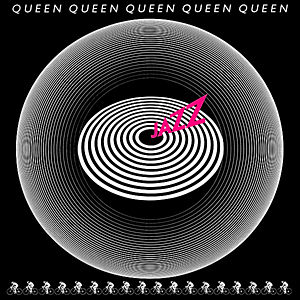
.JPG)


