Showing posts with label music. Show all posts

Friday, 18 September 2020

Killer Opening Songs (Led Zeppelin’s Whole Lotta Love) “Phallic rock” at its best


By the time Led Zeppelin came off stage at the Chatenay Malabry (Piston 70) in Paris on the 6th December 1969, The Rolling Stones’ free concert in Altamont had yet to start and its sad ‘end of the sixties’ label yet to be coined. In the meantime, the Boeing 747 jumbo jet had already made its debut and the first draft lottery in the US since World War II had also taken place. It is in these circumstances that one of the better Killer Opening Songs of all times must be analysed.

Following their well-received debut album, ‘Led Zeppelin’, released in January 1969, the British band embarked on a series of concerts during the same year promoting material for their sophomore record. From the US to Sweden, from Denmark to Canada, Zep’s bluesy, raw sound seduced thousands of youngsters and enticed a whole generation.

The chemistry between Jimmy Page, Robert Plant, John Paul Jones and John Bonham played a major role in the band’s ascension to the pinnacle of rock’n’roll. Although, to be fair, it was the group’s ‘fifth’ member, manager Peter Grant, who made the impossible possible: Led Zeppelin remains one of the few bands (K.O.S. cannot think of any other) that never released singles in its entire musical career in the UK, only albums.

Continue reading here

Thursday, 21 May 2020

Killer Opening Songs to Listen to During the Lockdown


Some artists manage just one Killer Opening Song in their whole musical career. Some others get to release just a handful. But there are performers for whom KOSs are part of their DNA. Step forward, Queen.

Carry on reading here.

Thursday, 5 September 2019

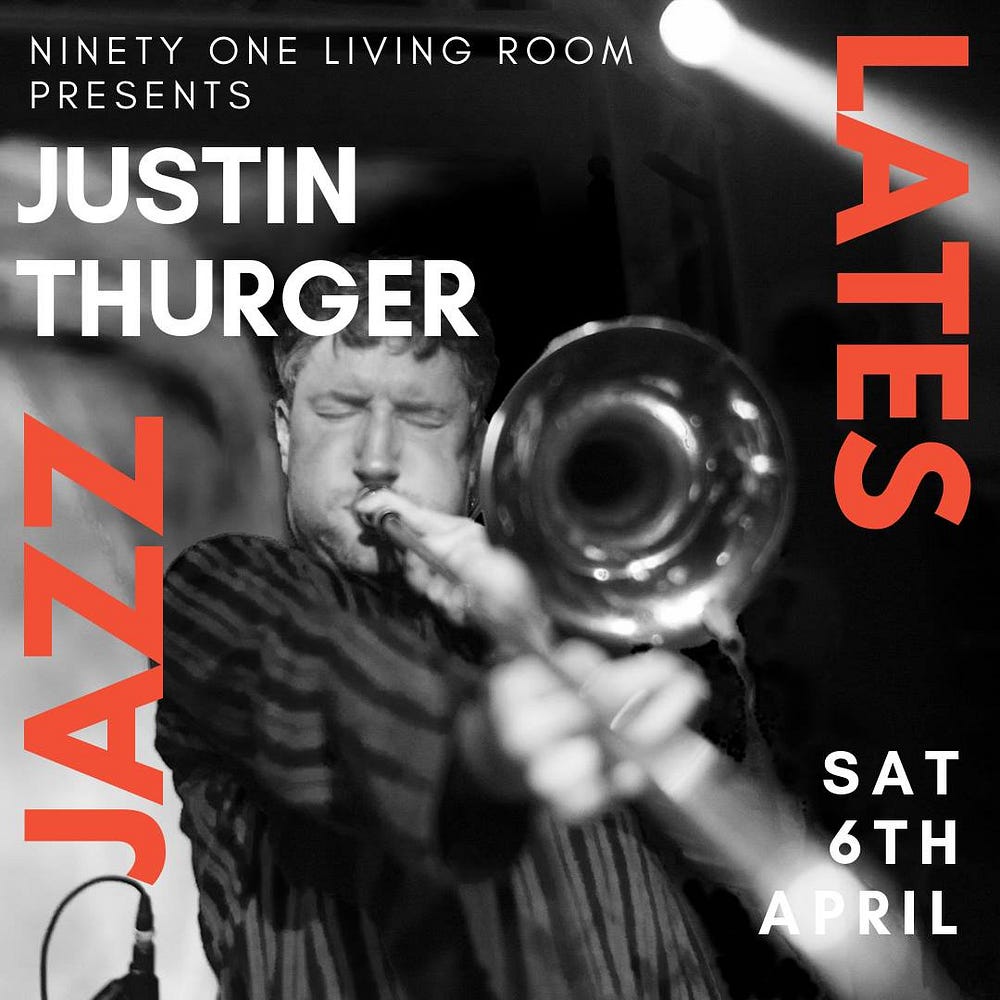
Ninety One Living Room


It's funny how religion was all around me when I was growing up in (supposedly religion-free) Cuba. My late grandmother was raised a Catholic and never lost the faith. My father was a (closeted) Freemason and my mother was not averse to dropping Christian-themed snippets of wisdom while bringing me up. All this punctuated by regular visits by a babalawo (a priest in the Yoruba religion) to my flat in Havana. Yet, I became an atheist and still consider myself one.

Except when it comes to music. Music (and art by default) is the closest I've come to becoming a worshipper of any kind.

This has been the case with Ninety One Living Room. This is a venue in east London that has converted me. To what it has converted me is not the point, the point is the unorthodox nature of the programme that has converted me.

Ninety One Living Room's Jazz Lates is the brainchild of Cuban musician and promoter, Orestes Noda. In its short incarnation (it only got going in autumn/winter 2018) it has shone a much-needed light onto some of the more exciting talent the UK's up-and-coming jazz scene has to offer.

Based in the heart of hipster east London, Jazz Lates has hosted some of the finest contemporary jazz musicians. Along the way it has also contributed to some unforgettable sessions. This is helped by a format in which musicians play two sets; the first one usually featuring their own material and the second one showcasing a mix of original songs and covers of jazz classics.

The beauty of this set-up is that at the start the audience is exposed to a sound with which they might not be familiar. This builds a sense of trust from the word go, which allows lesser-known acts to grow into their performance on stage. It also ensures that the band or singer's own compositions are the focus, instead of how they tackle yet another version of Dave Brubeck's Take Five.


That was certainly the case with Sahra Gure, a Berlin-born, London-based, vocalist who has taken London by storm. She performed at Ninety One Living Room recently. Still very young but already showing lots of confidence and pizzazz, Sahra has collaborated with the likes of Dele Sosimi (he of Fela Kuti fame) and Kishon Khan (who fronts the ground-breaking, hard-to-box-in, award-winning Lokkhi Terra).

Variety is another key element of Jazz Lates. For instance, Luna Cohen, originally from Belo Horizonte, Brazil, and now relocated to London, brought a harmony-rich repertoire. One that eschewed the usual middle-of-the-road, listener-friendly, Joao Gilberto-influenced, samba-lite sound and instead gave us a more challenging proposition. All this accompanied by soulful vocals and a magnetic stage presence.

Although music is the reason for us, jazz-lovers, to flock to Ninety One Living Room, there are also other components to factor in when assessing the venue's success. One is the atmosphere. The energy in the room is electric. Most punters are united by a shared appreciation of live jazz. Especially, the type that is unpretentious and at the same time intimate. The other element that makes Ninety One a win-win option for a Friday or Saturday evening (when most gigs take place) is the food. Although admission to the space is free, if you want to eat, you need to book a table. The grub is reasonable and good. They can certainly rustle up a decent burger and chips (there are both vegetarian and vegan options) and other dishes that are equally delicious.

Having been to Jazz Lates many times now, I have noticed a following that is almost of a cult nature. Ninety One Living Room has certainly racked up something of a football-like loyalty amongst jazz fans. This has helped promote the night as far and wide as possible, mainly through word of mouth.

While it is hard to deny that both Brick Lane and the surrounding area have suffered the effects of gentrification (as illustrated in the recent Akram Khan's documentary, Curry House Kid. Curry houses are closing down at an alarming rate), Jazz Lates, on the other hand, has provided a much-needed bridge between artists and their community. As I mentioned before, entrance is free and some of those performing on stage are locals, born within earshot of the Bow bells.

It is the curatorial savoir-faire of Orestes Noda (the man behind the Sambroso Sambroso Cuban-music-promoting brand) that we need to thank most of all. In conversation with the maestro recently he told me that the driving force behind whatever he did (like his Afro-Cuban-percussion-driven, Middle-Eastern-sound, electronica-powered project, Ariwo, for instance) was his curiosity. I am just a curious person, Mario, he told me, a smile beaming on his face.

That curiosity has given us performances by the likes of award-winning, musical collective, Kefaya (their name is Arabic for "enough"), Israeli-born, multifaceted and talented singer-songwriter Noga Ritter and ex-Bellowhead (remember them?) trombonist Justin Thurgur.

To this day I continue to call myself an atheist. Except when it comes to music. When it comes to music, venues like Ninety One Living Room and its weekly Jazz Lates convert me. To what they convert me is not the point, the point is the heterodox nature of what they offer. The stage is my altar and the audience my fellow worshippers.

All photos by Nadjib Le Fleurier

Sunday, 12 May 2019

Pieces of Me, Pieces of Havana


Funny how some stories come about. In this one the main character has no name. Yet, that’s not by design, but because I never did learn this fellow’s name. All I remember is that he was as much a part of the urban landscape of my Havana as the famous El Morro lighthouse.  He was there as I manoeuvred my way through my late teens in the city of my birth.


Now, reader, picture this. I am seventeen or eighteen, tail end of the 80s. By now I have become a regular at the Casa de la Cultura de Plaza, an arts centre bang on the corner of Calzada and 8th Street, in the modern(ish) borough of Vedado, Havama. Every (or every other) Tuesday evening, there is a jazz session run by the famous Cuban musician, Bobby Carcassés. A multi-instrumentalist by trade, Bobby is a one-man show. His stage presence is magnetic. Whether playing trumpet or banging away on conga drums, this guy renders the night its beating heart.

Casa de la Cultura de Plaza is also an institution. It is here that the first Jazz Plaza Internacional was held only a few years ago. The name itself conjures up memories: this is where I was converted to jazz by a friend of mine; a night when I went from hating the genre to falling in love with it, lost to the sound of Arturo Sandoval’s trumpet. This is where I have increasingly become less self-conscious of being part of the jazz tribe. This place is a sanctuary for a teenager who is beginning to doubt the political system in which he is growing up.

And then, there is him. Forgive me, reader, for I cannot provide a name. As I said before, I never did learn this fellow’s name. But he stands out. Especially, when he puts his flute to his lips.

Here we are, the jazz faithful, watching Carcassés move from trumpet to congas and from congas to bass. At some point, our friend strides on to the centre of the stage, flute in hand. A miniature of a man, he sports an unremarkable short-sleeved shirt (which he often wears, regardless of the weather). He mutters something under his breath, perhaps a few words of self-encouragement, perhaps a prayer.

We all have our ways of evidencing our existence in the world. Some of us have what could be termed “big stage presence”. Others have to create one if they are to be noticed. As the ultimate showman, Bobby Carcassés has no problem flaunting his skills as a musician. He looks like a giant under the theatre lights. On the other hand, our friend, the flute-player is a different kettle of fish.

His is the kind of performance you remember down the years. Even if you can’t see him (sometimes the venue is packed to the rafters and people stand in front of you), you know he is there. First, it’s the stumble. He hardly ever walks straight. The drink has put paid to any notion of him regaining an upright position and steady gait. He takes his spot, facing the mike, facing, the crowd, facing the world. And then, he blows.

When he blows, you forget about the rest of the band. In fact, you float in and out of a music-made haze. For the next four or five minutes (I’m certain he would like his solos to last longer, but Bobby rushes him to the other side of the stage) you no longer live in a physical world, but a deeply-spiritual, flute-driven one.

One night I spot him after the gig. He is nursing a pint, a very posh name for the Cuban perga. This is a tall, cardboard-made cup that can hold up to a pint and a half of lager. He is sitting, talking to other musicians. Every now and then someone comes over and pats him on the shoulder. Well done, mate! That was top! He smiles. A smile that accentuates the cracks on his face. Deep furrows running on either side of his nose. Crow’s feet branching out of the corners of his eyes. I, too, congratulate him. He grins. I mention that my father is a pianist. He asks me for his name. When I tell him, his eyes light up. I know Mario! He recalls sharing the stage with my father’s old band, Orquesta Astral once. His speech is slurred but still intelligible. Under the starry Cuban night two people, a generation apart, bridge the age gap through the power of music.

He stands to leave and keels over. I’ll take you home, I offer. At first he resists, but then, he can see the deep-seated sense of duty towards men like him reflected in my eyes. He puts his left arm around my shoulder and together we take off.

We walk a few hundred yards before he suddenly breaks into song. Actually, it’s more like a hum. It is a well-known bolero, and not one in which his instrument, the flute, is usually required. His voice sounds like a plaintive cry and it hardly cracks, which is strange, given the amount of drink he’s consumed. He is certainly no singer, but at least he can harmonise fairly well. At some point he turns his head towards me, expecting me to join him. Sorry, I don’t know the words, I mutter. I’m into jazz, I say. And I’m still a rocker at heart, I silently state in my head. It will be another two or three years before I re-discover my Cuban roots and rekindle my love for bolero.

We walk for what seems like a long time. I switch positions every couple of blocks. For some reason he feels heavier on my left side than he does on my right one. This is still my “skeletal” period, when being slim goes hand in hand with being a rock fan, so I am definitely no pumped-up Atlas attempting to hold up the celestial heavens. At some point, now walking on 17th St, past L St, Malecón-bound he points to a door on our right. It’s an old block of flats, a couple of storeys high. It is a rundown, derelict building that houses more families than it has room for. The paint on the walls has long gone, the stairs have no banister and the stench of urine reigns supreme.

The flute-player thanks me, dismisses me at the entrance and starts to climb up the stairs slowly. He looks so unsteady that I rush over and catch him just in time before he falls down. C’mon, I’ll take you to your room, I say. My voice surprises me. It sounds stern, reassuring and authoritative, despite my still-wet-behind-the-ears look. Luckily he lives on the first floor. His hunched form disappears in the darkness as soon as he opens the door. Uninvited, I step inside, too. My hands cannot detect the presence of a light switch. Don’t! He shouts. There’s no light switch, he adds. For a split second his inebriation fades and instead a moment of lucidity makes him bring two loose wires together on a nearby wall. I realise that in the same way I have been his reliable, human crutch on the way here, he has just saved me from getting electrocuted.

The light is so weak that we might as well go back to being in the dark. It beams from a single, bare, bulb in the middle of the room. Sorry, he slurs, as he scans my face. It’s very damp, he adds, as if any confirmation is needed. In the eerie half-light, ashen-coloured patches are dotted randomly on the walls.

Standing in the middle of his room, the flute-player looks less like a musician and more like an actor in a one-man show. His flat could not be a more fitting stage. The four-hob cooker that sits silently in a corner. The fridge, almost empty and, thus, rendered useless. The floor, riddled with stains. The bottles of rum under the sink, one next to the other, some full, some half-full.

How can you live like this? I ask him. I’m genuinely concerned. My late-adolescent self, although no longer a true believer, still clings a little onto Fidel’s socialist utopia. There should be help for you, I say, as I make (a futile, as it turns out) attempt to tidy up his room. There is a part of me that’s raging. Perhaps, because I have just seen this man playing his heart out on stage and now he stands here, looking lost like a Cuban version of King Lear.

My naiveté makes him laugh. Eventually his laughter transitions to hiccups-interrupted sobs. He pulls a chair and sits on it. I perch up on a tiny corner of the only couch in the room, avoiding the big stain covering much of it. I am the oldest of five children, he starts. My father was an alcoholic and my mother found it difficult to bring us all up. I married young myself but my wife couldn’t cope with my drinking problem. I spent more time in the bar at El Conejito restaurant than I did with her and our children. In the end, she got fed up and left me. My children only see me when I pay them a visit. They never come around. They’ve turned out OK, though.

I am overcome by an uncomfortable mix of feelings: anger, sadness and hopelessness. I leave after three quarters of an hour, aching with pain but relieved to be out of there. Before I go, I promise him I’ll do something. What I’ll do, not even I know. I just want to make things right. It’s only when I reach the bottom of the stairs that I notice the saltiness on my lips. I’ve been crying all along.

But, to my shame, as the days of my last year in college roll by, I begin to forget about the flute-player. I start university in the autumn. Suddenly there are fewer opportunities to go back to Bobby Carcassés’ jazz night. My time is taken up by coursework and countless assignments. It is four years before I return to the Casa de la Cultura de Plaza and it is not even for the same reason as before. By now I am an amateur actor and member of a theatre troupe that rehearses at the arts centre every week, not far from the space where the flute-player first cast his music-made, hazy, magic spell on me.

One day, many years after that night at the old man’s flat, I find myself behind the wheel in a hired car with my wife and two children in Havana. I happen to drive by the Casa de la Cultura de Plaza and unconsciously, I take the same route I did when I accompanied the flute-player home on that occasion. Past L St, I point to what is now a rubble-strewn, empty space in between two buildings (his came down some time ago. A hurricane did the job). I tell my spouse and offspring the old musician’s sad story. My daughter asks me what his name is. And I begin to laugh. Because reader, it is funny how some stories come about. In this one the main character still has no name.

Sunday, 7 October 2018

Tribalistas: a deep human connection beyond music


Diaspora, the opening track on the Tribalistas’ second album, is more than just a song. It is a prayer, a lament to the human condition. Especially to those caught up in the recent refugee crisis. Lines such as “Onde está/Meu irmão sem irmã/O meu filho sem pai/Minha mãe sem avó/Dando a mão pra ninguém” point to a certain sensibility, often absent from official, political circles. After all, we all have a father, a mother and a grandma.

It is this deep human connection that has made Tribalistas the successful supergroup they are. And it is precisely this sort of kinship that fans of the band will be able to feel at the Eventim Apollo on Sunday 4th November, the first time the Brazilian outfit will play in the UK. From their debut album in 2002, to their sophomore effort fifteen years after, Marisa Monte, Carlinhos Brown and Arnaldo Antunes have added another dimension to the human experience. One that goes beyond musical boundaries.

Supergroups come in two guises. There are those that stick to a well-trodden, successful and familiar musical path, say, blues-driven Cream and those which become genres unto themselves. For instance, experimental-sounding, all-star Irish The Gloaming. Tribalistas belong to the latter category. Their songs are not the typical samba-lite, listener-friendly, Brazilian sound commonly found on Jazz FM’s Breakfast show. Monte, Brown and Antunes have three very distinctive personalities and voices. However, so far the trio has managed to find enough common ground to churn out two outstanding albums, each a masterpiece in its own right.

Rio-raised Marisa Monte has a singing style that has been influenced by both samba and opera, having trained in the latter in Italy. Ex-Titas member, Arnaldo Antunes has the sort of earth-scorched vocals that can turn even the glibbest of pop songs into an intellectual manifesto. Carlinhos Brown’s mid-range, melodious timbre is the perfect counterweight to Marisa’s lyrical and Antunes’s deep-voiced tones.

Just like 2002 Tribalistas, the 2017 outing, of the same name, is arrangement-rich. Collaboration is the key amongst the Tribalistas. Sixteen years ago, the evidence was in tracks like É Você, a dreamy tune that found Brown and Monte’s voices intertwining organically. Fast-forward to Tribalistas 2 and you have the foot-tapping, momentum-building Tribalivre, an ironic take on work that boasts Antunes’s lead on vocals, Monte on guitar and backing vocals and Brown playing all kinds of instruments, from congas to berimbau.

More than a musical statement, Tribalistas is that rarest of beasts nowadays. A supergroup whose members have left their egos behind in order to create a solid, politically- and socially-minded sound. The concert at the Eventim Apollo on Sunday 4th November promises to be a once in a lifetime opportunity to experience this.


© 2018

Wednesday, 22 August 2018

We All Have an Aretha Track…


… And mine is “I Never Loved a Man (the Way I Love You)”. Especially after I took up marathon-running. As a runner, sometimes you come across a hill that’s too steep, a flat that’s too long, a path that’s too rough. You need that track that will make you overcome that hill, beat that flat, win over that path. “I Never Loved a Man (the Way I Love You)” has that quality. It’s a rocket-powered, piano-riff-rich, bass-hook-driven monster of a song. And on top of everything you have the soaring vocals of the Queen of Soul. Vocals that sing a song of both surrender and love (“You’re a no good heart breaker/You’re a liar and you’re a cheat/And I don’t know why/I let you do these things to me/My friends keep telling me/That you ain’t no good/But oh, they don’t know/That I’d leave you if I could”).

This is a song about flawed humanity. About what we do and the lengths we go to when we love that other person. Even when that other person hurts us so bad. Whereas blues is pain and soul is reaffirmation, “I Never Loved a Man (the Way I Love You)” is a cross between both genres. It is Aretha doing what she did throughout her entire stellar musical career: combining pleasure and suffering.

It is the reason why, when this song comes on my mp3 player, I get that extra burst of energy. It is the combination of brains, brawn (in the form of Aretha’s emotionality) and voice. It is the piano riffs, the bass line, but above all the chops, the pipes. The thought that she only ever took hold of melodies she could feel. And if she felt them, rest assured, so did you.

© 2018


Monday, 9 July 2018

Thoughts in Progress

It is strange to think of a song like Tracy Chapman’s 1988 Behind the Wall in the context of the ubiquitous, free market-driven and fast-buck-making capitalism of that time. Not only that but also the fact that the track became one of her most listened-to on her eponymous debut album. At the time the charts were dominated – as they usually are – by inane pop of the Tiffany, Kylie Minogue and Rick Astley type. Behind the Wall was different. It had lines such as “And when they arrive/They say they can't interfere/with domestic affairs/between a man and his wife/and as they walk out the door/the tears well up in her eyes”. It was uncompromising pop by an uncompromising pop singer. Forget Tom Jones’s Delilah with those ominous but always crowd-pleasing words: “I felt the knife in my hand and she laughed no more”. In Behind the Wall, we are terrified because we know very well what will happen when the police “walk out the door”. The knife in the hand and the abrupt end to merriment do not trigger knicker-throwing hysteria. On the contrary, this is the reality of domestic violence. Domestic violence in Billboard magazine. Cheers, Tezza.

I have been thinking about Tracy Chapman lately. A trip down memory’s (slow) lane if you like. I did not become acquainted with Chapman until my first year in uni, circa 1990. A tape was passed around and I was immediately hooked by the combination of poetry, voice and musical arrangements. That was hard to find in pop music at the time. Most artists favoured just one of these elements. Add on the fact that in those days in Cuba we usually got the latest releases two or three years after they’d come out in the US and UK and it is less difficult to understand why many of us, freshmen, fell in love with the dreadlocked, folk singer from Cleveland. She was a novelty.

The other reason why this musical love affair blossomed between Tracy and me (not that she was ever aware, mind) was that every time she asked us if we didn’t know they were “talkin’ ‘bout a revolution”, I had a different type of revolution in mind. Mine was of the individual thinking variety. The consumption and interpretation of art is completely subjective and Chapman was a good example. We all took away a different message from her output.

Of course, when I listened to the Tracy Chapman album recently the only melody that got stuck in my head was ForYou. For very personal reasons, the lyrics call to a part of my life at the moment that is part love declaration and part self-analysis. “Deep in my heart/Save from the guards/Of intellect and reason/Leaving me at a loss/For words to express my feelings”. What a crafty way of saying that love does not obey the laws of rationality.


© 2018

Friday, 27 April 2018

Ariwo: where Afro-Cuba meets electronica


No wonder April was the cruellest month for T. S. Eliot. Just the temperature see-saw is enough to drive one bonkers. Perhaps the great poet, had he been alive, would have had a different view on the fourth month of the year, if only he had popped down to the Village Underground in Shoreditch to watch Ariwo on Monday 23rd April as part of the La Línea Festival. The quartet-turned-quintet on the night (saxophonist Binker Golding was a special guest) produced one of the most exhilarating and rousing sets I have seen for a long time.

More than mere fusion, Ariwo specialises in a hitherto little-explored musical phenomenon: that of the crossover of electronica and Afro-Cuban beats. Except for the Cuban maverick Edesio Alejandro in mid-to-late 80s Havana, this territory still remains semi-virgin. The band’s emphasis on sound (hence the name Ariwo, which translates as “noise” from Yoruba) is evident all the way throughout their set, rendering the concert a deep sonic experience.


With personal biographies boasting both musical virtuosity and critical acclaim, Monday night was always going to feel special. What nobody could foresee was how special it became with each song being lapped up by an ever-hungry and knowledgeable audience. Gahambar’s trumpet-driven, looped groove transported me back to Havana’s carnival, floats parading up and down the Malecón, feet and hips moving endlessly and beer flowing freely. Caldera presented us with the sight of Yelfris, stalking the stage like a panther, trumpet in hand and ready to launch into a mano a mano with Hammadi Valdes on drums. To Earth showcased Binker Golding’s mastery on saxophone; his drifting riffs a cross between Ornette Coleman and Steve Coleman and yet distinctive in their own complexity. The track Alafin brought a rousing solo on congas by Orestes Noda, not just one of the finest Cuban musicians in his own right, but also an outstanding promoter of Cuban culture in the UK and Europe. And holding it all together, whilst at the same time providing some of the more spiritually enriching melodies on the decks I’ve heard for some time, was Iranian-born Pouya Ehsaei. No mean feat when you have some of the better jazz cats in the UK today challenging each other and upping the ante to the nth degree. Not all tracks were dance-friendly, though. There were a few eyes-shut, fists-clenched, much-welcome meditative moments, too.

Yes, Tom, maybe, April is the cruellest month. But it needn’t be. Especially when you have Ariwo to warm up the most inclement of spring nights.


© 2018

Friday, 13 April 2018

Let Drum Beat: an all-female musical powerhouse

Two Brazilians, a Beninese, a Scot and an Italian walk into a bar and…

No, this is not the beginning of a bad, Jeremy-Clarkson-flavoured joke, but the all-female, musical set-up that has been lighting up London’s stages of late. Let Drum Beat is Alba Cabral, Béa Shantifa, Lizzie Ogle, Marta Riccardi and Tuca Milan. These superb musicians use a wide range of Afro-Brazilian percussion instruments to create their unique, fusion-powered style. Singing at times in Portuguese, French and Tupi-Guarani, Let Drum Beat uses vocal harmonies to establish a connection to their homelands, transporting their audience there in the process.

This link was much needed recently when they played to a very receptive and welcoming crowd at the Bernie Grant Arts Centre, in Tottenham, north London. Rain-soaked and cold weather has pretty much been spring’s main contribution so far. Yet, in just over an hour-long set, Let Drum Beat brought the temperature in the room up to Brazilian-summer levels. I was impressed not only with the musicianship and compactness of the ensemble but also with their use of non-percussive instruments, like the rabeca, a north-eastern-Brazil-rooted, violin-like, stringed instrument that, unlike its close European relative, is supported either on the chest or left shoulder.


In a diverse, multicultural city like London, where world music aficionados have plenty of options available to them, Let Drum Beat stands out as a musical powerhouse in their own right. Energetic, innovative and risk-taking, these five women have already blazed a trail. The launch of their debut album this summer (announced on the night) heralds a new era, not just for Let Drum Beat but also for London’s music scene.


© 2018

Saturday, 9 December 2017

Thoughts in Progress


Claude Monet, one of the pioneers of impressionism, was said to have been struck by London’s ever-changing weather when he alighted in the British capital in 1870. He was especially attracted to the metropolis’ combination of fog and light. On subsequent trips he managed to translate these two elements into a series of paintings of London’s bridges, the Houses of Parliament and the river Thames.

One of the more famous ones, The Thames Below Westminster, has become the go-to image to show Monet’s fascination with London. Shrouded in mist, the Houses of Parliament and Westminster Bridge emerge in the distance as a ghostly vision, one that contrasts heavily with the more colourful and dynamic foreground.

Living across the seat of British democracy gave Monet a unique insight into what London in the 19th century was like. Traffic on Westminster Bridge at the time, both pedestrian and carriage-led, must have been heavy. After all, one of the reasons to build the bridge was to serve as a link between the expanding West End and fast-growing south London. Up to then, commuters and visitors were forced to use alternative routes, such as the Strand and New Oxford Street. Westminster Bridge, upon opening on 18th November 1750, elicited glowing praise like this comment, from The Gentleman’s Magazinea very great ornament to our metropolis, and will be looked on with pleasure or envy by all foreigners.” Truer words have never been written. On any given day, nowadays, Westminster Bridge is always full of families, tourists, or just politicians taking a break from parliamentary duties.

It was on this bridge, sadly, that Kent-born, 52-year-old Khalid Masood (né Adrian Ajao), decided to carry out his heinous terrorist attack on Wednesday 22nd March of this year. He drove a car into pedestrians, killing three, two instantly and one later on in hospital. Once he crashed his vehicle outside parliament, he tried to enter the building armed with two knives stabbing fatally a police officer in the process.

Monet took inspiration from London’s foggy weather to create his masterpieces. Terrorists’ main intention – whether the Daesh-inspired or the white supremacist type – is to create a mist-like, blurred, hazy vision of unimaginable panic. Perpetrators like Khalid know that they have not got a chance in hell to turn their hate-filled philosophy into a viable political alternative. Hence, their “amateur”, but devastating, modus operandi.

The entire area around Westminster Bridge has changed a great deal since Monet walked its streets more than a century ago. It is no longer just a place to go through in order to get to south London, but an almost essential photo-op stop (the mud-coloured Thames offers a fabulous background) before purchasing a souvenir at one of the stalls nearby. Westminster Bridge and its surroundings are often so packed with pedestrians and cyclists (the East-West cycle superhighway takes in part of the Embankment) that it makes sense to use the road instead, despite the obvious dangers.

In trying to mow down those he saw as infidels, Khaled might have ended up killing fellow Muslims. The paradox of this new kind of terrorism the West has faced for the last sixteen years is that it is nothing new in Muslim nations where the number of victims murdered by extremists is far higher.

If Khaled had ventured “sarf” of the river and driven down York Road, he would have come across a couple of Italian restaurants and two or three Indian-themed ones. At any time of the day or night, these establishments are crowded with punters. Punters who come from all corners of the globe. This is what terrorists are up against. It is not just a way of life that refuses to be defeated, but also a two-finger-up attitude that whatever flaws London has (and there are many), we, Londoners from here, there and everywhere, love our city the way it is. Warts (plenty) and all.

Of course, the sheer volume of visitors London attracts (9.98m visits from January to June according to the VisitBritain website) makes the city an obvious target for a terrorist attack. This is the reason why most of us, city-dwellers, have adopted a mindset that has more in common with the famous “Keep Calm and Carry On” World War II slogan than with the panic terrorists are intent on spreading.

It is interesting, albeit not surprising, that Monet, who was inspired by London’s dreamy, hazy, misty autumn weather, is getting his own exhibition at the National Gallery next year. His art has defied the passing of time. On the other hand, we have a terror-spreading individual whose actions, whilst costing the lives of some, were repudiated instantly. Nobody will remember Adrian Ajao’s name in five years’ time. In attempting to paint our lives in fog-coloured textures, Khalid became what the Houses of Parliament emerged as in Monet’s The Thames Below Westminster: a ghostly and fast-disappearing vision.


© 2017

Monday, 13 November 2017

Remembrance Day, Jazz and Sex

It was quite apposite, I thought as I walked away from the venue, that this concert was staged on Remembrance Day. Earlier on, just a stone’s throw from the theatre, I had watched the oldest procession in the country as part of the Annual Lord Mayor’s Parade.

If Remembrance Day is about acknowledging the sacrifices made by the fallen and injured to secure peace, what better way to honour them than through music? In my opinion, the most universal of all the art forms and the one that gives us the succour we need in our darkest hours.

That was exactly what Chucho Valdés and Gonzalo Rubalcaba served to a musically-hungry audience at the Barbican as part of the London Jazz Festival. Two world-strutting behemoths with a Grammy collection that would be the envy of any well-established pianist, this was probably one of the must-see shows of the ten-day event. On the one hand, seventy-six-year-old Chucho, a pioneer and trailblazer of modern Cuban jazz, who with his band Irakere not only broke the mould of what Latin jazz was supposed to sound like, but also created new rules along the way. On the other hand, smaller in stature, but definitely not in craft, virtuoso Rubalcaba, who redefined jazz for a late 80s, 90s both Cuban and international audience.


The two masters together

In addition to all this, the experience, at least to me, of watching these two colossi was akin to what I could only describe as an aural orgasm. Yes, this post is certainly X-rated, my dears, so do not let your little ones read it (smiley, with a wink). By the way, all puns are intended. Yep, it is that kind of post.

Where to start? Maybe with the teasing, long, foreplay-like meditation at the beginning. It was as sensuous as it was deft. Delicate notes, exploring, probing, feeling. It was Rubalcaba who broke away first, his Steinway gathering pace as a patient and calm Valdés kept back and watched.

What followed thereafter can only be described with the language of love, or sex, if you prefer. There were sprints and sudden stops, polyphonic dialogues the two masters lunged at and percussive, quick-fire, repetitive tapping. A Cuban montuno became a climax-inducing piece. A “zapateo” was given a full big band revamp… minus the big band. The sound was big, all-encompassing. I looked both to my left and to my right. I saw plenty of open mouths and eyes, bobbing heads and shaking shoulders. Those twenty fingers on stage, eliciting occasional gasps and sighs in the audience, every time they travelled up and down the ivories and hit the desired spot. Would we have been down on the aisles grooving it had the concert not been at 2:30pm? You bet.

And just when you thought the concert was over, the encore came. Even the ”Duke” would have approved of Chucho and Gonzalo’s take on Caravan. It was full of razzmatazz and panache. The final stage of copulation and the post-coital ciggie all at once (I threw the latter in for good measure, I don’t smoke. But I’m feeling generous.). A tumbao-heavy version with a thirty- or forty-second Manteca riff halfway through. This was not a battle, in the same way sex should never be one. This was collaboration, banter, care, tenderness, playfulness, a bit of rough and calmness (at the end). My only gripe? Where was my second part? Where was the interval and follow-up? Because as many of us know, when it comes to sex, sorry, music, second parts tend to be as good as, if not better than the first ones.

© 2017

Saturday, 16 September 2017

... That 20 Years Is Nothing?

There's a funny moment in our lives (funny, both ha-ha and strange) when we realise that we have fallen for what we used to mock before. This Augenblick can only be interpreted as a journey from a carefree, fun-filled summer day to the crepuscular beauty of an autumn evening in no more than twenty-four hours. This is that moment in our lives when a "bolero", a “fado” or a "tango" calls to a part of us that had hitherto lain hidden. Or dormant. Or unexplored. Or covered up by layers and layers of identity markers. Those markers we pick up from the shop we call life. There we are, little, hopping, skipping creatures, barely able to reach the dinner table, entering the shop stage right and many years later, exiting stage left, carrying with us multiple transformations, disguises and masks.

It is that time of the year when rain-soaked, dark-inked pavements trigger off feelings of nostalgia in me. This time around, a wet summer, combined with the early onset of autumn has unleashed a deluge of memories. Not just any memories, mind. In November it will be 20 years since I landed in the UK. To stay. To set down roots. To throw my lot in with the people of this country. But the question that has arisen in the last half decade is: have I succeeded?

Succeeded at what could be the swift response.  Perhaps, I should rephrase that question: has it been a fulfilling life for me so far?

With the rain still hanging over the low-rise flats in my neck of the woods and weak sunrays spearing through eastbound, grey clouds, I recently pulled up just outside my house after another long bike ride around London. Whilst catching my breath back, I paused to ask myself that question: has my life been fulfilling so far? The short answer is yes, above all personally and professionally. The long one would be: it’s a work in progress (I haven't even developed the immigrant's usual love-hate relationship with their new home). It is easy to relocate to another place and not have a sense of belonging to it. I believe that the process of settling in another country is a two-way system: you give and take in equal measure. I looked at my bicycle and retraced my steps all the way back to that morning. It had caught me in east London interviewing a guy who can only be described as an essential part of the incredible, creative power this city has. The afternoon had seen me have my lunch in west London in a beautiful park; the dry grass a provocation to the gathering clouds. Trafalgar Square was a sight to cycle past, not a tourist stop. The downpour caught me not long after. It gave me time to think. Unlike running, when most of the time I listen to music, whenever I am pedalling my way around London my ears remain earphone-free. Instead I focus on the sounds of the city: the loud-revving car engines revealing impatient drivers, the voices (with their various accents), the beeping, the swearing, the muzak blaring out of cafes and restaurants, the R'n'B/reggae/rock/grime blasting out of open windows, the football chants, the soft, swishing sound of the closing doors of a double-decker, the whispered plea, "Can you spare some change, please?"

Part of the progress I have made in these 20 years is figuring out what the pattern of this city is. All cities have one, especially metropolises. Havana’s is laid-back, London is a rush-hour one, with a nowadays added screen-facing, neck-bent population.

During the next few weeks, up until November, when I will be celebrating my second decade in this country, my posts will be even more London-centric, if that’s possible. I will be posting interviews I conducted during the summer holidays with some of the makers and shakers of this city’s incredible entrepreneurial might. There will be plenty of autumn-coloured reflections, impressionistic in their design with perhaps a surrealist touch in their delivery. After all, another element in London’s pattern is how often it confounds expectations. Here is a city that is not afraid to wear its eccentricity on its sleeve. A city in which anyone can end up being bathed in nostalgia-scented memories by the power of a fado or a bolero.


© 2017

Next Post: “London, my London”, to be published on Wednesday 20th September at 6pm (GMT)

Saturday, 8 July 2017

Thoughts in Progress

Many of you, fellow bloggers and readers, know how interested I am in the human mind, consciousness and rational thought. The way our brains process information and our subconscious mind works has always enticed me. Recently I read an interview with the philosopher and scientist Daniel Dennett in the New Humanist which reawakened this passion. In it Daniel attempted to throw some light on that strange, elusive and confusing phenomenon known as consciousness.

To Mr Dennett consciousness is not one thing but a combination of different elements. They are our thoughts and experiences. This group also includes our subconscious, that always hard-to-define region of our brain where we hold information we are not even aware of having.

I first came across Daniel’s theories a few years ago via Steven Rose, one of The Guardian’s book reviewers. He also happens to be one of Mr Dennett’s staunchest critics. One of the reasons for this antagonism is that Daniel uses computer-based language to describe the way the human brain operates. Personally, I, too, find this hard to accept. To me the human brain has an infinite capacity to generate ideas and thoughts. To compare it with a PC’s storage capability is to fall into the same old trap of seeing the human mind as mere RAM. However, where I do agree with Mr Dennett is in his view of the mind and body as a single entity. There is no miracle, in my view, in the way the mind is linked to the body. The evidence is in the fact that when one of those two elements is not functioning well, the other one suffers.

The extraordinary nature of the human mind can be explained through the way we transform social learning into norms and habits. Elements of culture, no matter how disparate, are drained through a collective-focused colander, leaving the more human-friendly (hopefully) parts and chucking out the flotsam and jetsam. And yet, this process is not without faults. For, no matter how carefully we sift these cultural, moral and social norms through, we will always be at the mercy of human unpredictability, otherwise known as… the human mind.

If we accept, as I believe, the notion that because of evolution human beings developed a collective/individual duality, we also have to accept that throughout our existence this duality has led to the need to communicate, cooperate and compete. The latter is not a word many would find attractive nowadays. Competition has been given a bad rap, especially in our current neoliberal, market-obsessed society. Yet, it is a reality that we compete with one another. What we cannot deny is that in order to communicate, cooperate and compete we have to engage our minds. We have to be able to think, organise, evaluate and learn.

Consciousness is, as I mentioned before, that elusive and confusing process whereby we cook up all these ideas and thoughts, intentionally or unintentionally. And although it might come across as an otherworldly, mysterious entity, it is as human as our hands, legs and feet.


© 2017

Next Post: “Of Literature and Other Abstract Thoughts”, to be published on Wednesday 12th July at 6pm (GMT)

Thursday, 6 July 2017

Food, Music, Food, Music, Food, Music... Ad Infinitum

 Photography: Louise Hagger for the Guardian
I confess that when I first heard the recent horror stories about people getting wounded whilst trying to cut avocados I laughed. I was not being mean, I swear. I felt sympathetic to those involved in avocado-caused accidents. It 's just that the way these injuries were described was... hard to believe. Most people apparently got cut trying to flesh out the large seed. Any Cuban (or Mexican, or Brazilian) will tell you that if you quarter (there, that's a massive clue) the avocado, the seed will fall out without any further intervention.

I love avocado, which is the reason why I am posting this recipe. I am always looking for new ways of getting the best of this highly nutritional fruit. Yotam's recipe offers a new twist.

Avocado with curried prawns and lime


100ml groundnut oil
1 banana shallot, peeled and halved lengthways, then each half cut lengthways into quarters
1 red chilli, deseeded and thinly sliced
20 fresh curry leaves
2 tsp coriander seeds
1 tsp black mustard seeds
2 limes, 1 finely shaved and juiced, the other cut into four wedges, to serve
Salt
300g sustainably sourced raw king prawns, peeled and deveined (cooked peeled prawns are a perfectly acceptable shortcut)
20g mayonnaise
80g Greek-style yoghurt
1½ tsp mild curry powder
1 tsp honey
2 ripe avocados, cut in half lengthways and stoned
Heat 85ml of oil in a small saute pan on a medium-high heat, then fry the shallot and chilli for 10 minutes, stirring occasionally, until the shallot is golden and fragrant. Add the curry leaves, fry for 20 seconds, until crisp, then take off the heat and stir in the coriander and black mustard seeds, lime skin and a pinch of salt. Set aside for 20 minutes, to cool and infuse, then discard the lime skin.
Put the remaining tablespoon of oil in a medium sauté pan on a high heat, then fry the prawns and an eighth of a teaspoon of salt for a minute or two, stirring, until the prawns are cooked through and fragrant. Transfer to a plate to cool.
Mix the mayonnaise, yoghurt, curry powder, honey, two teaspoons of lime juice and an eighth of a teaspoon of salt in a small bowl. Finely chop half the prawns and stir into the sauce; toss the remaining prawns in the infused oil.
To serve, put an avocado half on each of four small plates and sprinkle with a small pinch of salt. Spoon in the creamy sauce, then top with the whole prawns, allowing some to fall off around the avocado. Drizzle each portion with a tablespoon of infused oil and sprinkle with the crisp aromatics. Serve with a lime wedge.

The music to go with this dish has to be equally punchy. That is why I am opening with Laura Marling. I saw her set at the recent Glastonbury and she was excellent once more. Here's Salinas.


Second track tonight comes a band I discovered only a year or so ago. The Airborne Toxic Event makes music as unusual as their name. This melody is as haunting as the emotions that probably motivated.


The last song is a classic, reworked by the flamenco singer El Cigala. Cheo Feliciano made this salsa number a worldwide hit and now it has been given a new lease of life by El Cigala. El Ratón (The Mouse). Enjoy.

LinkWithin

Related Posts Plugin for WordPress, Blogger...