"The ache for home lives in all of us. The safe place where we can go as we are and not be questioned." (Maya Angelou)
Showing posts with label Jazz. Show all posts
Thursday, 21 May 2020
Killer Opening Songs to Listen to During the Lockdown
Some artists manage just one Killer Opening Song in their whole musical career. Some others get to release just a handful. But there are performers for whom KOSs are part of their DNA. Step forward, Queen.
Carry on reading here.
Labels:
A Cuban In London,
Cubans in London,
Jazz,
music,
Mustapha,
Queen
Thursday, 5 September 2019
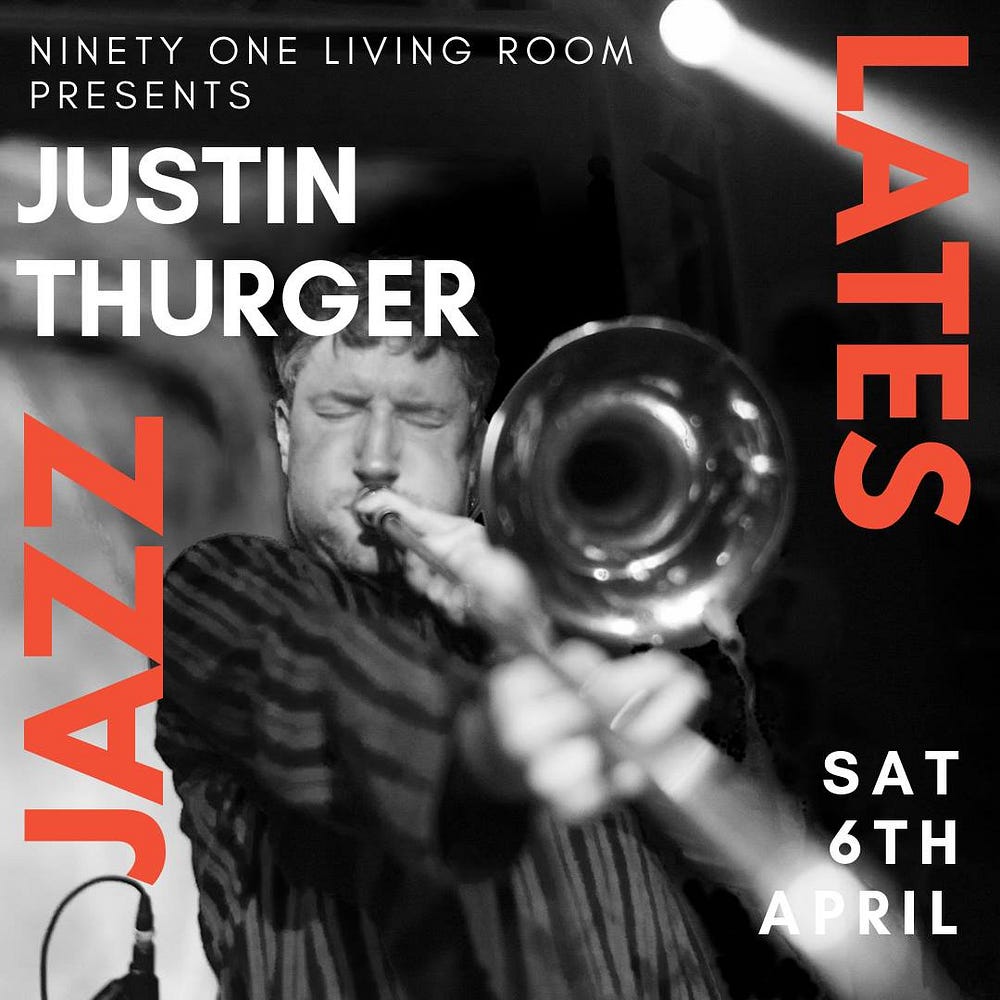
Ninety One Living Room
It's funny how religion was all around me when I was growing up in (supposedly religion-free) Cuba. My late grandmother was raised a Catholic and never lost the faith. My father was a (closeted) Freemason and my mother was not averse to dropping Christian-themed snippets of wisdom while bringing me up. All this punctuated by regular visits by a babalawo (a priest in the Yoruba religion) to my flat in Havana. Yet, I became an atheist and still consider myself one.
Except when it comes to music. Music (and art by default) is the closest I've come to becoming a worshipper of any kind.
This has been the case with Ninety One Living Room. This is a venue in east London that has converted me. To what it has converted me is not the point, the point is the unorthodox nature of the programme that has converted me.
Ninety One Living Room's Jazz Lates is the brainchild of Cuban musician and promoter, Orestes Noda. In its short incarnation (it only got going in autumn/winter 2018) it has shone a much-needed light onto some of the more exciting talent the UK's up-and-coming jazz scene has to offer.
Based in the heart of hipster east London, Jazz Lates has hosted some of the finest contemporary jazz musicians. Along the way it has also contributed to some unforgettable sessions. This is helped by a format in which musicians play two sets; the first one usually featuring their own material and the second one showcasing a mix of original songs and covers of jazz classics.
The beauty of this set-up is that at the start the audience is exposed to a sound with which they might not be familiar. This builds a sense of trust from the word go, which allows lesser-known acts to grow into their performance on stage. It also ensures that the band or singer's own compositions are the focus, instead of how they tackle yet another version of Dave Brubeck's Take Five.
That was certainly the case with Sahra Gure, a Berlin-born, London-based, vocalist who has taken London by storm. She performed at Ninety One Living Room recently. Still very young but already showing lots of confidence and pizzazz, Sahra has collaborated with the likes of Dele Sosimi (he of Fela Kuti fame) and Kishon Khan (who fronts the ground-breaking, hard-to-box-in, award-winning Lokkhi Terra).
Variety is another key element of Jazz Lates. For instance, Luna Cohen, originally from Belo Horizonte, Brazil, and now relocated to London, brought a harmony-rich repertoire. One that eschewed the usual middle-of-the-road, listener-friendly, Joao Gilberto-influenced, samba-lite sound and instead gave us a more challenging proposition. All this accompanied by soulful vocals and a magnetic stage presence.
Although music is the reason for us, jazz-lovers, to flock to Ninety One Living Room, there are also other components to factor in when assessing the venue's success. One is the atmosphere. The energy in the room is electric. Most punters are united by a shared appreciation of live jazz. Especially, the type that is unpretentious and at the same time intimate. The other element that makes Ninety One a win-win option for a Friday or Saturday evening (when most gigs take place) is the food. Although admission to the space is free, if you want to eat, you need to book a table. The grub is reasonable and good. They can certainly rustle up a decent burger and chips (there are both vegetarian and vegan options) and other dishes that are equally delicious.
Having been to Jazz Lates many times now, I have noticed a following that is almost of a cult nature. Ninety One Living Room has certainly racked up something of a football-like loyalty amongst jazz fans. This has helped promote the night as far and wide as possible, mainly through word of mouth.
While it is hard to deny that both Brick Lane and the surrounding area have suffered the effects of gentrification (as illustrated in the recent Akram Khan's documentary, Curry House Kid. Curry houses are closing down at an alarming rate), Jazz Lates, on the other hand, has provided a much-needed bridge between artists and their community. As I mentioned before, entrance is free and some of those performing on stage are locals, born within earshot of the Bow bells.
Variety is another key element of Jazz Lates. For instance, Luna Cohen, originally from Belo Horizonte, Brazil, and now relocated to London, brought a harmony-rich repertoire. One that eschewed the usual middle-of-the-road, listener-friendly, Joao Gilberto-influenced, samba-lite sound and instead gave us a more challenging proposition. All this accompanied by soulful vocals and a magnetic stage presence.
Although music is the reason for us, jazz-lovers, to flock to Ninety One Living Room, there are also other components to factor in when assessing the venue's success. One is the atmosphere. The energy in the room is electric. Most punters are united by a shared appreciation of live jazz. Especially, the type that is unpretentious and at the same time intimate. The other element that makes Ninety One a win-win option for a Friday or Saturday evening (when most gigs take place) is the food. Although admission to the space is free, if you want to eat, you need to book a table. The grub is reasonable and good. They can certainly rustle up a decent burger and chips (there are both vegetarian and vegan options) and other dishes that are equally delicious.
Having been to Jazz Lates many times now, I have noticed a following that is almost of a cult nature. Ninety One Living Room has certainly racked up something of a football-like loyalty amongst jazz fans. This has helped promote the night as far and wide as possible, mainly through word of mouth.While it is hard to deny that both Brick Lane and the surrounding area have suffered the effects of gentrification (as illustrated in the recent Akram Khan's documentary, Curry House Kid. Curry houses are closing down at an alarming rate), Jazz Lates, on the other hand, has provided a much-needed bridge between artists and their community. As I mentioned before, entrance is free and some of those performing on stage are locals, born within earshot of the Bow bells.
It is the curatorial savoir-faire of Orestes Noda (the man behind the Sambroso Sambroso Cuban-music-promoting brand) that we need to thank most of all. In conversation with the maestro recently he told me that the driving force behind whatever he did (like his Afro-Cuban-percussion-driven, Middle-Eastern-sound, electronica-powered project, Ariwo, for instance) was his curiosity. I am just a curious person, Mario, he told me, a smile beaming on his face.
That curiosity has given us performances by the likes of award-winning, musical collective, Kefaya (their name is Arabic for "enough"), Israeli-born, multifaceted and talented singer-songwriter Noga Ritter and ex-Bellowhead (remember them?) trombonist Justin Thurgur.
To this day I continue to call myself an atheist. Except when it comes to music. When it comes to music, venues like Ninety One Living Room and its weekly Jazz Lates convert me. To what they convert me is not the point, the point is the heterodox nature of what they offer. The stage is my altar and the audience my fellow worshippers.
All photos by Nadjib Le Fleurier
Sunday, 12 May 2019
Pieces of Me, Pieces of Havana
Funny how some
stories come about. In this one the main character has no name. Yet, that’s not
by design, but because I never did learn this fellow’s name. All I remember is
that he was as much a part of the urban landscape of my Havana as the famous El
Morro lighthouse. He was there as I manoeuvred my way through my late
teens in the city of my birth.
Now, reader, picture
this. I am seventeen or eighteen, tail end of the 80s. By now I have become a
regular at the Casa de la Cultura de Plaza, an arts centre bang on the
corner of Calzada and 8th Street, in the modern(ish) borough
of Vedado, Havama. Every (or every other) Tuesday evening, there is a jazz
session run by the famous Cuban musician, Bobby Carcassés. A
multi-instrumentalist by trade, Bobby is a one-man show. His stage presence is
magnetic. Whether playing trumpet or banging away on conga drums, this guy
renders the night its beating heart.
Casa de la Cultura de Plaza is also an institution. It is here that the
first Jazz Plaza Internacional was held only a few years ago. The name
itself conjures up memories: this is where I was converted to jazz by a friend
of mine; a night when I went from hating the genre to falling in love with it,
lost to the sound of Arturo Sandoval’s trumpet. This is where I have
increasingly become less self-conscious of being part of the jazz tribe. This
place is a sanctuary for a teenager who is beginning to doubt the political
system in which he is growing up.
And then, there is
him. Forgive me, reader, for I cannot provide a name. As I said before, I never
did learn this fellow’s name. But he stands out. Especially, when he puts his
flute to his lips.
Here we are, the jazz
faithful, watching Carcassés move from trumpet to congas and from congas to
bass. At some point, our friend strides on to the centre of the stage, flute in
hand. A miniature of a man, he sports an unremarkable short-sleeved shirt
(which he often wears, regardless of the weather). He mutters something under
his breath, perhaps a few words of self-encouragement, perhaps a prayer.
We all have our ways of evidencing our existence in the world. Some of us have what could be termed “big stage presence”. Others have to create one if they are to be noticed. As the ultimate showman, Bobby Carcassés has no problem flaunting his skills as a musician. He looks like a giant under the theatre lights. On the other hand, our friend, the flute-player is a different kettle of fish.
His is the kind of performance you remember down the years. Even if you can’t see him (sometimes the venue is packed to the rafters and people stand in front of you), you know he is there. First, it’s the stumble. He hardly ever walks straight. The drink has put paid to any notion of him regaining an upright position and steady gait. He takes his spot, facing the mike, facing, the crowd, facing the world. And then, he blows.
When he blows, you forget about the rest of the band. In fact, you float in and out of a music-made haze. For the next four or five minutes (I’m certain he would like his solos to last longer, but Bobby rushes him to the other side of the stage) you no longer live in a physical world, but a deeply-spiritual, flute-driven one.
One night I spot him
after the gig. He is nursing a pint, a very posh name for the Cuban perga.
This is a tall, cardboard-made cup that can hold up to a pint and a half of
lager. He is sitting, talking to other musicians. Every now and then someone
comes over and pats him on the shoulder. Well done, mate! That was top! He
smiles. A smile that accentuates the cracks on his face. Deep furrows running
on either side of his nose. Crow’s feet branching out of the corners of his
eyes. I, too, congratulate him. He grins. I mention that my father is a
pianist. He asks me for his name. When I tell him, his eyes light up. I know
Mario! He recalls sharing the stage with my father’s old band, Orquesta
Astral once. His speech is slurred but still intelligible. Under the starry
Cuban night two people, a generation apart, bridge the age gap through the
power of music.
He stands to leave
and keels over. I’ll take you home, I offer. At first he resists, but then, he
can see the deep-seated sense of duty towards men like him reflected in my
eyes. He puts his left arm around my shoulder and together we take off.
We walk a few hundred
yards before he suddenly breaks into song. Actually, it’s more like a hum. It
is a well-known bolero, and not one in which his instrument, the flute,
is usually required. His voice sounds like a plaintive cry and it hardly
cracks, which is strange, given the amount of drink he’s consumed. He is
certainly no singer, but at least he can harmonise fairly well. At some point
he turns his head towards me, expecting me to join him. Sorry, I don’t know the
words, I mutter. I’m into jazz, I say. And I’m still a rocker at heart, I
silently state in my head. It will be another two or three years before I
re-discover my Cuban roots and rekindle my love for bolero.
We walk for what
seems like a long time. I switch positions every couple of blocks. For some
reason he feels heavier on my left side than he does on my right one. This is
still my “skeletal” period, when being slim goes hand in hand with being a rock
fan, so I am definitely no pumped-up Atlas attempting to hold up the celestial
heavens. At some point, now walking on 17th St, past L St, Malecón-bound
he points to a door on our right. It’s an old block of flats, a couple of
storeys high. It is a rundown, derelict building that houses more families than
it has room for. The paint on the walls has long gone, the stairs have no
banister and the stench of urine reigns supreme.
The flute-player thanks me, dismisses me at the entrance and starts to climb up the stairs slowly. He looks so unsteady that I rush over and catch him just in time before he falls down. C’mon, I’ll take you to your room, I say. My voice surprises me. It sounds stern, reassuring and authoritative, despite my still-wet-behind-the-ears look. Luckily he lives on the first floor. His hunched form disappears in the darkness as soon as he opens the door. Uninvited, I step inside, too. My hands cannot detect the presence of a light switch. Don’t! He shouts. There’s no light switch, he adds. For a split second his inebriation fades and instead a moment of lucidity makes him bring two loose wires together on a nearby wall. I realise that in the same way I have been his reliable, human crutch on the way here, he has just saved me from getting electrocuted.
The light is so weak
that we might as well go back to being in the dark. It beams from a single,
bare, bulb in the middle of the room. Sorry, he slurs, as he scans my face.
It’s very damp, he adds, as if any confirmation is needed. In the eerie
half-light, ashen-coloured patches are dotted randomly on the walls.
Standing in the middle
of his room, the flute-player looks less like a musician and more like an actor
in a one-man show. His flat could not be a more fitting stage. The four-hob
cooker that sits silently in a corner. The fridge, almost empty and, thus, rendered
useless. The floor, riddled with stains. The bottles of rum under the sink, one
next to the other, some full, some half-full.
How can you live like
this? I ask him. I’m genuinely concerned. My late-adolescent self, although no
longer a true believer, still clings a little onto Fidel’s socialist utopia.
There should be help for you, I say, as I make (a futile, as it turns out)
attempt to tidy up his room. There is a part of me that’s raging. Perhaps,
because I have just seen this man playing his heart out on stage and now he
stands here, looking lost like a Cuban version of King Lear.
My naiveté makes him
laugh. Eventually his laughter transitions to hiccups-interrupted sobs. He
pulls a chair and sits on it. I perch up on a tiny corner of the only couch in
the room, avoiding the big stain covering much of it. I am the oldest of five
children, he starts. My father was an alcoholic and my mother found it
difficult to bring us all up. I married young myself but my wife couldn’t cope
with my drinking problem. I spent more time in the bar at El Conejito
restaurant than I did with her and our children. In the end, she got fed up and
left me. My children only see me when I pay them a visit. They never come
around. They’ve turned out OK, though.
I am overcome by an
uncomfortable mix of feelings: anger, sadness and hopelessness. I leave after
three quarters of an hour, aching with pain but relieved to be out of there.
Before I go, I promise him I’ll do something. What I’ll do, not even I know. I
just want to make things right. It’s only when I reach the bottom of the stairs
that I notice the saltiness on my lips. I’ve been crying all along.
But, to my shame, as
the days of my last year in college roll by, I begin to forget about the
flute-player. I start university in the autumn. Suddenly there are fewer
opportunities to go back to Bobby Carcassés’ jazz night. My time is taken up by
coursework and countless assignments. It is four years before I return to the Casa
de la Cultura de Plaza and it is not even for the same reason as before. By
now I am an amateur actor and member of a theatre troupe that rehearses at the
arts centre every week, not far from the space where the flute-player first
cast his music-made, hazy, magic spell on me.
One day, many years
after that night at the old man’s flat, I find myself behind the wheel in a
hired car with my wife and two children in Havana. I happen to drive by the Casa
de la Cultura de Plaza and unconsciously, I take the same route I did when
I accompanied the flute-player home on that occasion. Past L St, I point to
what is now a rubble-strewn, empty space in between two buildings (his came
down some time ago. A hurricane did the job). I tell my spouse and offspring
the old musician’s sad story. My daughter asks me what his name is. And I begin
to laugh. Because reader, it is funny how some stories come about. In this one
the main character still has no name.
Labels:
A Cuban In London,
creative writing,
Cuba,
Cubans in London,
Jazz,
music
Friday, 27 April 2018
Ariwo: where Afro-Cuba meets electronica
No wonder April was the cruellest month for T. S. Eliot. Just the temperature see-saw is enough to drive one bonkers. Perhaps the great poet, had he been alive, would have had a different view on the fourth month of the year, if only he had popped down to the Village Underground in Shoreditch to watch Ariwo on Monday 23rd April as part of the La Línea Festival. The quartet-turned-quintet on the night (saxophonist Binker Golding was a special guest) produced one of the most exhilarating and rousing sets I have seen for a long time.
More than mere fusion, Ariwo specialises in a hitherto little-explored musical phenomenon: that of the crossover of electronica and Afro-Cuban beats. Except for the Cuban maverick Edesio Alejandro in mid-to-late 80s Havana, this territory still remains semi-virgin. The band’s emphasis on sound (hence the name Ariwo, which translates as “noise” from Yoruba) is evident all the way throughout their set, rendering the concert a deep sonic experience.
With personal biographies boasting both musical virtuosity and critical acclaim, Monday night was always going to feel special. What nobody could foresee was how special it became with each song being lapped up by an ever-hungry and knowledgeable audience. Gahambar’s trumpet-driven, looped groove transported me back to Havana’s carnival, floats parading up and down the Malecón, feet and hips moving endlessly and beer flowing freely. Caldera presented us with the sight of Yelfris, stalking the stage like a panther, trumpet in hand and ready to launch into a mano a mano with Hammadi Valdes on drums. To Earth showcased Binker Golding’s mastery on saxophone; his drifting riffs a cross between Ornette Coleman and Steve Coleman and yet distinctive in their own complexity. The track Alafin brought a rousing solo on congas by Orestes Noda, not just one of the finest Cuban musicians in his own right, but also an outstanding promoter of Cuban culture in the UK and Europe. And holding it all together, whilst at the same time providing some of the more spiritually enriching melodies on the decks I’ve heard for some time, was Iranian-born Pouya Ehsaei. No mean feat when you have some of the better jazz cats in the UK today challenging each other and upping the ante to the nth degree. Not all tracks were dance-friendly, though. There were a few eyes-shut, fists-clenched, much-welcome meditative moments, too.
Yes, Tom, maybe, April is the cruellest month. But it needn’t be. Especially when you have Ariwo to warm up the most inclement of spring nights.
© 2018
Labels:
A Cuban In London,
Afro-Cuban,
Ariwo,
Cuba,
Cuban,
Cubans in London,
Jazz,
music
Monday, 13 November 2017
Remembrance Day, Jazz and Sex
It was quite apposite,
I thought as I walked away from the venue, that this concert was staged on
Remembrance Day. Earlier on, just a stone’s throw from the theatre, I had
watched the oldest procession in the country as part of the Annual Lord Mayor’s
Parade.
If Remembrance Day is about acknowledging the sacrifices made by the fallen and injured to secure peace, what better way to honour them than through music? In my opinion, the most universal of all the art forms and the one that gives us the succour we need in our darkest hours.
That was exactly what Chucho Valdés and Gonzalo Rubalcaba served to a musically-hungry audience at the Barbican as part of the London Jazz Festival. Two world-strutting behemoths with a Grammy collection that would be the envy of any well-established pianist, this was probably one of the must-see shows of the ten-day event. On the one hand, seventy-six-year-old Chucho, a pioneer and trailblazer of modern Cuban jazz, who with his band Irakere not only broke the mould of what Latin jazz was supposed to sound like, but also created new rules along the way. On the other hand, smaller in stature, but definitely not in craft, virtuoso Rubalcaba, who redefined jazz for a late 80s, 90s both Cuban and international audience.
In addition to all this, the experience, at least to me, of watching these two colossi was akin to what I could only describe as an aural orgasm. Yes, this post is certainly X-rated, my dears, so do not let your little ones read it (smiley, with a wink). By the way, all puns are intended. Yep, it is that kind of post.
Where to start? Maybe with the teasing, long, foreplay-like meditation at the beginning. It was as sensuous as it was deft. Delicate notes, exploring, probing, feeling. It was Rubalcaba who broke away first, his Steinway gathering pace as a patient and calm Valdés kept back and watched.
What followed thereafter can only be described with the language of love, or sex, if you prefer. There were sprints and sudden stops, polyphonic dialogues the two masters lunged at and percussive, quick-fire, repetitive tapping. A Cuban montuno became a climax-inducing piece. A “zapateo” was given a full big band revamp… minus the big band. The sound was big, all-encompassing. I looked both to my left and to my right. I saw plenty of open mouths and eyes, bobbing heads and shaking shoulders. Those twenty fingers on stage, eliciting occasional gasps and sighs in the audience, every time they travelled up and down the ivories and hit the desired spot. Would we have been down on the aisles grooving it had the concert not been at 2:30pm? You bet.
And just when you thought the concert was over, the encore came. Even the ”Duke” would have approved of Chucho and Gonzalo’s take on Caravan. It was full of razzmatazz and panache. The final stage of copulation and the post-coital ciggie all at once (I threw the latter in for good measure, I don’t smoke. But I’m feeling generous.). A tumbao-heavy version with a thirty- or forty-second Manteca riff halfway through. This was not a battle, in the same way sex should never be one. This was collaboration, banter, care, tenderness, playfulness, a bit of rough and calmness (at the end). My only gripe? Where was my second part? Where was the interval and follow-up? Because as many of us know, when it comes to sex, sorry, music, second parts tend to be as good as, if not better than the first ones.
© 2017
If Remembrance Day is about acknowledging the sacrifices made by the fallen and injured to secure peace, what better way to honour them than through music? In my opinion, the most universal of all the art forms and the one that gives us the succour we need in our darkest hours.
That was exactly what Chucho Valdés and Gonzalo Rubalcaba served to a musically-hungry audience at the Barbican as part of the London Jazz Festival. Two world-strutting behemoths with a Grammy collection that would be the envy of any well-established pianist, this was probably one of the must-see shows of the ten-day event. On the one hand, seventy-six-year-old Chucho, a pioneer and trailblazer of modern Cuban jazz, who with his band Irakere not only broke the mould of what Latin jazz was supposed to sound like, but also created new rules along the way. On the other hand, smaller in stature, but definitely not in craft, virtuoso Rubalcaba, who redefined jazz for a late 80s, 90s both Cuban and international audience.
![]() |
| The two masters together |
In addition to all this, the experience, at least to me, of watching these two colossi was akin to what I could only describe as an aural orgasm. Yes, this post is certainly X-rated, my dears, so do not let your little ones read it (smiley, with a wink). By the way, all puns are intended. Yep, it is that kind of post.
Where to start? Maybe with the teasing, long, foreplay-like meditation at the beginning. It was as sensuous as it was deft. Delicate notes, exploring, probing, feeling. It was Rubalcaba who broke away first, his Steinway gathering pace as a patient and calm Valdés kept back and watched.
What followed thereafter can only be described with the language of love, or sex, if you prefer. There were sprints and sudden stops, polyphonic dialogues the two masters lunged at and percussive, quick-fire, repetitive tapping. A Cuban montuno became a climax-inducing piece. A “zapateo” was given a full big band revamp… minus the big band. The sound was big, all-encompassing. I looked both to my left and to my right. I saw plenty of open mouths and eyes, bobbing heads and shaking shoulders. Those twenty fingers on stage, eliciting occasional gasps and sighs in the audience, every time they travelled up and down the ivories and hit the desired spot. Would we have been down on the aisles grooving it had the concert not been at 2:30pm? You bet.
And just when you thought the concert was over, the encore came. Even the ”Duke” would have approved of Chucho and Gonzalo’s take on Caravan. It was full of razzmatazz and panache. The final stage of copulation and the post-coital ciggie all at once (I threw the latter in for good measure, I don’t smoke. But I’m feeling generous.). A tumbao-heavy version with a thirty- or forty-second Manteca riff halfway through. This was not a battle, in the same way sex should never be one. This was collaboration, banter, care, tenderness, playfulness, a bit of rough and calmness (at the end). My only gripe? Where was my second part? Where was the interval and follow-up? Because as many of us know, when it comes to sex, sorry, music, second parts tend to be as good as, if not better than the first ones.
© 2017
Labels:
A Cuban In London,
Chucho Valdés,
Cuba,
Cuban,
Cubans in London,
Gonzalo Rubalcaba,
Jazz,
music,
Remembrance Day,
sex
Saturday, 6 May 2017
Thoughts in Progress
The first time I heard it I did not hear it at all. I was not prepared for it. I was too young and my parents did not warn me (I am going to blame my parents, especially my dad; I need to blame someone and parents always come in handy). It was not included in my folks’ small record collection. That is, if a bunch of random LPs bundled together in a corner of a minute one-bed flat can be called collection. If truth be told, years later, when I became a fan of it, I was surprised at its absence from our house. After all, my parents, especially my father, were music lovers. My dad was (is, still) a musician, composer and arranger. If someone was capable of appreciating it, it should have been him. Records by Roberto Faz, Orquesta Riverside and La Original de Manzanillo were amongst the few gems that were played at very special occasions on the old, blue record-player (a relic from pre-revolutionary days). These were big bands that had a lot in common with the Glenn Millers and Buddy Riches of this world. Yet, it did not feature at all chez moi. I do not think that it was unknown to them. I just think that they did not get “it”.
Most of the music played at home when I was a child, was of the dance variety. Later on, when my auntie brought home the first cassette player we ever had it was my cousin (big sister, really) who took over DJ-ing duties. However, we still did not tend to listen to Anglophone music very often.
"It", jazz, was surplus to requirements since its demographic was non-existent in our household at the time.
I went to the kind of college (high school for US readers) which defies conventions about Cuban education’s supposed equality. Though uniform-clad, we all knew where we belonged and which tribe was ours. I was in the scruffy, working-class, rock-faithful one. However, I had one good friend in the “Trova” (New Song) gang. Once I happened to be at his house. We were both playing tapes to each other. And there it was: the piercing sound of a trumpet, if not out of tune, out of everything I conceived at the time as “being in tune”. Seeing the frown on my face, my friend asked me: you don’t like Dizzy? Not wanting to be rude, I shrugged my shoulders. Inside, though, I swore never to return.
There is a certain built-in philistinism in the life of a teenager. It is easier, however, to notice it in others than in yourself. Aged fifteen, I listened to Dizzy Gillespie, Charlie Parker and Sonny Rollins at my mate’s and found their sound foreign and alien.
1989. I had just turned eighteen in November and was in my first year at university. What was I doing here at midnight, in the lounge where my cousin and her mum slept on foldable beds? What was that sound, low and mellow, coming out of the old, battered Russian radio? Was that the same piercing sound of the trumpet I had rejected fours year before? What had happened?
Let us rewind to the month of February of the same year. Let us go back to the corner of 23rd Avenue and L Street, one of the most popular corners in Havana. There I was, scruffily dressed as usual, in my rocker’s get-up: skintight jeans, oversized shirt and canberras (steel toe-capped Russian boots). I had no plans that night. My jazz-enthusiast friend from college happened to pass by. He was on his way to the Havana Jazz Festival. He had a spare ticket. Would I care to join him? I said no. He would not take no for an answer. After all these years, I think he saw something in me that night. Perhaps the face of the willing convert who refuses to believe he will be inevitably converted. He insisted. My replies became more elliptical and my reasons weaker.
Together we set off, Casa de la Cultura de Plaza-bound.
I would like to say that a full moon flooded the stage and that in the quiet of the night the sound of a saxophone triggered off my epiphany. The truth is rather more prosaic. It was very noisy when we got to the venue. We went inside, which was outside (the concert was outdoors) but then I went back inside.
I went back inside my own mind.
You see, jazz in Cuba did not have a tribe in those years. Correction, it had its own specific tribe, but it did not function like others. Rockers, salsa-lovers, trovas, pop-enthusiasts; they were distinctive. We wore uniforms; we wore our allegiance on our sleeves. Sometimes literally. Jazz, on the other hand, belonged to old people. That is how we saw it, us youn’ uns.
That night I, the refusenik, sat down. I had my speech ready. I imagined that as soon as the concert ended the words would spill out, of their own accord, without any push or shove from me: I only came because of you. No, I didn’t like it. I don’t like jazz. I don’t like jazz. I don’t like jazz.
And then he came on stage and played the trumpet. He, being Arturo Sandoval, Cuba’s foremost trumpeter.
I cried that night. Moreover, I cried, sitting next to my friend, amongst people I did not know. I cried, conscious that as a man I ought not to. That’s what they always said: men don’t cry. Well, I bloody well did. That was the effect Arturo Sandoval had on me that night: uncontrollable tears. But also joy. I had found yet another layer of my humanity. A metaphysical one perhaps; its abstract nature not fully decipherable prima facie. Whatever had caused that emotion, I had to get more of it.
That is how I found myself in November 1989, in the darkness of our small flat, listening to a radio DJ, more used to playing classical music than compositions by Gershwin and Coltrane. Every Wednesday night between midnight at 1am I would silently come to our lounge, move the radio to our dinner table and switch the kitchen light on. That was the start of my love affair with jazz. That was the gateway to Ella, Billie and Nina. Through CMBF, the aforementioned station, I learnt the difference between bebop and smooth jazz.
Years later, as an adult, and while trying to rationalise my strong, lachrymose reaction to Sandoval’s trumpet-playing all those years before, I came up with a theory for my conversion. My love of rock was partly responsible for my newfound passion. The musical patterns, or lack of them thereof, of a Yes or Pink Floyd track were not dissimilar to the unorthodox approach taken by the likes of Thelonius Monk or Ornette Coleman. At the heart of it, jazz musicians tried to break or bend the rules. My initial mistake, at my friend’s, was trying to understand a phenomenon I deemed “absurd” at the time. It is only when we stop trying that we become more open to music genres we do not comprehend.
In simple terms: my defences were lowered that February night in Havana at the jazz gig. Then, again, since then I have lowered my defences on purpose whenever I am confronted by the new. A couple of years ago it happened, when I saw Bill Laurance and Snarky Puppy at Jazz FM’s Love Supreme Festival. Not knowing what to expect, I prepared myself to welcome the unknown. The result was the sort of experience some people might call religious.
Jazz bares me. In its syncopated/discontinuous, uniform/wandering notes, lies a truth that calls to a part of me. It is there in Roberto Fonseca’s eclecticism and Aziza Mustafa Zadeh’s vocal range. It is there in Sarah Vaughan’s unforgettable voice and Alice Coltrane’s Vedic-influenced, mystical harp. I didn’t find jazz. Jazz found me.
© 2017
Next Post: “Food, Music, Food, Music, Food, Music... Ad Infinitum”, to be published on Wednesday 10th May at 6pm (GMT)
Most of the music played at home when I was a child, was of the dance variety. Later on, when my auntie brought home the first cassette player we ever had it was my cousin (big sister, really) who took over DJ-ing duties. However, we still did not tend to listen to Anglophone music very often.
"It", jazz, was surplus to requirements since its demographic was non-existent in our household at the time.
I went to the kind of college (high school for US readers) which defies conventions about Cuban education’s supposed equality. Though uniform-clad, we all knew where we belonged and which tribe was ours. I was in the scruffy, working-class, rock-faithful one. However, I had one good friend in the “Trova” (New Song) gang. Once I happened to be at his house. We were both playing tapes to each other. And there it was: the piercing sound of a trumpet, if not out of tune, out of everything I conceived at the time as “being in tune”. Seeing the frown on my face, my friend asked me: you don’t like Dizzy? Not wanting to be rude, I shrugged my shoulders. Inside, though, I swore never to return.
There is a certain built-in philistinism in the life of a teenager. It is easier, however, to notice it in others than in yourself. Aged fifteen, I listened to Dizzy Gillespie, Charlie Parker and Sonny Rollins at my mate’s and found their sound foreign and alien.
1989. I had just turned eighteen in November and was in my first year at university. What was I doing here at midnight, in the lounge where my cousin and her mum slept on foldable beds? What was that sound, low and mellow, coming out of the old, battered Russian radio? Was that the same piercing sound of the trumpet I had rejected fours year before? What had happened?
Let us rewind to the month of February of the same year. Let us go back to the corner of 23rd Avenue and L Street, one of the most popular corners in Havana. There I was, scruffily dressed as usual, in my rocker’s get-up: skintight jeans, oversized shirt and canberras (steel toe-capped Russian boots). I had no plans that night. My jazz-enthusiast friend from college happened to pass by. He was on his way to the Havana Jazz Festival. He had a spare ticket. Would I care to join him? I said no. He would not take no for an answer. After all these years, I think he saw something in me that night. Perhaps the face of the willing convert who refuses to believe he will be inevitably converted. He insisted. My replies became more elliptical and my reasons weaker.
Together we set off, Casa de la Cultura de Plaza-bound.
I would like to say that a full moon flooded the stage and that in the quiet of the night the sound of a saxophone triggered off my epiphany. The truth is rather more prosaic. It was very noisy when we got to the venue. We went inside, which was outside (the concert was outdoors) but then I went back inside.
I went back inside my own mind.
You see, jazz in Cuba did not have a tribe in those years. Correction, it had its own specific tribe, but it did not function like others. Rockers, salsa-lovers, trovas, pop-enthusiasts; they were distinctive. We wore uniforms; we wore our allegiance on our sleeves. Sometimes literally. Jazz, on the other hand, belonged to old people. That is how we saw it, us youn’ uns.
That night I, the refusenik, sat down. I had my speech ready. I imagined that as soon as the concert ended the words would spill out, of their own accord, without any push or shove from me: I only came because of you. No, I didn’t like it. I don’t like jazz. I don’t like jazz. I don’t like jazz.
And then he came on stage and played the trumpet. He, being Arturo Sandoval, Cuba’s foremost trumpeter.
I cried that night. Moreover, I cried, sitting next to my friend, amongst people I did not know. I cried, conscious that as a man I ought not to. That’s what they always said: men don’t cry. Well, I bloody well did. That was the effect Arturo Sandoval had on me that night: uncontrollable tears. But also joy. I had found yet another layer of my humanity. A metaphysical one perhaps; its abstract nature not fully decipherable prima facie. Whatever had caused that emotion, I had to get more of it.
That is how I found myself in November 1989, in the darkness of our small flat, listening to a radio DJ, more used to playing classical music than compositions by Gershwin and Coltrane. Every Wednesday night between midnight at 1am I would silently come to our lounge, move the radio to our dinner table and switch the kitchen light on. That was the start of my love affair with jazz. That was the gateway to Ella, Billie and Nina. Through CMBF, the aforementioned station, I learnt the difference between bebop and smooth jazz.
Years later, as an adult, and while trying to rationalise my strong, lachrymose reaction to Sandoval’s trumpet-playing all those years before, I came up with a theory for my conversion. My love of rock was partly responsible for my newfound passion. The musical patterns, or lack of them thereof, of a Yes or Pink Floyd track were not dissimilar to the unorthodox approach taken by the likes of Thelonius Monk or Ornette Coleman. At the heart of it, jazz musicians tried to break or bend the rules. My initial mistake, at my friend’s, was trying to understand a phenomenon I deemed “absurd” at the time. It is only when we stop trying that we become more open to music genres we do not comprehend.
In simple terms: my defences were lowered that February night in Havana at the jazz gig. Then, again, since then I have lowered my defences on purpose whenever I am confronted by the new. A couple of years ago it happened, when I saw Bill Laurance and Snarky Puppy at Jazz FM’s Love Supreme Festival. Not knowing what to expect, I prepared myself to welcome the unknown. The result was the sort of experience some people might call religious.
Jazz bares me. In its syncopated/discontinuous, uniform/wandering notes, lies a truth that calls to a part of me. It is there in Roberto Fonseca’s eclecticism and Aziza Mustafa Zadeh’s vocal range. It is there in Sarah Vaughan’s unforgettable voice and Alice Coltrane’s Vedic-influenced, mystical harp. I didn’t find jazz. Jazz found me.
© 2017
Next Post: “Food, Music, Food, Music, Food, Music... Ad Infinitum”, to be published on Wednesday 10th May at 6pm (GMT)
Labels:
A Cuban In London,
Arturo Sandoval,
Cubans in London,
Jazz,
music
Wednesday, 26 April 2017
Cubafonía by Daymé Arocena
Daymé Arocena’s outstanding second album, Cubafonía, can be summed up in two words: maturity and intensity. The former can be evidenced in her approach to song-writing and arranging. It is bold and with a take-no-prisoners attitude. Opener Eleggua combines multi-layered vocals with looped bass and horns. This is followed by a lively party number, La Rumba Soy Yo. Scatting her way through parts of the song, Daymé reminds the listener that she is a pretty good jazz singer in her own right.
The intensity is found throughout the record, mainly in the first six tracks. Lo Que Fue builds up slowly, starting with Daymé’s signature low rasp and ending with a Cuban descarga. Maybe Tomorrow (sung in English) deals with hope. Infectious Negra Caridad is a throwback to Cuba’s 1940s and 50s big band golden era. That a 24-year-old can hold her own belting tunes that the great late Celia Cruz took years to master, speaks volumes about Arocena’s standing in the Cuban musical scene at the moment.
The largest island of the Caribbean has always been a hotbed of creativity. However, for the last twenty-odd years the sounds coming out of my country of birth are more boundary-breaking and genre-defying than ever. Daymé joins Roberto Fonseca, Yusa, Danay Suárez and Telmary in the search for an identity which, although still recognisably Cuban, is not afraid to draw from other influences. A good example of this is Cómo, a ballad that would not be out of place in a record by Jill Scott. Performed confidently in both English and Spanish, the track shows off Arocena’s softer and more reflective side.
Special mention to Ángel, a minimalist composition (pared back percussion and piano) in which Daymé demonstrates a total vocal control. And also to the closer, Valentine (in which the chanteuse goes from English to French, to Spanish), a cute changüi number.
Cubafonía is a must-have for any jazz/Latin music aficionado. On the strength of this outing, I can only see a brighter future for Daymé Arocena.
© 2017
Next Post: “One-Minute Cycle Diaries”, to be published on Saturday 29th April at 6pm (GMT)
Labels:
A Cuban In London,
Cuba,
Cubafonía,
Cuban,
Cubans in London,
Daymé Arocena,
Jazz,
Latin,
music
Saturday, 18 February 2017
Thoughts in Progress
In Denzel Washington’s latest film, as both actor and director, there is an unusual supporting character. Fences features a baseball hanging by a thin rope in the back garden of the house shared by Washington’s Troy, his wife Rose (played by Viola Davis) and their son Cory (Jovan Adepo). Though inanimate, this ball serves as a witness to all the tribulations of this black family in post-war US. Hit every which way by Troy and his son Cory, this baseball is also a metaphor for how we shape our lives and how far we can go in determining our own destiny.
To me this baseball also reminded me of the recent US election. Before you close down your browser sending my post in the process to the land of oblivion, I would like you to give me a few minutes of your time. I am fully aware that we are all now pretty Trumped-out (his latest press conference being a case in point. How low can the guy go? Well, you ain’t seen the bottom yet, I suppose). The dust has now settled. To quote Leonard Cohen: “Everybody knows the good guys lost/Everybody knows the fight was fixed/The poor stay poor, the rich get rich”. Except that it was not a good guy who lost but a woman.
It would be arrogant of me to attempt to figure out why Hillary Clinton lost to a misogynist, racist, sexist and xenophobe. Plenty of opinion pieces have been churned out since November. But what I cannot stop thinking about is the reasons why her manifesto might not have struck a chord with most voters. To recap, Clinton lost the election, but won the popular vote. You could say that electoral changes are needed urgently in the US and you would be right. Yet, that would be like trying to hit that ball in Troy’s garden out of the park. That ball ain’t going nowhere. It’s still hanging on a rope.
Team Clinton bashed out a series of proposals and ideas that they thought would capture the public’s imagination. Overall, I thought, sitting comfortably on this side of the Atlantic Ocean, that they banked more on the Trump’s machine imploding than they themselves causing their explosion. Wrong. When your opponent realises that the ball you’re hitting is not moving, they grow stronger, not weaker. In order to get at Trump team Clinton had to untie that baseball and play real ball with it.
That would have meant casting your net much wider, beyond identity politics. I will not delve deep into identity politics in this post because I am in the process of drafting one up on the left and the case for/against identity politics. The truth is, however, that Clinton got caught up in a feminist/multicultural/gay-friendly agenda. Nothing wrong with that. But what is eating most Americans right now is where the next dime is going to come from.
When Barack Obama entered office in 2009, one of his first actions was to summon the top banking executives. Remember that this was post-2008-crisis and Wall Street was on its knees. The usual villains, politicians, had been given a short-lived respite, to be replaced by bankers. At that point president Obama could have asked for the moon to be delivered on a silver plate and every single person in the room would have coughed up enough money for a space expedition leaving the next day. But Barack dithered and bankers smelled blood. Instead of the far-reaching economic reforms that were needed then, all bankers got was a slap on the wrist and, guess what, within a couple of years, the multi-million-pound bonuses made a comeback.
This was the financial situation Clinton inherited as the Democrat front-runner. Never mind the fact that under Obama more jobs were created than during Bush’s eight-year reign. Never mind that Obamacare became an immediate safeguard for thousands, if not hundreds of thousands of families. The crux of the matter was still, a lot of rich people were getting richer and poor people poorer. Obama, for all his credentials as a liberal and the hope he represented, explicitly stated in that strikingly beautiful poster (remember?) was seen as part of the same machinery that had ceded ground to China and had allowed Putin’s Russia to start calling the shots on the international stage.
By the time Clinton entered the frame, the electorate was jaded. Cynical voters are the toughest to turn around, especially if one of the candidates comes from what could be assumed to be a dynasty (Bill Clinton served two terms as president. Chelsea Clinton has already been discussed as a possible candidate for 2024 or 2028). It was not Clinton’s fault that the election went to Donald. It was, as I said at the start, a combination of factors. One of them was the Democrats focusing on policies that might have gone down well with the already-converted but did very little to enthuse the fence-sitters, the refuseniks, the hard-to-reach.
Donald Trump is not infallible and he definitely is not unbeatable. I seriously doubt he will be re-elected in 2020. But, and this is an important “but”, for the Democrats to win the White House again, they will have to untie that baseball and take it to places where they are rarely seen, engaging voters whom they barely know or whose views they disparage. Clinton got the vote of mainly poor, young, Latin and black women (four different categories in themselves). Trump’s camp was the beneficiary of chiefly white women from a working-class background and rural areas.
An average baseball game lasts nine innings. We are barely in the bottom of the first. Hitting a baseball on a string makes good practice but it is not the real game. The real game is won by the team with most runs. Already team Trump has made a few gaffes. What Democrats need to do now is to capitalise on those players who have reached base. What’s the next step: steal or sacrifice bunt, or both? How about going for the big swing? Whatever happens, it is about putting runs on that scoreboard. Untie that baseball and hit it hard. Just hit it as hard as you can.
© 2017
Next Post: “Of Literature and Other Abstract Thoughts”, to be published on Wednesday 22nd February at 6pm (GMT)
To me this baseball also reminded me of the recent US election. Before you close down your browser sending my post in the process to the land of oblivion, I would like you to give me a few minutes of your time. I am fully aware that we are all now pretty Trumped-out (his latest press conference being a case in point. How low can the guy go? Well, you ain’t seen the bottom yet, I suppose). The dust has now settled. To quote Leonard Cohen: “Everybody knows the good guys lost/Everybody knows the fight was fixed/The poor stay poor, the rich get rich”. Except that it was not a good guy who lost but a woman.
It would be arrogant of me to attempt to figure out why Hillary Clinton lost to a misogynist, racist, sexist and xenophobe. Plenty of opinion pieces have been churned out since November. But what I cannot stop thinking about is the reasons why her manifesto might not have struck a chord with most voters. To recap, Clinton lost the election, but won the popular vote. You could say that electoral changes are needed urgently in the US and you would be right. Yet, that would be like trying to hit that ball in Troy’s garden out of the park. That ball ain’t going nowhere. It’s still hanging on a rope.
Team Clinton bashed out a series of proposals and ideas that they thought would capture the public’s imagination. Overall, I thought, sitting comfortably on this side of the Atlantic Ocean, that they banked more on the Trump’s machine imploding than they themselves causing their explosion. Wrong. When your opponent realises that the ball you’re hitting is not moving, they grow stronger, not weaker. In order to get at Trump team Clinton had to untie that baseball and play real ball with it.
That would have meant casting your net much wider, beyond identity politics. I will not delve deep into identity politics in this post because I am in the process of drafting one up on the left and the case for/against identity politics. The truth is, however, that Clinton got caught up in a feminist/multicultural/gay-friendly agenda. Nothing wrong with that. But what is eating most Americans right now is where the next dime is going to come from.
When Barack Obama entered office in 2009, one of his first actions was to summon the top banking executives. Remember that this was post-2008-crisis and Wall Street was on its knees. The usual villains, politicians, had been given a short-lived respite, to be replaced by bankers. At that point president Obama could have asked for the moon to be delivered on a silver plate and every single person in the room would have coughed up enough money for a space expedition leaving the next day. But Barack dithered and bankers smelled blood. Instead of the far-reaching economic reforms that were needed then, all bankers got was a slap on the wrist and, guess what, within a couple of years, the multi-million-pound bonuses made a comeback.
This was the financial situation Clinton inherited as the Democrat front-runner. Never mind the fact that under Obama more jobs were created than during Bush’s eight-year reign. Never mind that Obamacare became an immediate safeguard for thousands, if not hundreds of thousands of families. The crux of the matter was still, a lot of rich people were getting richer and poor people poorer. Obama, for all his credentials as a liberal and the hope he represented, explicitly stated in that strikingly beautiful poster (remember?) was seen as part of the same machinery that had ceded ground to China and had allowed Putin’s Russia to start calling the shots on the international stage.
By the time Clinton entered the frame, the electorate was jaded. Cynical voters are the toughest to turn around, especially if one of the candidates comes from what could be assumed to be a dynasty (Bill Clinton served two terms as president. Chelsea Clinton has already been discussed as a possible candidate for 2024 or 2028). It was not Clinton’s fault that the election went to Donald. It was, as I said at the start, a combination of factors. One of them was the Democrats focusing on policies that might have gone down well with the already-converted but did very little to enthuse the fence-sitters, the refuseniks, the hard-to-reach.
Donald Trump is not infallible and he definitely is not unbeatable. I seriously doubt he will be re-elected in 2020. But, and this is an important “but”, for the Democrats to win the White House again, they will have to untie that baseball and take it to places where they are rarely seen, engaging voters whom they barely know or whose views they disparage. Clinton got the vote of mainly poor, young, Latin and black women (four different categories in themselves). Trump’s camp was the beneficiary of chiefly white women from a working-class background and rural areas.
An average baseball game lasts nine innings. We are barely in the bottom of the first. Hitting a baseball on a string makes good practice but it is not the real game. The real game is won by the team with most runs. Already team Trump has made a few gaffes. What Democrats need to do now is to capitalise on those players who have reached base. What’s the next step: steal or sacrifice bunt, or both? How about going for the big swing? Whatever happens, it is about putting runs on that scoreboard. Untie that baseball and hit it hard. Just hit it as hard as you can.
© 2017
Next Post: “Of Literature and Other Abstract Thoughts”, to be published on Wednesday 22nd February at 6pm (GMT)
Labels:
A Cuban In London,
Cubans in London,
Jazz,
Lalah Hathaway,
music,
Snarky Puppy
Saturday, 5 November 2016
Thoughts in Progress
Lately I have been wondering if the mark of true masculinity can be found in a role allocated to us, men, that we are supposed to fulfill, or if such concept is devoid of meaning at all. My deliberations have come as a result of recent discussions on the role men play in society nowadays.
A key component of male identity has long been a bread-winning mentality. Whether of the blue- or white-collar type, the masculine professional mind-set has usually seen itself as the one that brings home the bacon. Yet, in recent decades the male influence has somewhat dwindled. The collapse of industries up and down the UK, changes in the workplace (with a corresponding higher female intake), the emergence of a zero-hour-contract culture, the swift transition from a manufacturing economy to a consumer-led, service-based one; these are all factors that have dealt a heavy blow to the male ego.
Gendered identities have been a comfort zone for many (although, it appears women were not consulted too often on them) for centuries. Whilst it might have made sense in a world riven with unknown dangers in ancient times – and I, for one, am not condoning such attitudes – it makes less sense in the modern era. We live in a non-binary world now and this has proved to be challenging for the older male generation.
Nevertheless, we still live in a world governed by my gender. Wherever you turn, media, politics, business, you will see men calling the shots. However, once you start cutting through the different strata of society you notice that men no longer perform traditional roles. Moreover, they often can be found in positions that used to be thought of as “women’s jobs” (education and childcare being two). This has created a conflict between men and the rest of society (including women and institutions) and within men themselves, as they struggle to understand their place on planet Earth in the 21st century. The typical power-related behaviour displayed by the male of the species has had to adapt quickly to a market-driven economy that favours customers over gender.
Is there, then, a crisis of masculinity? Yes is the answer, if we ascribe ourselves only to a man-centric viewpoint. No, if we believe (as I do) that masculinity is not defined by athletic prowess or pub-closing-time brawls. Male identity does not exist in a vacuum, even if that has been the long-held opinion. What has happened in the last two decades, from the rise of LGBT activism, to the ever-increasing female influence on society, is that the penis-shaped, Berlin-Wall of masculinity has come tumbling down. Notions of gender and sexuality are not as strict as they used to be. More women are employed now than ever (even if they still make less money than their male counterparts performing the same jobs). Straight men have shaken off the shackles of orthodox masculinity.
It follows then, that indeed there could be a men’s crisis, but only insofar as this crisis stems from a pre-conceived idea of what a man is meant to be and do. Once you eliminate the rigid notion of masculinity you are left with a very loose and hard to categorise definition. Not that there has not been a backlash against these changes. You only need take a look at Donald Trump across the pond and Nigel Farage in Britain to see male power in retreat and fighting back. Its targets are the usual suspects: the politically correct brigade, “feminazis”, “bloody wimin”, gays (with a new addition, “trans activists”) and “unmanly men”. It will be interesting to see how this head-to-head battle pans out in years to come.
In the meantime, those of us who have decided that masculinity means more than talking about women in a degrading way, have embraced openness and acceptance as a means to assert our humanity. This is a much bigger concept than maleness and far more inclusive.
© 2016
Next Post: “Urban Diary”, to be published on Wednesday 9th November at 6pm (GMT)
A key component of male identity has long been a bread-winning mentality. Whether of the blue- or white-collar type, the masculine professional mind-set has usually seen itself as the one that brings home the bacon. Yet, in recent decades the male influence has somewhat dwindled. The collapse of industries up and down the UK, changes in the workplace (with a corresponding higher female intake), the emergence of a zero-hour-contract culture, the swift transition from a manufacturing economy to a consumer-led, service-based one; these are all factors that have dealt a heavy blow to the male ego.
Gendered identities have been a comfort zone for many (although, it appears women were not consulted too often on them) for centuries. Whilst it might have made sense in a world riven with unknown dangers in ancient times – and I, for one, am not condoning such attitudes – it makes less sense in the modern era. We live in a non-binary world now and this has proved to be challenging for the older male generation.
Nevertheless, we still live in a world governed by my gender. Wherever you turn, media, politics, business, you will see men calling the shots. However, once you start cutting through the different strata of society you notice that men no longer perform traditional roles. Moreover, they often can be found in positions that used to be thought of as “women’s jobs” (education and childcare being two). This has created a conflict between men and the rest of society (including women and institutions) and within men themselves, as they struggle to understand their place on planet Earth in the 21st century. The typical power-related behaviour displayed by the male of the species has had to adapt quickly to a market-driven economy that favours customers over gender.
![]() |
| I've got a softer side, you know? |
Is there, then, a crisis of masculinity? Yes is the answer, if we ascribe ourselves only to a man-centric viewpoint. No, if we believe (as I do) that masculinity is not defined by athletic prowess or pub-closing-time brawls. Male identity does not exist in a vacuum, even if that has been the long-held opinion. What has happened in the last two decades, from the rise of LGBT activism, to the ever-increasing female influence on society, is that the penis-shaped, Berlin-Wall of masculinity has come tumbling down. Notions of gender and sexuality are not as strict as they used to be. More women are employed now than ever (even if they still make less money than their male counterparts performing the same jobs). Straight men have shaken off the shackles of orthodox masculinity.
It follows then, that indeed there could be a men’s crisis, but only insofar as this crisis stems from a pre-conceived idea of what a man is meant to be and do. Once you eliminate the rigid notion of masculinity you are left with a very loose and hard to categorise definition. Not that there has not been a backlash against these changes. You only need take a look at Donald Trump across the pond and Nigel Farage in Britain to see male power in retreat and fighting back. Its targets are the usual suspects: the politically correct brigade, “feminazis”, “bloody wimin”, gays (with a new addition, “trans activists”) and “unmanly men”. It will be interesting to see how this head-to-head battle pans out in years to come.
In the meantime, those of us who have decided that masculinity means more than talking about women in a degrading way, have embraced openness and acceptance as a means to assert our humanity. This is a much bigger concept than maleness and far more inclusive.
© 2016
Next Post: “Urban Diary”, to be published on Wednesday 9th November at 6pm (GMT)
Wednesday, 19 October 2016
Killer Opening Songs (Giant Steps by John Coltrane)
Intensity, high-tempo and rhythmic mastery. Just three of the many words that could apply to John Coltrane’s Killer Opening Song “Giant Steps”, from the same-titled album. If smoothness and subtlety were the mots d’ordre on Blue Note’s release Blue Train, then Atlantic Record’s offering Giant Steps’ were chaos and improvisation. Beautiful chaos and improvisation, K.O.S. hastens to add.
In terms of tenor solo statements, Giant Steps was outstanding. From the outset there was a clear intention from John Coltrane to break away from the foot-tapping sound he had helped create on Miles Davis’ timeless classic Kind of Blue. Saxophone, double-bass, piano and drums kick off together. Rather than a mere time-keeping ensemble piece, Paul Chambers’ bass acts as another level of tonal exploration. This serves both pianist and saxophonist well as their sound swells to unreal levels.
The Killer Opening Song is the gateway to other six musical gems such as Countdown’s blistering, sonic explosion, swinging Syeeda’s Song Flute and self-searching, simple and yet emblematic Naima.
Whereas Blue Train was a sort of bridge between the recent Charlie Parker-driven bebop sound and the smoother Miles Davis’ approach, Giant Steps was the sign of things to come in jazz. More experimental and more outré, this was Coltrane at his peak as a bandleader and composer. Once again, all this thanks to the Killer Opening Song.
© 2016
Next Post: “Thoughts in Progress”, to be published on Saturday 22nd October at 6pm (GMT)
Wednesday, 24 June 2015
Killer Opening Songs (On the Sunny Side of the Street)
Unlike the owner of this blog, Killer Opening Songs digs summer. It is one of its favourite seasons. Summer means optimism, creativity and bonheur. And since the summer solstice has just happened K.O.S. wanted to honour it by bringing you one of those tunes that will leave you licking your lips and tapping your feet. It might even throw a “99” in it. Flake optional.
Dizzy Gillespie’s stature as a trumpeter grew a few more inches with the release of the must-have album Sonny Side Up in 1957. The record not only showed his credentials as one of the most innovative and organically creative trumpet-players in jazz history, but it also demonstrated he had the chops to be an excellent bandleader. At the heart of the success of Sonny Side Up is the Killer Opening Song, On the Sunny Side of the Street. If you are looking for a summer melody, look no further than this starter. It has everything in it. Sonny Rollins and Sonny Stitt (yes, those two Sonnies) at the top of their game. In fact, the pair slugs it out nicely on the album. In regards to Rollins, this is the period that saw him jump from Blue Note to Metro-Jazz to Contemporary to other labels. As for his opposite number, Sonny Stitt, the slightly older and more seasoned gun-slinger, he had already built a reputation for demolishing up-and-coming cats. The icing on the cake is the spirit-lifting lyrics which Mr Gillespie delivers with gusto and panache: "Grab your coat and get your hat/Leave your worries on the doorstep/Life can be so sweet/On the sunny side of the street". Now, where's my 99?
After a funky, groovy start, second track The Eternal Triangle, brings in a saxophone-driven bebop-themed zesty number. This is followed by Killer Opening Songs’ favourite track, After Hours; a sultry blues that will make you snap your fingers and tap your feet throughout the whole track and beyond. The opening chords are by none other than Ray Bryant (yes, that Ray Bryant! Miles Davis’ Ray Bryant, Art Blakey’s Ray Bryant, Coleman Hawkins’ Ray Bryant) whose beautiful and deft piano-playing serves as a safety net above which all sorts of rhythmic pirouettes are performed.
Last song, I Know That You Know, provides a workout for bassist Tommy Bryant (Ray Bryant’s brother) and drummer Charlie Persip who have to keep up with the pace set by Gillespie, Stitt and Rollins. Great album Killer Ending Song and super Killer Opening Song make Sonny Side Up a smoker of a record to have. And if this is not the sound of summer, K.O.S. does not know what it is. Even if still the owner of this blog refuses to acknowledge the season.
© 2015
Next Post: “Saturday Evenings: Stay In, Sit Up and Switch On”, to be published on Saturday 27th June at 6pm (GMT)
Wednesday, 3 December 2014
Killer Opening Songs (Song For My Father by Horace Silver)
Kind of Blue is the go-to album for people who are first introduced to jazz. Whether initially averse to the genre or curious about its intrinsic musical patterns, neophytes are usually given Miles Davis 1959 masterpiece as a way to join the ever-expanding jazz community. That is why Kind of Blue has remained such a powerful symbol of the coolness of jazz.
This is not fair on other equally ground-breaking records, however. There’s Alice Coltrane’s harp-driven, lyrical and sublime third album, Ptah, the El Daoud, Mary Lou Williams’ groovy and blues-infused Free Spirits and ass-kicking (pardon K.O.S.’s French) Horace Silver’s 1965 LP Song forMy Father.
Killer Opening Songs will concentrate on the third of these three albums tonight. Inspired by a trip Horace Silver made to Brazil, Song for My Father was one of Blue Note’s signature records from the sixties. Silver’s mother was of Irish and black descent, and his father was originally from Cape Verde. The influence of this ethnic mix on Horace is what makes Song for My Father such an enjoyable record.
Equally, part of what makes the record successful is the Killer Opening Song, the title song that is dedicated to Horace’s father, John Tavares Silva. This melody is quintessential hard bop with a funk element added in for good measure. Uncharacteristically it is not the binomial of drum and bass that kicks off the track but Horace’s deeply, swinging, groovy piano accompanied by tenor saxophonist Joe Henderson (although in the clip below both trumpet and saxophone come in at the same time at the outset). The feel of not just the Introductory Track with Murder Tendencies but of the whole album is one of ebullience and optimism. Calcutta Cutie has an air of eeriness about it whilst Que Pasa is a foot-tapping, catchy little number.
Now that Christmas is almost here, maybe it’s time to revisit your gift lists (if you are in the habit of making them up) and include this gem of a record. After all, it is not only Miles Davis’ Kind of Blue that has the knack to express the coolness of jazz, but also Horace Silver’s Song for My Father. And once again it is partly down to the Killer Opening Song.
© 2014
Next Post: “Sunday Mornings: Coffee, Reflections and Music”, to be published on Sunday 7th December at 10am (GMT)
Sunday, 13 July 2014
Sunday Mornings: Coffee, Reflections and Music
This is my last post before my customary summer break. When thinking of what to write today the words of Melvyn Bragg in a recent article in the New Statesman came to mind: “The rituals of walking are few but often seem essential. The garb, the route, the recognition of old favourites – trees, prospects, rivers. Once you are in the rhythm of those rituals what happens, to me at any rate, is that a non-self takes over. A non-drug-induced drift. And an expanding sense of inner freedom. And there are the inklings of sensations. Intimations? Shapes that could become thoughts that do not seem to obey mechanical laws. Maybe in time we will see that in fact they do. Maybe everything we feel will be settled by mathematics. But what if not? Might the known unknown of the universe and the brain surprise us all? And will we then lose this invaluable feeling of inner liberty?”
I’ve included the whole paragraph to provide a bit of context. Writer, broadcaster and veteran presenter of the long-running South Bank Show (for those who don’t know who he is) Melvyn Bragg was musing about rituals, prayers, God and religion. He was, at the time of writing this article, in Cumbria. North West England. There were other submissions as well. From former Archbishop of Canterbury, Rowan Williams, to philosopher Julian Baggini, contributors (and contributions) were varied and thought-provoking. It was Melvyn’s column, though, that really got to me.
I recognise that state he described. I have been under the influence of that “rhythm” he pondered over. My “non-self” has come out a few times as well. I call this the “gear” moment. As in all the “gears” slotting into place, well-oiled, fully functional, forward-motion gears, propelling, whatever device they are part of, onwards. Also, in my case like Melvyn’s, this is a “non-drug-induced” experience. Who needs drugs to appreciate David Gilmour’s guitar solo at the beginning of Shine On You Crazy Diamond, or the rich Cornish coastal landscape, or the majestic Big Ben, in the early evening after a whole day of rain in the company of someone you care about? Who needs drugs?
This is transcendence, not in a pantheistic way, but in a human one. As I mentioned before, the column Melvyn penned was part of a bigger debate on how we supposedly fill this “faith-shaped hole in modern life”. Whatever your take on God, religion and the like (and there are many, luckily), what can’t and shouldn’t be denied is that the moments Mr Bragg described above begin and end in the person, the human.
An anecdote is called for here to explain my line of thought. Almost a month ago the teacher of an Afro-Brazilian class in north London which I had been attending, rang me up out of the blue. He was stranded in Greece and needed someone to cover his workshop that night. I must admit that I felt flattered to be asked as up to then I had been only a student and found him to be a very engaging, knowledgeable and skilful tutor. He told me that I could work with the two percussionists who normally play in the class. Already this posed a challenge. Although Africa gave Brazil and Cuba similar cultures our dance traditions are very different. Throughout the day I could hardly concentrate on my work. My mind was on the workshop I was meant to deliver that night.
I took a gamble. I chose a type of dance from the extensive Afro-Cuban repertoire that resembled somewhat some of the moves this teacher had taught before and which could be executed without much difficulty by the two drummers. At the same time I added my own spin. After meeting and agreeing with the musicians on what rhythm they were going to play I felt more confident to go ahead with the idea I had in mind. It’s good to work with professionals who know what they are doing and these two drummers were top class. I began the warm-up.
After a few stretching and abdominal exercises with yogic influences, I asked the students to close their eyes and to stay where they were. I, then, went up to each of them and gave them the same instructions one by one, individually: Keep your eyes closed, don’t open your eyes, I want you to move to the music you are hearing now on the spot. I don’t care about technique, experience or anything, just move on the spot, move in whatever way you are feeling the music because this is your music, nobody else’s, it’s yours, you own it, so you dance it, you move to it. It was a full house, twenty plus students, but the “gears” were slotting into place. They were all moving in unison but in their own idiosyncratic way. This was what Melvyn Bragg called in his column “an expanding sense of inner freedom”. For them and for me. These people were free because they were not looking at each other. They couldn’t even look at themselves in the big mirrors the dance studio had. I had eliminated any source of inhibition and self-doubt that could have jeopardised my class and in its place brought in a primary sense of being. Being through a rhythm they had never heard. Being a human being in communion with the beautiful art of Afro-Cuban dance.
What happened that night was magical. Recalling it now in the context of the New Statesman’s question on faith, I realise that he answer is, at least to me: there is no faith-shaped hole, there’s just a reclaiming of transcendence from a human perspective. We have come full circle, and this time we have the language to explain the phenomenon. But even if we can’t explain it, we can still feel it.
I am of the belief that our ancestors came across moments of pure magic, of “gears”. But lack of linguistic resources rendered these cavewomen and men almost speechless. Hence the tendency to export their (potential) analytical powers to forces that dwelled outside them. That way they didn’t have to worry about the answers. Sometimes, however, one doesn’t need to have any answers. Sometimes there are no answers. Sometimes there cannot be any answers, for the methods to get to this truth have not been invented yet, or we haven’t discovered them.
My answer to Melvyn’s question on the “known unknown of the universe and the brain” is, yes, it will surprise us. But it won’t mean the end of our inner liberty. If anything, we will acquire an extra dimension. An extra human dimension. Cheerio, see you in the second week of September. I hope you enjoy the music today. Music with which to unlock your non-self and inner freedom.
© 2014
Photo taken by the blog author
Next Post: “Sunday Mornings: Coffee, Reflections and Music”, to be published on Sunday 14th September at 10am (GMT)
I’ve included the whole paragraph to provide a bit of context. Writer, broadcaster and veteran presenter of the long-running South Bank Show (for those who don’t know who he is) Melvyn Bragg was musing about rituals, prayers, God and religion. He was, at the time of writing this article, in Cumbria. North West England. There were other submissions as well. From former Archbishop of Canterbury, Rowan Williams, to philosopher Julian Baggini, contributors (and contributions) were varied and thought-provoking. It was Melvyn’s column, though, that really got to me.
![]() |
| The Big Ben: you don't need drugs to appreciate its beauty |
This is transcendence, not in a pantheistic way, but in a human one. As I mentioned before, the column Melvyn penned was part of a bigger debate on how we supposedly fill this “faith-shaped hole in modern life”. Whatever your take on God, religion and the like (and there are many, luckily), what can’t and shouldn’t be denied is that the moments Mr Bragg described above begin and end in the person, the human.
An anecdote is called for here to explain my line of thought. Almost a month ago the teacher of an Afro-Brazilian class in north London which I had been attending, rang me up out of the blue. He was stranded in Greece and needed someone to cover his workshop that night. I must admit that I felt flattered to be asked as up to then I had been only a student and found him to be a very engaging, knowledgeable and skilful tutor. He told me that I could work with the two percussionists who normally play in the class. Already this posed a challenge. Although Africa gave Brazil and Cuba similar cultures our dance traditions are very different. Throughout the day I could hardly concentrate on my work. My mind was on the workshop I was meant to deliver that night.
I took a gamble. I chose a type of dance from the extensive Afro-Cuban repertoire that resembled somewhat some of the moves this teacher had taught before and which could be executed without much difficulty by the two drummers. At the same time I added my own spin. After meeting and agreeing with the musicians on what rhythm they were going to play I felt more confident to go ahead with the idea I had in mind. It’s good to work with professionals who know what they are doing and these two drummers were top class. I began the warm-up.
After a few stretching and abdominal exercises with yogic influences, I asked the students to close their eyes and to stay where they were. I, then, went up to each of them and gave them the same instructions one by one, individually: Keep your eyes closed, don’t open your eyes, I want you to move to the music you are hearing now on the spot. I don’t care about technique, experience or anything, just move on the spot, move in whatever way you are feeling the music because this is your music, nobody else’s, it’s yours, you own it, so you dance it, you move to it. It was a full house, twenty plus students, but the “gears” were slotting into place. They were all moving in unison but in their own idiosyncratic way. This was what Melvyn Bragg called in his column “an expanding sense of inner freedom”. For them and for me. These people were free because they were not looking at each other. They couldn’t even look at themselves in the big mirrors the dance studio had. I had eliminated any source of inhibition and self-doubt that could have jeopardised my class and in its place brought in a primary sense of being. Being through a rhythm they had never heard. Being a human being in communion with the beautiful art of Afro-Cuban dance.
What happened that night was magical. Recalling it now in the context of the New Statesman’s question on faith, I realise that he answer is, at least to me: there is no faith-shaped hole, there’s just a reclaiming of transcendence from a human perspective. We have come full circle, and this time we have the language to explain the phenomenon. But even if we can’t explain it, we can still feel it.
I am of the belief that our ancestors came across moments of pure magic, of “gears”. But lack of linguistic resources rendered these cavewomen and men almost speechless. Hence the tendency to export their (potential) analytical powers to forces that dwelled outside them. That way they didn’t have to worry about the answers. Sometimes, however, one doesn’t need to have any answers. Sometimes there are no answers. Sometimes there cannot be any answers, for the methods to get to this truth have not been invented yet, or we haven’t discovered them.
My answer to Melvyn’s question on the “known unknown of the universe and the brain” is, yes, it will surprise us. But it won’t mean the end of our inner liberty. If anything, we will acquire an extra dimension. An extra human dimension. Cheerio, see you in the second week of September. I hope you enjoy the music today. Music with which to unlock your non-self and inner freedom.
© 2014
Photo taken by the blog author
Next Post: “Sunday Mornings: Coffee, Reflections and Music”, to be published on Sunday 14th September at 10am (GMT)
Labels:
A Cuban In London,
Bill Laurance,
Cubans in London,
groundUP,
Jazz,
music,
Snarky Puppy
Subscribe to:
Posts (Atom)