Showing posts with label movies. Show all posts

Monday, 4 June 2018

Thoughts in Progress

I went to see a Polish movie recently at the ICA. It was called “Beyond Words” and at first sight it dealt with an issue close to my heart: a father-and-son relationship. Yet, as I thought about the feature and peeled the layers off it after I left the Institute of Contemporary Arts, I realised that there was an overarching theme: immigrants and how they see their host country. And how their host country sees them, which is just as important. Mirrors do talk back.

Michael is a successful Polish-born lawyer. Yet for all his perfect-sounding German that makes him blend in easily in 21st-century Berlin, he is still looking for a real identity. This identity conundrum is further complicated when a man, claiming to be his father, turns up out of the blue. The two of them spend some days together trying to work out trust-related issues. Michael’s father, a Polish bohemian with very unorthodox ideas about life in general, brings chaos into his son’s otherwise orderly life. Whilst at the beginning we see resistance from Michael to this onslaught, little by little he begins to relent and finally surrenders to the only link he has to his native Poland. At the same time there is another narrative going on. One which is just as important as the father-son puzzle.  This subplot involves Michael and his employer and friend, German-born Franz. Asked by the latter to defend an African poet applying for asylum, Michael refuses on the grounds that the case is a lost one. In reality, it is Michael’s prejudices against the African man that stop him from taking his case on. In an ironic and sad twist, Franz reveals a hitherto hidden side of him. He doesn’t see Michael as an equal. Just like Michael doesn’t see the African man as an equal.

The film made me question my “Cubanness”. After 20-plus years in the UK, how much of Cuba is there still in me and how much of Britain has filtered through and settled in? As soon as I got home I scanned my new place for signs of “Cubanness”. Other than music and books, all I could find was a Cuban flag on the side of a jar of Cuban honey, kindly gifted to me by my friend D. For some strange reason I also suddenly recalled some lines from Paul Muldoon’s poem “Cuba”, in which he never mentions my country, but does allude to Kennedy, “nearly an Irishman/So he’s not much better than ourselves”.

This question of identity and belonging, to me, was the main theme in “Beyond Words”. The (almost) demand on an immigrant to conform to a pre-established concept of authenticity. This concept can be laid down either by the immigrant themselves, or the host country, or both, following a centuries-old unwritten agreement whereby we do not deviate from our pre-assigned roles. Yet, what happens when we do? This is exactly what makes Michael’s father run away from his son when the latter cracks a well-known Polish joke. The words are Polish and so is the wisecrack but the man telling them… what is he? Michael’s father is not the only person estranged from something or someone. Michael himself is estranged from his culture. I don’t think I have reached that point yet, nor do I think I ever will, but certain attitudes do set me apart from what would normally be labelled “Cuban culture”. And yet, isn’t there an incongruity in that very term? For what is culture but an ever-shifting, always-forward-looking phenomenon? Am I to be only salsa, sun and sand? Who decided that?

Later on as I fell asleep the last image that flashed in my mind was that of a pebble thrown with intent and purpose by a child across a lake. The stone left a choreography of uniformly-shaped outward-fanning ripples.

Who are you? Who am I?

© 2018

Wednesday, 12 October 2011

Bamako (Review)


I still remember the first and only time I watched the movie Waiting for Happiness, Abderrahmane Sissako's meditation on migration. It was at an African film festival I had curated and managed and the feature was amongst a number of obscure submissions over whose reception I was fretting somewhat. Yet, I, and the rest of the audience were blown away by the director's subtle images of sand and sea, juxtaposed with a feeling of otherness and a state of limbo.

Whereas in Waiting for Happiness the setting is all whitewashed buildings and almost total tranquillity, Bamako is the opposite. The movie centres on a court case in the Malian capital where the plaintiff seems to be Africa itself and the accused are the World Bank, the IMF and other corporations. Beyond the premises there's the hustle-bustle that characterises an African city. However, to say that the court case is at the centre of the film is somewhat misleading because there are other subplots that are as interesting as, if not more interesting than, the main one. There're the marriage problems between a nightclub singer and her unemployed husband. There's also a photographer, who works part-time for the police, and who records marriages and funerals, choosing the latter over the former because they're 'more real'. There's even an out-of-this-world (and some might think totally unrelated) scene where people are watching a spaghetti western called Death in Timbuktu, starring Danny Glover and the Palestinian film-maker Elia Suleiman.

Sissako's achievement is in presenting an Africa that speaks with its own voice and in its own language. His intention is to celebrate the dignity of those who have very little but without displaying any kind of self-pity. At the same time he avoids the usual pitfalls of laying all the blame at the doors of those who are better off. During the court proceedings we hear stories from both sides. Some of the witnesses are very articulate and others aren't. The magic of the film lies in the combination of an off-the-cuff approach (Sissako has a reputation for hiring non-actors) and a calculated and sophisticated one, especially when it comes to the photography and setting.

The result is a stunning film where the viewer is challenged to come up with his or her own answers and where the protagonist, Africa, gets one of those rare chances to speak its mind. Another one not to miss.

© 2011

Next Post: “Sunday Mornings: Coffee, Reflections, Music and Dance”, to be posted on Sunday 16th October at 10am (GMT)


Wednesday, 20 July 2011

Lilya 4-Ever (Review)


Whenever immigration is discussed in the UK, the following words and/or phrases are wheeled out: illegal, scroungers, taking our jobs, many, too many, no space, burden on the NHS/education sector. Less attention is paid to what makes some people up sticks and move to another country, sometimes travelling in a boat on dangerous waters, or in the back of a lorry.

That was one of the reasons why I welcomed Lukas Moodysson's film "Lilya 4-Ever". Because he dares to go where few directors will. Moodysson's feature packs a mighty punch. Like a scientist, he dissects the living, breathing (post-socialist) contemporary Russian society and reveals its bleak reality.

Lilya (Oksana Akinshina) is a vivacious sixteen-year-old girl who lives with her mother in a poverty-stricken, derelict Russian town. Her mother meets a man through a dating agency and together they decide to emigrate to the States. At the beginning, Lilya is pretty much part of her mother's long-term plans but soon that changes and she is left behind. The situation takes a turn for the worse when Lilya's auntie asks her to move to another flat which is in a worse condition than the one in which she lives now. Lilya befriends a local eleven-year-old boy, Volodya (Artyom Bogucharsky), who has a crush on her and together they get up to all kinds of pranks. About the same time, she also falls in with the wrong crowd and ends up meeting a smooth-talking young guy in a club, who promises her that he can take her away to Sweden where she will have the opportunities that are denied to her in her native Russia. What Lilya doesn't suspect, nor has she the ability to, is that her "boyfriend" is a pimp who procures prostitutes for a vast network of clients in European countries. He doesn't even travel to Sweden with her.

Once in the Scandinavian nation Lilya is locked up in a flat on her own where she has to perform all kinds of unspeakably sexual acts. And it is here, in civilised, liberal Sweden where she meets her horrible fate.

Lilya 4-Ever is, above all, a film about betrayal. Lilya's mother betrays her daughter. Lilya, then, betrays Volodya when she meets Andrei (the pimp) and leaves her friend behind in an attempt to improve her life in Sweden. Lilya is consequently betrayed by Andrei, too. At the same time all characters in the movie are let down by society, both the Russian and Swedish, for their role in it amounts to no more than a mere cameo.

But the movie is also about the failure of the "big Soviet dream". One should never build a polity on utopias. One of the reasons why the socialist panacea failed - and continues to fail, in the few countries that are left - was that it created an illusion it couldn't deliver. The effect of this mirage was alienation amongst its younger members with the concomitant outcomes: drugs, alcohol and prostitution. For Lilya, read the youngsters jumping over the Berlin Wall in '89, or the Cuban rafters in '94, or the lone man facing the Chinese tanks in Tiananmen Square. The squalor in which Lilya lives is not just the result of deficient post-Soviet economic policies, but also of erstwhile blind, centralised, political bureaucracy.

I admit that I rented the movie from Lovefilm without having an inkling about the director's work. It turns out that his two previous films have been comedies. Talk about career change!

Moodysson forces us to confront certain truths that are not at all comfortable. Who cleans the floors of the schools our children attend, before the little ones even get there? Who prepares the salads that wind up on the shelves of our local supermarkets? Who picks our fruit'n'veg? Who keeps the sex and porn industry afloat? And on top of that they have to put up with yet another sanctimonious Daily Mail headline demonising them.

There's no doubt that Lily-4-Ever is a tough movie to watch. But it is also riveting. It's cinematography at its best. The music is very good, ranging from hardcore metal to soft, harmonious melodies. The scenes where Lilya is repeatedly raped by different men are shot from her perspective, thus rendering her ordeal more palpable. The dreamlike sequence where Volodya's spirit appears to Lilya would have been thought kitsch in any other context. But coming on the back of yet more physical and mental pain for the protagonist, they are beautiful to watch. As well as painful. The photography reminded me a little of Ken Loach with its no-holds-barred documentary-like approach.

This is another must-see movie. And I, for one, will be now looking up Moodysson's comedies on Lovefilm. Just to balance a bit, you know.

© 2011

Next Post: “Sunday Mornings: Coffee, Reflections and Music”, to be published on Sunday 24th July at 10am (GMT)


Wednesday, 6 July 2011

The Secret in Their Eyes (Review)


"You said life". It's not very often that such a short sentence, like tonight's post's opener, is loaded with so much meaning. But it would be fair to say that this laconic statement is the axis on which the plot of the Oscar-winning Argentinian thriller "El Secreto de sus Ojos" ("The Secret in Their Eyes") revolves. The 'life' to which that phrase refers can be interpreted in two ways.

The first one is pretty direct. It's the movie's main narrative. In mid 70s, pre-junta, Argentina, an attractive schoolteacher is raped and murdered. The resulting investigation sees young policeman Benjamín Espósito (Ricardo Darín) working with - and falling for - Cornell-graduate lawyer Irene Menéndez Hastings (Soledad Villamil). After a false start following a confession beaten out of two immigrants by one of Benjamín's rivals, the real killer is finally apprehended. He turns out to be a long-time acquaintance of the victim's and obsessed with her. But corruption is rife and the perpetrator is soon freed. Thus, justice is far from done. This situation, which takes up to thirds of the movie, is important to understand the meaning of the opening phrase of this post. A phrase, which is the last line in the film, uttered by the deceased woman's husband to a puzzled - but understanding - Benjamín.

The second reading is more subtle and concerns three characters. One is the aforementioned widower, who, on figuring out the identity of his wife's killer, goes regularly to the same train station, week after week, hoping to come face to face with the criminal. This stakeout becomes his only life, since his beloved one's has been taken. The other two characters for whom 'life' means exactly that are the two leads. Twenty-five years after the murder and whilst writing a novel about it, Benjamín pays a visit to his old boss. He realises immediately that his feelings for her have not abated, but, on the contrary, intensified. The way they look at and desire each other reminded me somehow of the end of "Love in the Time of Cholera" when Florentino Ariza tells Fermina Daza that "after 53 years, seven months and 11 days and night, my heart was at last fulfilled. And I discovered, to my joy, that it is life and not death that has no limits." In Benjamín and Irene's case it's, fortunately, only half that time.

There are other elements that make "The Secret in their Eyes" an excellent film. The supporting cast, headed formidably by Guillermo Francella (Benjamín's alcoholic sidekick), with Pablo Rago as the grieving husband and Javier Godino as the psychopathic killer, is exquisite to watch. The photography is superb, especially the interior shots and the flashbacks. There's plenty of humour, too, which is very welcome in a film laden with so much suffering.

But to me it's the Dostoevskian puzzle at the centre of the film that matters most. Should life mean life? And, should we use violence to retaliate when we've been wronged and justice has not been done? I think that each case should be treated individually, but in Juan José Campanella's film I find myself replying affirmatively to the opening sentence of this review: yes, life means life.

© 2011

Next Post: “Sunday Mornings: Coffee, Reflections and Music”, to be published on Sunday 10th July at 10am (GMT)


Wednesday, 9 March 2011

London River (Review)


It's hard to envisage someone trying to create or make sense of beauty when confronted with an atrocity. More so when the barbaric act to which this person bears witness is the consequence of the worst terrorist attack a city's ever seen perpetrated against it. It, then, shouldn't be hard to understand the initial reluctance by writers, musicians, film-makers and artists in general, to address the events that befell London in the summer of 2005.

7/7 will always be etched in our collective memory, not just because of the eerie, iterative numerical combination, but also because it happened a day after the British capital had been confirmed as the host of the 2012 Olympic Games. Suddenly the mood in the streets went from elation to despair.

However, in the end artists did respond, not only to the bombings, but also to some of the events that took place in the wake of the terrorist attack: the shooting of the Brazilian Jean Charles de Menezes two weeks after 7/7, for instance. Nitin Sawhney's eighth studio album, 'London Undersound', aimed to celebrate and comment on London and its cultural diversity. A memorial to the victims of the carnage was unveiled in Hyde Park in 2009. And film made its own contribution, too, in the form of Chris Morris's satire 'Four Lions' and 'London River', directed by the French director Rachid Bouchareb. The latter, in particular, is a movie about tragedy and loss as much as it is about prejudice and ignorance.

Elisabeth (another five-star performance by Brenda Blethyn) is a farmer on the idyllic island of Guernsey. Her daughter has recently moved to London and seems to be doing well, although mum is unaware of what her offspring's daily life entails. Watching the events of 7/7 unfold on TV, Elisabeth calls her daughter to check she is OK. After leaving countless messages on her mobile and getting no response, she finally takes a train London-bound, leaving her brother in charge of her farm. Upon her arrival in the British capital she comes face-to-face with the havoc wreaked by the terrorist attacks. 'Missing' posters are put up on walls outside underground station by relatives who still don't know the whereabouts of their loved ones. Police stations are stretched to the full by the many enquiries from members of the public. Hospitals can barely cope. The only place Elisabeth resists visiting is the morgue. She still has hopes of finding her daughter alive.

Elisabeth is joined in her search rather fortuitously by African immigrant worker Ousmane (a fine turn by Malian actor Sotigui Kouyaté) although she rejects him at first. Ousmane is looking for his son, whom he hasn't seen since he was six. At some point he fears his boy might have been one of the suicide bombers, or at least had something to do with the atrocity. When Ousmane finds a photo of his son with a group of friends, he immediately recognises Elisabeth's daughter whose 'missing' poster he'd seen before. What follows after is a thoughtful and mature meditation on 7/7 and human relations.

The performances are superb, but so are both the direction and script. In just under an hour and a half, Bouchareb constructs a credible story and craftly allows its main characters to take ownership of it. His is a hands-off approach that benefits greatly from the expertise of Kouyaté and Blethyn. The script is rich in nuances (Elisabeth's conversations in French with Ousmane are a joy to behold and put paid to the notion that all Brits are monolingual. They're not). After the initial froideur from Elisabeth towards Ousmane, the barriers come down. At the centre of the story is the tale of two human beings who are not dissimilar to one another: they both work the soil, Elisabeth as a farmer, Ousmane as a forest worker in France; they have both grown apart from their children, in her case she is surprised to find out that her daughter has taken up Arabic (her daughter and Ousmane's son are also a couple). Ousmane, on the other hand, feels guilty for not having been present in his son's life.

In the end, though, even with the tragic dénouement that engulfs both parents, we're left with the idea that when faced with events like 7/7 it's our common humanity which should/will prevail. Precisely the kind of message that the victims of the London bombing would have liked to hear. This is another must-see film.

© 2011

Next Post: ‘Sunday Mornings: Coffee, Reflections and Music’, to be published on Sunday 13th March at 10am (GMT)


LONDON RIVER trailer from Trinity Films on Vimeo

Tuesday, 2 November 2010

La Lectrice/The Reader (Review)


I'm sure that you will agree with me, my lovely book-worm readers, that going to bed with Atwood or Rushdie is one of those pleasures in life that cannot be measured. Before you jump to the wrong conclusion, that of me advocating licentious literary displays, let me come clear. I'm referring to the simple act of reading in bed. Or being read to, which is better.

That's the premise at the centre of "La Lectrice" (The Reader), a French film from 1988 that I watched again recently. Constance (played superbly by Miou-Miou) is in bed with her boyfriend, to whom she is reading a novel aloud. Inspired by the book's main character, Marie, who hires her services out as a reader, Constance decides to do something similar. From here onwards fiction and reality combine together seamlessly to create a tale where the boundaries of what's
reality combine together seamlessly to create a tale where the boundaries of what's genuine and what’s not very often confuse the viewer.

Constance/Marie’s clients include a disabled young man, a general’s widow with strong communist leanings, a company director who can’t handle social interaction very well and a lascivious judge. Along the way we’re taken on a journey through some of literature’s classical works. Tolstoy, Duras and Sade are just some of the authors who cameo in the film.

La Lectrice” poses various questions: is reading a solitary activity or can it be shared? If shared, do you have to possess a particular voice to read to another person or an audience, or will your ordinary one do just as well? Can being read to change the way we interact with people?

The film benefits from a strong direction (Michel Deville) and leads, but occasionally it affects a false tone of sophistication. On top of that some of the nude scenes are gratuitous, in my opinion, especially after the playful atmosphere at the beginning. Saying that, Constance/Marie’s decision at the end of the film to refuse to read to the lascivious magistrate and his friends a passage from Sade’s “120 Days of Sodom”, is evidence that Miou Miou’s character is anything but a puppet.

I would recommend that you watch this film with a group of like-minded friends who are as keen on reading as you are, preferably on a Saturday night. Who knows, you might even arrange a reading session after!

© 2010

Next Post: “Let’s Talk About…”, to be published on Thursday 4th November at 11:59pm (GMT)

Tuesday, 28 September 2010

Jesus of Montreal (Review)

When I was younger I got involved in various drama projects. One of them was led by an independent producer and director who had gained certain notoriety in the alternative cinema scene in Havana. We used to rehearse every Sunday morning and although our work never made it to the screen - to my chagrin - I enjoyed the sessions because they were extremely liberating. A key exercise was to remember a sad episode from our childhood, act on it and come out of it as quick as possible. I was good at the recalling and reliving it but less effective at the letting go of it.

The same happened to Lothaire Bluteau's character in "Jesus of Montreal".

If with "The Decline of the American Empire", Canadian director Denys Arcand gave us a comprehensive view of Montreal's chattering classes, their inhibitions and repressions (especially of a sexual nature), with "Jesus of Montreal" he turned the seaport city into a version of Gethsemane.

A Catholic priest (Fr. Leclerc, played by Gilles Pelletier) asks an actor (Daniel, played by Lothaire Bluteau) to update a Passion play he's been staging for many years. The piece feels somewhat dated and the prelate thinks that a fresher approach will help his church gain new worshippers. Daniel's approach is, for want of a better word, unconventional. At some point he even hints that Jesus's biological father is a Roman soldier who leaves Palestine soon after. The production is very successful but it falls foul of the higher church authorities who order Fr. Leclerc to stop it. With the boundaries of art and reality becoming more and more blurred, Daniel's life starts mirroring that of his character, Jesus of Nazareth. The final scene in a Montreal underground station is harrowing, if also poetic.

'Jesus of Montreal' is the type of film that you have to watch more than once in order to understand the symbolisms in it. Having had very little religious knowledge when I first saw it, I was more impressed with the performances and photography than with the parallels between Christ's tribulations and that of the actors', especially Daniel. This time around I looked closer and the various allegorical themes were easier to read: Daniel wrecking the film equipment at a commercial when he thinks that his fellow thespian Mireille is being taken advantage of is reminiscent of the cleansing of the temple; Daniel's apperance before a judge echoes Jesus' appearance before Pontius Pilate. And then there's the ending, which, depending on your taste, can be uplifting or schmaltzy. After his death, three of Daniel's organs, including a heart and an eye, are transplanted into three other patients. The message is clear: Daniel has become Christ the Redeemer.

But beyond this cinematographic hagiography, Denys Arcand builds a credible tableau vivant where he explores human acts and emotions such as hypocrisy, intolerance and optimism. Far from being a celibate priest, Fr. Leclerc is sleeping with Constance, one of the actresses in the production. The fine, sharp line that runs between left-of-field art and its commercial cousin is straddled more than once; one of the actors that joins the ensemble makes ends meet by providing voice-overs for hardcore pornographic films. After the church authorities demand that the play be abandoned, Daniel and his troupe disobey the orders from above and attempt to perform it regardless of the consequences, which in this case are fatal for Daniel.

With the recent papal visit to the UK, the Catholic Church has come under scrutiny once more and its stand on various issues such as women, marriage, homosexuality and child sexual abuse has been debated more openly. It was a perfect (albeit unplanned, I swear), time to watch again this cinematic gem.

© 2010

Next Post: 'Alvin Ailey Dance Theatre (Review)', to be posted on Thursday 30th September at 11:59pm (GMT)


Thursday, 9 September 2010

Los Amantes del Círculo Polar/The Lovers of the Arctic Circle (Review)


Destiny and chance play a big part in our lives, even if those of a more realistic and pragmatic disposition, like me, would claim that most of the time we shape our own fate. Still, there's always space for what-ifs scenarios and that's exactly what Basque director Julio Medem had in mind when he made 'Los Amantes del Círculo Polar' ('The Lovers of the Arctic Circle')

Otto and Ana are two children in the same school who end up sharing more than an educational institution. Their names are palindromes and after Otto's parents separate, his father begins a relationship with Ana's mother. Thus, Otto and Ana's paths are brought together by fate. Fortuity is also present when their childhood friendship becomes adolescence romance. But since they have grown up together like brother and sister, their relationship has to be kept secret. Finally, after cheating on him for a long time with a colleague at work, Ana's mother leaves Otto's father. This causes a rift between the latter and his son. Otto flees home and later becomes a pilot. Ana moves to Lapland, within the Arctic Circle, where she can watch the midnight sun she had often discussed with Otto when they were children. Otto, meanwhile, on finding out Ana's whereabouts, flies to Lapland to meet her.

'Los Amantes del Círculo Polar' deals with themes already explored by other Medem's vehicles. On this blog we've had 'Vacas' and very soon I will be writing about 'Lucía y el Sexo' ('Sex and Lucia'). In 'Los Amantes del Círculo Polar', the chances one encounters in life and how to take full advantage of them, love, death and destiny are recurring themes.

As befits the title, the action is circular. Ana sees the spectre of his dead father when she first lays eyes on Otto. Otto looks for Ana years after he's left home. One of the better moments in the film is when Otto, still unlucky in his search, sits in a public square behind Ana, as she considers breaking up with her current boyfriend. Of such fleeting instants is real life made. It's no coincidence (or maybe it is?) that Ana's life ends under the wheels of a coach. Under a vehicle with four circular frames.

As a director, Medem has always enjoyed good performances from his leads and supporting cast. 'Los Amantes del Círculo Polar' continues in the same tradition with Najwa Nimri and Fele Martínez excelling in their roles as young Ana and Otto respectively. Nancho Novo, who had already worked with Medem before in 'La Ardilla Roja' ('The Red Squirrel'), is excellent playing the father. Maru Valdivielso completes the quartet with a great turn as the mother.

Julio Medem's fourth feature film tells a good story based on the what-ifs life throws at us. It is another visual gem from the Basque director which I recommend to all cinema lovers.

© 2010

Next Post: 'Sunday Mornings: Coffee, Reflections and Music', to be posted on Sunday 12th September at 10am (GMT)


Thursday, 22 July 2010

The Squid and the Whale (Review)


Sophie: Yeah. I mean, it's gross when he turns into the bug, but I love how matter of fact everything is.
Walt Berkman: Yeah, it's very Kafkaesque.
Sophie: [
She looks at him oddly. She laughs] Cause it's written by Franz Kafka.
Walt Berkman: Right. I mean, clearly.


Disfunctionality usually thrives in the most trivial and inconsequential situations. When teenager Walt Berkman lies to his girlfriend about him having read 'Metamorphosis', his words are the latest porky in a long string of untruths, starting with him appropriating Pink Floyd's 'Hey You', performing it at a festival in his school and trying to pass it off as his own composition. But then, as the saying goes, 'like father, like son'.

'The Squid and the Whale' deals with the disfunctionality created by the estrangement of two parents in modern New York. University professor Bernard Berkman (played superbly by Jeff Daniels) is a successful lecturer but his writing career is in the doldrums. His wife, Joan (Laura Linney excels in her role), on the other hand, is gaining ground with her literary efforts. Their separation brings about a conflict that pits their two sons against each other with unforeseen consequences. Adolescent Walt sides with his father and starts copying him. Meanwhile, younger sibling Frank stays with his mum and his behaviour goes from erratic to abnormal.

Based on director Noah Baumbach's true childhood experiences, 'The Squid...' is a film that touches upon various subjects with subliminal messages galore. The beginning of the movie is soundtracked by young Walt intoning Roger Waters' immortal words: 'Hey you, out there in the cold/Getting lonely, getting old/Can you feel me?'. It's a way of letting us know that angst will be part of the film's emotional landscape. Frank gets into trouble for using semen to smear the books in his school library as well as a locker. That could well be a response to her mother Joan starting an affair with Frank's tennis teacher. Or it could be Frank's way of reacting to his father's snobbish personality.

The movie benefits from an intelligent script, a balanced mix of comedy and drama, sound direction and good performances from both leading and supporting actors. Furthermore, 'The Squid...' is part of a crop of films about the Big Apple, that are filling the gap left behind by director Woody Allen, when he upped sticks and decided to use Europe as his headquarters. We've had 'Synecdoche, New York' and before that 'Being John Malkovich', two vehicles, amongst others, that sought to make sense of existential quandaries. The difference is that in 'The Squid...' Jeff Daniels' Bernard Berkman comes across as a jealous, self-indulgent, chauvinistic has-been, as opposed to a troubled soul like Philip Seymour Hoffman's Caden Cotard or John Cusack's Craig Schwartz.

An acerbic divorce, sexual misbehaviour and plagiarism. It makes one not want to be part of the Berkman clan, yet, how delightful to be given the opportunity by director Noah Baumbach to become a fly on the wall and enjoy the spectacle. I hope you will, too.

© 2010

Next Post: 'Sunday Mornings: Coffee, Reflections and Music', to be published on Sunday 25th July at 10am (GMT)


Thursday, 8 July 2010

Yella (Review)


What if we try to escape from our past by running away into another dimension? What if that dimension is literally figurative instead of a construct of our minds? And what if that past caught up with us later in the unlikeliest of scenarios?

These are some of the questions that German director Christian Petzold tries to answer with 'Yella', a pessimistic, grim drama, which centres on the life of a woman (Nina Hoss) whose life is turned upside down when she attempts to leave her hometown for a new life and job with better prospects. Tragedy strikes when her violent ex-husband turns up on the day she is leaving, gives her a lift to the station and then tries to kill her by driving his car into a near river. Yella manages to escape and eventually she reaches her destination but discovers the job she was promised was a hoax. It doesn’t exist. It is in these circumstances that she meets Phillip, an unscrupulous investor, whose main agenda is to roam the country looking for smaller companies of which he can take advantage. Yella turns out to be a formidable sidekick and soon the two of them become a lethal duet, cheating their way into and out of deals. Parallel to this, Yella begins to experience small paranormal moments where she can hear voices or sounds from her past. Her former husband, thought dead, also starts to stalk her and when her relationship with Phillip moves from the professional to the amorous, her ex- makes an unwelcome appearance.

'Yella' is a visually striking film, that moves from a desolate East Germany - where the leading character's hometown is located - to the western side of the country. The landscape is a combination of urban modernity and vast fields.The movie also delves into the still unsolvable issue of East vs West. In recent years, German cinema has addressed this topic in flicks such as: ‘Good Bye Lenin!’ and ‘The Lives of Others’. The former is a comedy whilst the latter is a faithful and painful account of the role the Stasi played in hundreds of thousands, if not millions, of Germans. 'Yella', by contrast, could be considered a metaphysical thriller, more in the mould of the 'X Files'. However, I couldn't help noticing that it is the East German woman who gets corrupted by the West German ruthless businessman.

Having come out in 2007, 'Yella' is also quite a prescient movie in that it foretells the crisis that venture capitalism unleashed on an unsuspecting world a year later. The world of hedge funds, acquisitions and mergers is well illustrated, mixing moments of witty facetiousness (for instance, when Phillip explains to Yella the theory of the crossed-fingers-hands-behind-the-neck position) with instants of utter desperation which wouldn't look out of place in a David Lynch or Ken Loach film.

And the ending? I usually include spoilers in my film reviews. But not this time. You have to watch the ending. The first time I saw it I was confused. The more I thought about it afterwards, and the more I analyse it now with the benefit of hindsight, the more I've come to the conclusion that the ending is the icing on the cake of a powerful critique of modern society's self-harming tendencies.

© 2010

Next Post: 'Sunday Mornings: Coffee, Reflections and Music', to be published on Sunday 11th July at 10am (GMT)


Thursday, 17 June 2010

El Violín (The Violin) - Review

Rebellion comes in different guises. There are those who take to the mountains to fight government forces. There are others who carry out terrorist attacks on city centres. Others choose more peaceful methods, like marching down a main thoroughfare bearing placards that proclaim their political allegiance. But then you have the type of rebel who defies stereotypes, mainly by staging his or her protest in more circumspect and inconspicuous ways.

This last category is the one that fits Don Plutarco, the leading character of 'El Violín', a Mexican film directed by Francisco Vargas. Shot entirely in black and white, this elegant film tells the story of a family caught up in the maelstrom of politics and insurgence. In an unnamed Latin American country - although most people seem to agree that the nation depicted in the film is Mexico and the period sketched out is that of the peasants' revolts in the 70s - the government is trying to contain a rural upheaval. The first scene shows a group of soldiers raping a peasant woman. Only later do we realise that she might be the wife of one of the main characters in the movie. The government forces loot, torture and murder as they wish. The rebels fight back but suddenly find themselves severed from their cache of ammunition. Don Plutarco (superb performance by Ángel Tavira, who I believe did not have much thespian experience before), a reputable, elderly patriarch, comes up with an ingenious way to smuggle the ammo under the soldier's noses: his violin case. He is helped, inadvertently, by the captain of a small platoon based at a checkpoint near Don Plutarco's farm. The officer (played excellently by Dagoberto Gama) asks the old man to play the violin to him. In exchange Don Plutarco is allowed to tend to his corn crop. But his intentions are not of the agricultural kind. Buried in the soil is his desired goal: the bullets for the insurgents.

In 'El Violín' Francisco Vargas builds a cogent narrative bereft of cheap sentimentality or tacky, romantic discourses. Although the soldiers are shown at their worst, the captain displays signs of a sensitive, artistic bent, probably masqueraded by his army life. In a poignant scene where the officer confides in Don Plutarco some of the dreams he had when he was younger he declares that he'd rather be somewhere else. He also confesses to the elderly farmer that he would have loved to learn how to play a musical instrument. On the other hand, Don Plutarco is the antithesis of the popular Latin America hero of lore: the bandana-wearing, Che Guevara firebrand. He avoids the conflict at first and concentrates on his music, which he performs with his son and his grandson. It's only when his offspring is dragged into the struggle and joins the rebels that the elderly farmer decides to act.

The photography is magnificent and Vargas uses it to good effect, especially the close-ups that show Don Plutarco's dignified stand. It's ironic that a black-and-white film that lasts roughly an hour and forty minutes tells more about the history of a particular period in Mexico - or Latin America, if we go by the film's tagline - than Mel Gibson's two-and-half-hour gorefest 'Apocalypto'.

Ángel Tavira died in 2008. 'El Violín' was the only movie in which he took part since he was a musician by profession. May this review be a tribute to his memory and a commendation to Francisco Vargas for making such a brilliant film.

© 2010


Next Post: 'Sunday Mornings: Coffee, Reflections and Music', to be published on Sunday 20th June at 10am (GMT)

Thursday, 10 June 2010

Waltz with Bashir (Review)

Sometimes I think that our memory is a capricious device inserted in human beings at some point during our evolution to act as a "Je t'accuse" tool. A reminder that no matter what we get up to in our life, there will always be a possibility that our mental capacity to revive facts will unearth an unwelcome one. From our past, for instance.

That is the thesis that runs through 'Waltz with Bashir', a feature-length animated documentary that focuses on a man's recurring nightmare connected to the time he spent in the Israeli army in the first Lebanon War in 1982. In the dream the man is being chased by twenty-six feisty dogs, a number that remains unaltered whenever he has this nightmare. Encouraged by his friend, Ari Folman (who is also the writer and director of the film) the man sets out to meet old friends around the world who were also involved in the military conflict. What he finds is disturbing to say the least. Slowly, images from the war creep up, mixed with other visions that he is not sure of having experienced. Did everything he imagines happen exactly as his dreams appear to dictate? Could his memory be tricking him, or could it be the effect of having fought a war where the civilian death toll was huge, especially in the Sabra and Shatila refugee camps?

What director Ari Folman also addresses is how memory can be a selective tool to discriminate against unwanted, intrusive elements that might pollute our reputation at a moment in our lives when stability and domestic bliss are the goals desired. The nameless man in the film acts as a gigantic metaphor for the Israeli forces whose decision to allow Christian Phalangist militia into the Palestinian camps ultimately proved fatal for the civilians based there.

The movie benefits from a combination of dark colours, minimalist music and comic-like animation. The effect is like walking on a wide wooden plank above a precipice, with the board eventually getting narrower and narrower without us realising it. The atmosphere is stifling and almost claustrophobic, not just for the main character, the nameless man, but also for those around him. Even Folman doesn't escape this collective amnesia. When confronted by the man's nightmare and the spectre of the war looming large over it, he baffles his interlocutor by claiming that he cannot remember if he was near the camps at the time. The man's meetings with his ex-comrades yield some of the most beautiful moments in the movie, from an aesthetic point of view. One recalls being ambushed and escaping by swimming out to sea in the moonlit night. Another one remembers having an erotic fantasy of an enormous naked woman towing him away whilst his confreres are getting killed. The nameless man himself has a quasi/faux memory of emerging from the sea completely naked with his fellow soldiers and wading on the beach at Beirut. The macabre dance-effect of the latter scene could well have been drawn from the stable of the late Pina Bausch. And dance is even present in the movie's title, named after a scene in which a machine gun-toting commander executes a waltz in front of one of the posters of Bashir Gemayel, the Lebanese president murdered in East Beirut.

'Waltz with Bashir' is a film about the reality of war from a dream-like perspective. One of the reasons why this approach works is because the director avoids pointing his finger at anyone in particular, except for at the Israeli Defence Forces for their role in the massacre of Sabra and Shatila. In what I can only call a 'snap of the fingers to wake the viewer up' moment, Ari Folman includes real TV news footage of the slaughter at the camps. To me the message is clear: it's OK to feel dreamy, and be intelectual and rational about it, but people did get killed. And no matter where you hide or how many years go by, your memory will hunt you down in the end.

©2010


Next post: 'Sunday Mornings: Coffee, Reflections and Music', to be published on Sunday 13th June at 10am (GMT)

Thursday, 3 June 2010

The Diving Bell and the Butterfly (Review)

The most outstanding element of 'The Diving Bell and the Butterfly' is, that a movie which primarily takes place inside someone's head (and someone who's just had a stroke to cap it all) can be so dynamic. Movement in this film is not restricted to the doctors and nurses who swarm around Jean-Dominique Bauby's bed, coming into and out of focus, but it also involves the patient's vivid inner world.

Whereas in 'Basquiat' he painted a portrait of a self-destructive but highly talented artist and in 'Before Night Falls' he detailed the harassment to which the Cuban writer Reinaldo Arenas was subjected by the Castro government, in 'The Diving Bell and the Butterfly' director Julian Schnabel focuses on the trauma suffered by a man who is used to living 'la dolce vita'. Elle magazine's editor-in-chief Jean-Dominique Bauby is at the height of his physical and mental powers when he falls victim to what is known in the medical profession as 'locked-in syndrome'. His whole body is paralysed except for his left eye. Battling against the odds, he learns how to communicate using both that organ of sight and a special code developed by his therapist and his publisher.

'The Diving...' is a film about human resilience, misgivings and challenges. The resilience is provided by Jean-Do's U-turn after initial disappointment in his condition and despair. The ex-editor eventually changes his mind in regards to the possibilities his therapy offers and becomes more cooperative with his speech specialist. The anxiety is displayed mainly by Dominique's friends and his estranged wife, who don't know how to deal with this delicate situation. In one poignant scene and before his volte-face, Jean-Do gets his speech therapist to write: 'I want to die'. On reading these words she storms out of the room and although she apologises after, she realises that her reaction has more to do with her feelings than his. The challenges are various, not least his physical ones, but to Jean-Do's credit he does manage to face up to them.

The movie is also a good opportunity to see director Julian Schnabel at his artistic best, visually speaking. I always felt when I saw both 'Basquiat' and 'Before the Night Falls' that Schnabel was excluding from his movies the genre that brought him fame in the first place: painting. In the eighties he was known for his neo-expressionist work and several galleries around the world have exhibited his art. In 'The Diving...', luckily he doesn't hold back and gives us scenes that could only have been carved out by a visual artist in touch with his creative self. For instance the title of the film is based on an image of a diving bell symbolising imprisonment, whilst the butterfly is a metaphor for freedom, the freedom Jean-Do had but which is now denied to him by his present condition.

There's a lot of humour in the film from the outset. And it's the type of warped facetiousness that is shaped by a sudden upheaval of a person's circumstances. But it is also the type of gaiety that conveys sadness. From that perspective, 'The Diving...' might be a tough film to watch if the main character's plight is too close to home for the viewer.

My only disappointment is the movie trailer (clip below). For some strange reason the producers decided to arrange all the scenes in what would be the chronological and logical order. But that's not how it happens in the film. We come across Jean-Do's thoughts first as he is lying in bed. He tries to talk to the doctors but they cannot hear him. Slowly we find out why and what's happened. The end of the film is the beginning of the trailer. Whereas Julian Schnabel's movie is all about disorientation, trauma and loss, the trailer tries to give a coherent narrative to what is fundamentally an irrational and disjointed situation - not least for Jean-Do. Healthy today, bed-ridden tomorrow.

Yet, don't let that cautionary note put you off this film. It is superbly acted, the script is very strong and the direction flawless. I hope you enjoy it.

© 2010


Next Post: 'Sunday Mornings: Coffee, Reflections and Music', to be published on Sunday 6th June at 10am (GMT)

Thursday, 20 May 2010

Vacas (Cows) by Julio Medem (Review)


Long before he became obsessed with penises and the sizes of them in 'Lucía y el Sexo' (Sex and Lucia), Basque director Julio Medem made three ground-breaking movies: 'Vacas' ('Cows'), 'La Ardilla Roja' ('The Red Squirrel') and 'Tierra' ('Earth'). Of this triumvirate 'Vacas' (Medem's opera prima) is probably the more meticulous one, traipsing as it does through the history and culture of the Basque Country.

The movie centres on the idea of how an act of cowardice can affect three generations of two families and fuel a rivalry that at times becomes bloody. Against the backdrop of the 1870s civil war that engulfed this part of Spain, Sergeant Carmelo Mendiluce tries to help fellow villager and army novice Manuel Irigibel when the latter joins the rebel forces. Manuel is filled with terror of the conflict and the fighting and it is this fear that causes Carmelo's death. To pretend that he, too, has been killed, Manuel covers himself with Carmelo's blood and returns to the village, kicking off a feud between the Irigibel and Mendiluce families. The situation is further complicated when many years after, a Romeo-and-Juliet scenario develops between two members of the warring clans.

'Vacas' is a powerful and in-depth study of Basque traditions. Decades after Manuel's coward act we see both families challenging each other over one of the region's rural sports: Aizkora proba (wood chopping). This is a competition where a wood cutter has to chop his way through a number of logs as quickly as possible whilst standing on the trunk. The eponymous bovines represent the agrarian nature of this fiercely patriotic corner of Spain. Medem uses also the cows as time machines to transport the viewer through the different generations (there are some beautiful moments where the camera remains fixed on a cow's gaze and slowly and, barely noticeable to the viewer, it takes him/her through the cow's eye, bringing them out to a different scene).

Special mention should be made of both sound and photography. The former is heightened by the director's decision to allow nature's very own voice to provide the movie's soundtrack. Thus, we are constantly exposed to the soft, crunching melody of dry leaves, the shrill of the scythe tied to a scarecrow as it swings around (it's meant to keep wild boar away) and the roar of the feral wind. The photography captures magnificently both the vastness of the Basque landscape with its lush valleys and hills and the claustrophobia of the undergrowth (plenty of close-ups and hand-held camera work).

The performances are very good. This was the movie that turned Emma Suárez into Julio Medem's muse (she also acted in 'La Ardilla Roja' and 'Tierra'), placing her into a similar relationship to that between the also Spanish actress Carmen Maura and the award-winning director Pedro Almodóvar.

'Vacas' is above all a surreal tale about two families that are reluctant to lay the ghost of their troublesome past and the heavy price they pay for it. As debut features go, it is a fine one, indeed. It makes me even forgive Medem for his later obsession with male genitalia.

© 2010


Next Post: 'Sunday Mornings: Coffee, Reflections and Music', to be published on Sunday 23rd May at 10am (GMT)

Tuesday, 4 May 2010

Once (Review)


Most of the films I’ve reviewed so far in this space have been either movies I’d already seen and wanted to enjoy again, or famous titles I couldn’t watch at the cinema at the time of their release. Since I am a member of Love Film, a UK-based DVD rental company, I take full advantage of their vast and eclectic collection and Sunday nights have become for my wife and me our weekly rendezvous with the world of cinemascope.

Occasionally, though, I choose randomly a movie I’ve never heard of. The motivation can based on the DVD’s cover design, or the synopsis, or the genre in which it is included, whatever the reason is, the process is totally unpremeditated and the result is often satisfactory. That was the case with ‘Once’, an Irish film.

This modern-day musical tells the story of a busker on the streets of Dublin, Ireland. One day, a Czech girl stops to listen to him and, impressed by the emotional frankness of his compositions, tries to find out more about his music and what spurs him to write it. It turns out the street performer (at no point is he or the woman given names) helps his dad repair vacuum cleaners, though his heart is set on becoming a recording musician. By happenstance the Czech’s Hoover is faulty and this gives her the perfect excuse to create a bond with the busker. She also has a musical background of her own; she plays the piano and writes songs. Romance blossoms but dangers lie ahead. The Irish lad is attempting to recover from a break-up with his long-term girlfriend who’s upped sticks and moved to London. For the Czech woman the situation is even more complicated; she is raising a young daughter in Ireland and her husband is trying to join them both.

Once’ is one of those movies that leaves the viewer with a spring in their step. Told through the power of music, it unites two people whose personal circumstances are poles apart. The man still lives at home with his father and although he finds it hard to make ends meet, his situation is very different from the Czech woman. She is an immigrant, doing odd jobs here and there (at one point she works as a florist), living at home with her mother and daughter, in a squalid flat where there’s no telephone and everyone has to share one bedroom. Every evening a group of lads come down to her apartment to watch telly since hers is the only one in the building. Money is tight, not to say almost non-existent. Yet, she doesn’t let this situation bring her down. She usually sports a wide grin on her face and becomes the driving force in the busker’s musical enterprise. It’s thanks to her efforts that the musician puts a demo together in the hope of getting a contract.

The script is excellent. I loved its nuances and subtleties. In a move that I imagine might have been a bit awkward with the film’s backers, the writer/director John Carney refuses to let the romance follow its natural course. And to me that’s one of the reasons why ‘Once’ pull its weight way above the current crop of Jennifer Anistonesque rom-coms: the movie is unpredictable. What the director gives us instead is the power of friendship, the gradations of love. In this endeavour he is helped by the superb performances of both Glen Hansard, frontman of the band ‘Frames’ (coincidentally the director John Carney used to play bass in the same group), in the busker’s role and Markéta Irglová as the Czech woman. The latter, especially, displays such a natural, organic thespian knack that it’s hard to believe she was only nineteen when the movie was released. Script and acting are supported throughout the film by a great soundtrack where tracks ‘Falling Slowly’ and ‘The Hill’ blend magnificently with the grey Dublin landscape.

In the end the busker shoots off to London in an attempt to re-build his life with his ex-girlfriend. Meanwhile the Czech woman has just received news from her husband that he will finally be joining her and their daughter soon. The final shot is an ode to hope, love and above all friendship.

Copyright 2010


Next Post: 'Living in a Bilingual World', to be published on Thursday 6th May at 11:59pm (GMT)

Thursday, 18 March 2010

Synecdoche, New York (Review)


Is a movie good because the rest are rubbish? When the regular stream of films offered by Hollywood feels so repetitive and cliché-ridden, does that give a left-of-field flick a golden chance to break through regardless of its quality?

That and many other questions were crossing my mind as the final credits of 'Synecdoche, New York', rolled up on my television screen. The brainchild of Charlie Kaufman, the writer behind cinematic gems such as 'Being John Malkovich', 'Adaptation' and 'Eternal Sunshine of the Spotless Mind', 'Synecdoche' had a lot to live up to. The movie works in a similar way to the aforementioned ones, blending the mundane with the surreal. In this case we have hapless theatre director Caden Cotard's (played impeccably by Philip Seymour Hoffman) chasing the Holy Grail, his magnum opus: the play everyone will talk about. By chance he gets a MacArthur grant which enables him to hire a group of actors and actresses who will re-enact their own banal lives inside a gigantic warehouse. But Caden has his own problems and his life is far from dull. He and his wife have been distant for some time (hilarious and cracking scene at the counsellor's office), his health deteriorates rapidly and when his wife leaves him to begin a new life in Berlin, she takes their daughter with her, thus, plunging him into a crisis.

'Synecdoche' functions as a meta-representation of New York and modern society in general, with its neuroses and existential angst. The flaws, and in my opinion there're just a few, are self-inflicted. A movie like this, carrying so many metaphysical motifs in an already crammed plot, will either delight or disappoint audiences. At times I felt bombarded by symbols: the burning house Hazel (Caden's estranged girlfriend) purchases, the blurring of lines between dream and alert states, Adele's (Caden's ex-wife) miniature paintings. And at just over two hours long, I felt that the editor's shears should have come out more often.

But the main theme in 'Synecdoche', that of the play (a part) representing New York, or even the US (the whole), makes for compelling viewing. Caden, as the director intent on creating a piece full of gritty realism, is an example of artistic integrity, especially in our times, when mediocrity triumphs over uncompromising art so often. His medical condition, which makes his body shut down its basic functions gradually, raises questions about our lifestyle and its consequences. And the wordplay combining Schenectady, an actual place and the film title is a stroke of genius.

Coming out as it did in the same year 'RocknRolla' and 'Sex and the City' were also released, 'Synecdoche' is a bold cinematic step in the right direction for Charlie Kaufman, and I can't wait to see his next film. As for my two opening questions: not applicable on this occasion, but still relevant, I think.

Copyright 2010


Next Post: 'Sunday Mornings: Coffee, Reflections and Music', to be published on Sunday 21st March at 10am (GMT)

Thursday, 4 March 2010

Danton (Review)

There's a pivotal scene in 'Danton', Andrzej Wajda's 1983 cinematic analysis of the French Revolution, where the eponymous figure explicitly states what the priority of the nascent First Republic should be: 'Without bread, there's no law, freedom, justice'. Liberation movements everywhere, please, take note.

'Danton' is not just a film. It is also an excellent dissection of the politics in end-of-18th-century France at a time when Jacobins and Girondists tussled for power. And at the centre of this conflict lay the popular and pragmatic Maximilien Robespierre against the more down-to-earth and fallible Georges Jacques Danton. The plot focuses on the Reign of Terror, a period during which many so-called enemies of the state were tried and executed in public. Upon his return to Paris from his country retreat Danton finds that rumours about a possible conspiracy led by him against Robespierre have spread; a charge which, if proved, will send him straight to the guillotine. After unsuccessfully pleading directly with the man whom supporters call 'The Incorruptible', Danton realises that his only hope lies in convincing the National Convention that he is not a plotter, yet, at the same time he can't agree with the bloodshed unleashed by Robespierre and his henchmen. Then, in a moment of pure cowardice, the revolutionary tribunal passes a law whereby if a prisoner is considered to behave in a disrespectful manner towards the Convention, he or she can be sentenced immediately. Needless to say, Danton disobeys the unfair decree and pays with his life.

It is thought that Wajda chose to make this film as an allegory to what was happening in his native Poland at the time. The Soviet Union had just sent troops (again!) to Warsaw and martial law had been declared. Whether that was his motivation or not, the truth is that he took liberties with historical facts.

For a start, there's hardly any evidence that the conversation between Robespierre and Danton (clip below, in French with English subtitles) took place in reality. Both men avoided each other as much as they could. Also, Wajda's depiction of Danton as a 'man of the people' contrasts with more veridical accounts of his excesses and privileges. However, the role does suit a young, thirty-five-year-old Depardieu who, at the time, had more films under his belt, including 'Novecento' by Bernardo Bertolucci, than candles on his birthday cake. For a master-class in acting, click here (in French, with no subtitles). Rumour has it that the French actor went hoarse during filming and far from taking a break to recover his voice, he carried on, rending the scene linked above the emotional gravitas it needed (from 04:46 onwards). In addition to orchestrating that apocryphal meeting between the two leaders and portraying Danton in such a positive light, Wajda paints Robespierre (excellently played by the also Polish actor Wojciech Pszoniak) as a bed-ridden dilettante instead of the morally confused demagogue he became.

Not that any of this 'artistic licence' matters, though, 'Danton' is still a terrific movie to watch, highlighting as it does the schisms in one of the most radical, social and political periods in history.

Copyright 2010


Next Post: 'Sunday Mornings: Coffee, Reflections and Music', to be published on Sunday 7th March at 10am (GMT)

Tuesday, 23 February 2010

Prova d'Orchestra (Orchestra Rehearsal) - Review

Maybe you are amongst the people who fall for Guido's introspection in ''. Or perhaps you belong to the group who finds playboy Marcello's meaningless affairs in 'La Dolce Vita' alluring. But when it comes to my favourite film by late Italian director, Federico Fellini, I know which one to choose: 'Prova d'Orchestra' (Orchestra Rehearsal). This lesser-known gem by Il Maestro is a joy to watch.

Made in 1978, 'Prova d'Orchestra' narrates the travails of a worldwide, famous conductor who arrives at a small oratorio to lead a rehearsal. From the outset he faces various challenges: the omnipresent union, the quarreling musicians and the impertinence with which he believes he is being treated by the members of the orchestra.

What makes the story so appealing to me is the quasi-documentary approach. The first thirty of forty minutes of the film involve a squabble between the union, a television crew - on site to film the renowned conductor - and the musicians. A union leader makes it clear to the performers that they will not get any extra money for talking to the reporters. Although his words act as a deterrent at first, little by little the musicians relax and the love for their instruments and the desire to talk and boast about them overcomes any apprehensions about payment. This is where the movie shines the brightest. Talking directly to the camera (that is to the viewer), each musician reveals what makes his or her instrument so special. Travelling the diapason of humour and melancholy, Fellini artfully crafts a tale where the love for music is palpably discernible. Here, is the first violinist bragging about his place at the heart of the orchestra. There, is the pianist looking bashful but shedding all vestige of coyness when she waxes lyrical about the black and whites. Banter ensues when the other musicians mention the bass tuba player.

Unlike the other two movies I mentioned before, in 'Prova d'Orchestra' Fellini avoids any type of aloofness and insouciance. Whereas in both '' and 'La Dolce Vita', Mastroianni is the epitome of cool and composure (though helped by Claudia Cardinale in the former and Anita Ekberg in the latter), in 'Orchestra Rehearsal' the roles are equally shared. Even Polish-born Balduin Bass, in the conductor's role, has to adhere to this democratic approach. Saying that, though, his time on screen is so captivating and magnetic that I couldn't take my eyes off him everytime he raised the baton and shouted out the famous - and dreaded amongst musicians - cri de guerre: Da Capo! His soliloquy at the end, where he mentions that nobody respects conductors anymore, could even be seen as a token of the even-handedness the film symbolises. At just 70 minutes long, this is one of those cinematic treats every one should watch, preferably on a cold winter's night with a cup of hot chocolate in hand.

Copyright 2010


Next Post: 'Food, Music, Food, Music... Ad Infinitum', to be published on Thursday 25th February at 11:59pm (GMT)

Tuesday, 12 January 2010

The Scent of Green Papaya (Review)


There are certain films in which the cinematography is so good that no other tool is necessary to tell the story. These movies could pass off as silent flicks and no one would bat an eyelid, so beautifully shot they are. 'Cinema Paradiso', with its flashback narrative and stunning shots of the Sicilian landscape, is one of them. Another that comes to mind is 'Le Grand Bleu' (The Big Blue), the best homage to the Mediterranean Sea I have ever seen in my life. And to this list I would like to add 'The Scent of Green Papaya', a French-produced, Vietnamese film, which I first saw many years ago, in 1995.

The movie tells the story of Mui, a peasant girl, who becomes a servant for a middle-class family. The mother, Truong Thi Lôc, is still grieving for her dead daughter, who would have been Mui's age, and this leads her to treat the latter as her own child. This first part of the film is seen through Mui's innocent eyes and the result is a very palpable and physical product. The sounds we hear, the food Mui and the cook make and the words the different characters utter, feel ever so real. There are lots of close-ups, from a bug that meets an early death as a consequence of one of the children's experiments to the preparation of the title-inspiring papaya recipe, a delicacy in Vietnam.

The second part catches Mui as a young woman after she has left Truong Thi Lôc's household to become the servant for a pianist who happens to be also a friend of the family. Mui falls for him but he is already engaged to a very lively woman. Whereas his wife-to-be only wants to go to parties and soirées, the groom just wants to stay home and play the piano. Unlike the first thirty or forty minutes of the film, where the approach is more angelic and blithe, the second act has an almost balletic proposition. The three main characters pirouette - literally in one scene - around each other, and their elongated figures point more at the world of turned-in legs than the domain of cinemascope.

The dénouement finds the pianist choosing Mui over his fiancée after spending a night with the former. On watching the movie for the second time, I was not sure whether there was a subliminal message behind the pianist's decision. Could it be that the director was implying that passivity (Mui's) was an attribute to which women ought to strive rather than independence, as symbolised by the pianist's former inamorata? Food for thought there.

What cannot be denied is that 'The Scent of Green Papaya' is one of those films that sticks in one's mind forever. A little cinematic, and dare I say, balletic gem, indeed.


Copyright 2010

Next Post: 'Road Songs', to be published on Thursday 14th January at 11:59pm (GMT)

Thursday, 17 December 2009

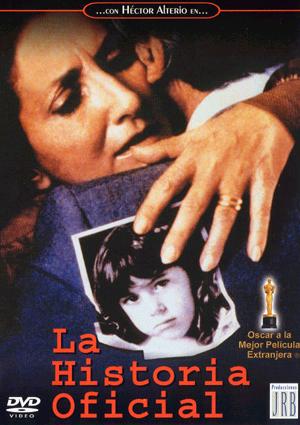
La Historia Oficial (The Official Story) - Review


According to accounts by eyewitnesses of the Indian Ocean tsunami that devastated the coastline of eleven countries and killed hundreds of thousands of people in 2004, there was a moment of dead calm before the final strike by the waves. This interlude was characterised by an almost total withdrawal of the sea from the coast encouraging those of a curious disposition to explore the exposed beach. As we all now know this peculiar sight is misleading, for the sea will come back much stronger giving those intrepid explorers no time to escape.

It is a similar situation we come across when dictatorships are toppled and genocidal regimes come to an end. There is a moment of initial euphoria and optimism - the equivalent to the receding sea - followed by a realisation of the scale of the horror that has been inflicted on the country in question. This is akin to the onrushing, gigantic waves travelling inland at great speed.

The Argentinian dictatorship known as 'La última Junta Militar (the last Military Junta)' was one of those cases. It capitalised on the squabbling of different political factions in the wake of Perón's death and seized power in 1976. 'La Historia Oficial (The Official History' deals with the return of democracy to that South American country and the aftermath of the seven years of 'The Dirty War'. To the sight of grieving families marching in the streets of Buenos Aires demanding justice for their missing relatives, another lesser known, but not less shocking, horror was added: that of the children of these 'desaparecidos' and their consequent fate. Their offspring ended up being adopted by many of the junta-favoured families and by the 'milicos' (military) themselves.

'La Historia Oficial' deals with this issue. Alicia is a middle-class, college - high school - teacher, married to a wealthy businessman and lawyer. Because of Alicia's infecundity, she and her husband adopt a little girl (Gaby) who turns five just as the first scenes of the movie begin to unfold. On the surface, Alicia's life is a fulfilling one: she has a good paid job, her marriage is solid and she has a close circle of friends who belong to her same socioeconomic stratum. Like many of her compatriots, Alicia is unaware of the horrors visited on a large part of the population by the junta. Slowly, though, the truth starts to unveil itself and before long doubts seep in. First off, we see her holding forth with her students on the issue of up to what extent the government is trying to re-write the history of torture and rape that has just plagued their country. Next, it is her friend Ana (clip below, and please, hankies at the ready) who contributes to her 'enlightening'. Ana has just come back from exile and the revelations she confides to Alicia are very far from the rosy pink view her friend has come to embrace. Finally, it is Alicia's chance encounter with a grandmother who is trying to track her daughter's child that becomes the final nail in the coffin of her confusion. It is possibly one of the most harrowing moments in the film. Alicia realises that her husband was involved in the government's 'Dirty War' and that he also cashed in on deals made with the ruling dictatorship. He also knows the horrid story behind Gaby's adoption. Alicia presses her husband on these issues but he tells her to forget about everything and to look to the future.

Although 'La Historia Oficial' focuses on a period that affected specifically Argentina and Argentinians and which left scars that have taken many years to cure (if they ever have), the over-arching topic is universal: that of memory and forgetfulness. From South Africa to Kosovo, the world has had its fair share of dictatorships and brutal regimes. What to do when peace is achieved and democracy is ushered in? Should we prosecute the culprits? Or should we attempt to wipe the slate clean and begin anew? The film also addresses complacency and political apathy, especially in Alicia's decision to play 'See no evil/Hear no evil' whilst the cries of justice for the thousands of 'disappeared' go unheard.

The plot is strong but it is the performances that really stand out, more remarkably Norma Aleandro as Alicia Marnet de Ibáñez. In a case of life imitating art, Norma herself was exiled during the dictatorship years. Asked once about her role as Alicia, the Argentinian actress said that her character's search for the truth reflected her country embarking on the same enterprise. The chamaleonic Héctor Alterio as Roberto Ibáñez gives one of those controlled, self-composed performances that stays on your mind long after the film has finished. Especially in the closing scene when, as Alicia insists on finding their daughter's real parents, he snaps and his façade of serious businessman crumbles to the ground.

Having already seen this movie three times before I was more focused on the adoption issue this time around. Especially in the wake of reports in the Argentinian press of cases of young people whose parents were amongst the thousands killed by the junta and who have recently found out that they were handed over to military families as babies. Adoption at the best of times is a very delicate topic that has been sadly triviliased by the likes of Madonna and Brangelina (that's Brad Pitt and Angelina Jolie for you, in case you don't know your celebrity slang). At the worst of times, it is a very emotionally disturbing experience that leaves deep scars on those affected by it. Although in 'La Historia Oficial', Roberto's hands get smeared with the colour of money rather than with the hue of blood, he is still an active accesory in the military machine. And the outcome, unfortunately, can be seen today in real life, in the several dozen Argentines who are trying to trace and match their DNA to parents they never knew. A social and political tsunami, indeed.


Copyright 2009

Next Post: 'Sunday Mornings: Coffee, Reflections and Music', to be published on Sunday 20th December at 10am (GMT)

LinkWithin

Related Posts Plugin for WordPress, Blogger...