Pull out a dictionary from your bookself. Open it up, face down, and shake it up until all the letters come out. Line them all up on the mantelpiece. Call the fusiliers and shout out: 'Fire!'. See all the vowels and consonants tumbling down in an amalgam of ink and shapes. Now, from the resulting debris, pick out the survivors. Those are the ones that will make it to your final draft.
If sometimes writers resemble descendants of Sir Francis Galton, is because of their obsession over getting the language right. However, their interest is not selective literary breeding with the aim of improving their early drafts, but the development of their initial idea into a coherent passage (or coherent passages). Eugenicists wanted to get rid of 'undesired' population groups. Writers, on the other hand, sacrifice words for the sake of a novel or poem, but come back to their rescue when they need them for the novel's follow-up or the second collection of poems. In writing, words never stay in their graves, long and forgotten. Like traditional ghosts in a castle, they come back to haunt the writer. Or rather the writer brings them back to haunt him/herself.
And it's all there, in that dictionary. Have you, writer, ever stood in the middle of a carriage, on a busy train, peak-hour and wondered how many of your fellow passengers have picked up pen and paper (or used a keyboard, rather, after all this is the 21st century) and made a stab at writing a novel, a short story or a poem? Have you ever asked yourself what their work would read like? After all, and as long as we're talking about an average western country, the majority of the population will be literate. We are all equipped with the same weaponry from an early age: illustration books and their captions, an alphabet, a Thesaurus, grammar rules, syntax, a dictionary. Unlike painting where technique is de rigueur (although, as I explained in my previous post, that might not always be the case) and dancing, where training lasts many years before it can turn out a well-rounded performer, writing should come as easily as breathing. At the end of the day, we all do it.
But that's a simplistic theory. Good writing calls to a part of us of which sometimes we're not even aware. Yes, you can shoot down as many letters as you like on that mantelpiece, but if the stew you knock up afterwards lacks the necessary spices, your grub will be just that, stale and tasteless grub. Reading and writing regularly (and in the case of the latter, I'm referring to the non-creative variety), then, are not necessarily conducive to constructing multiple-stories settings or carving out a period drama.
Which is why the first excerpt I'll use tonight to illustrate how difficult it is to write fiction, is a good example of literature where the detritus from a glossary decimation provides one of the most vivid passages I've ever read in my life:
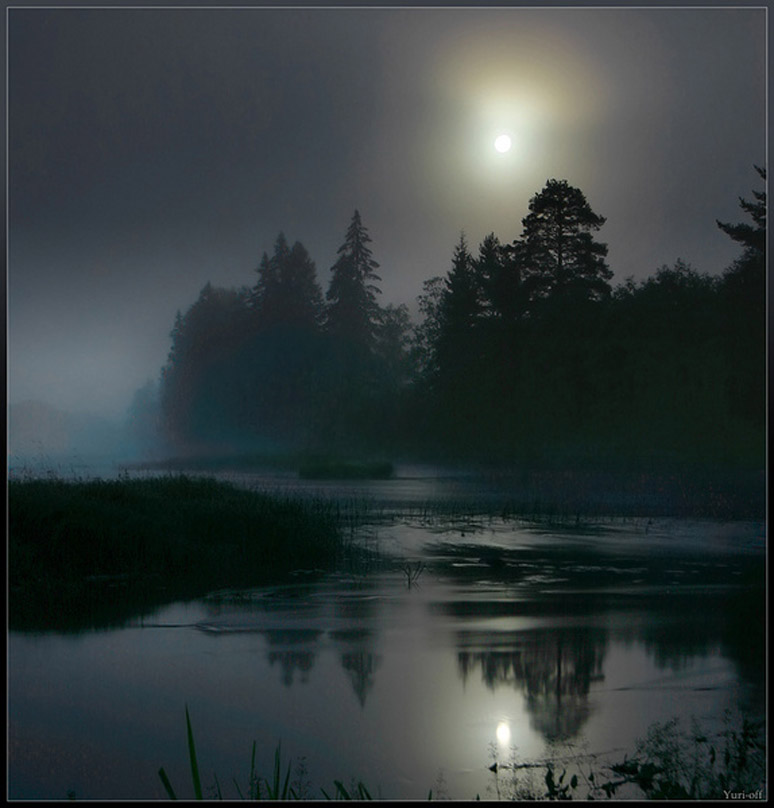
'A weak watery moon filtered through the clouds and revealed a young man sitting on the topmost of thirteen stones steps that led into the water. (…) In a while he stood up, took off the white mundu he was wearing, squeezed the water from it and twisted it around his head like a turban. Naked now, he walked down the thirteen stone steps into the water and further, until the river was chest high. Then he began to swim with easy, powerful strokes, striking out towards where the current was swift and certain, where the Really Deep began. The moonlit river fell from his swimming arms like sleeves of silver. It took him only a few minutes to make the crossing.
(…)
He stepped on the path that led through the swamp to the History House.
He left no ripples in the water.
No footprints on the shore.
He held his mundu spread above his head head to dry. The wind lifted it like a sail. He was suddenly happy. Things will get worse, he thought to himself. Then better. He was walking swiftly now, towards the Heart of Darkness. As lonely as a wolf.
The God of Loss.
The God of Small Things.
Naked but for his nail varnish.'
'The God of Small Things' by Arundhati Roy
Words slaughter doesn't come any finer than this. Darkness, water and the moonlight join forces together to give us a feeling of freedom that the protagonist of this scene, Velutha, is unfortunately denied. An untouchable himself, Velutha swims across the river to meet Ammu, the woman he loves, but with whom he knows he will never be allowed to live under the same roof on account of his lower-caste status. Roy is a master at the art of picking up the debris from the onslaught she herself causes. Alas, she must have used up all her arsenal in 'The God of Small Things', because she hasn't written another novel since.
In contrast, Anaïs Nin famously explored a woman's inner life - especially her erotic fantasies - at great length. There's no shortage of material from which to pick. But the main reason I chose the excerpt below is because it also deals with freedom. The difference with Roy's text is, though, that in Nin's short story 'Stella', the main character - a film star - thinks herself free when she is not. She is a captive of the men who imprint their dirty thoughts on her, she has a lover who is married and her father's figure looms large over her:
'What Stella whispered in the dark with her foreign accent enhancing strongly, markedly the cruelty of the sound was:
ma soch ism
Soch! Och! It was the och which stood out, not ma or ism but the och! which was like some primitive exclamation of pain. Am, am I , am I, am I, am I, whispered Stell, am I a masochist?
She knew nothing about the word except its current meaning: ‘voluntary seeking of pain’. She could go no further into her exploration of the confused pattern of her life and detect the origin of the suffering. She could not, alone, catch the inception of the pattern, and therefore gain power over this enemy. The night could not bring her one step nearer to freedom….
A few hours later she watched on the screen the story of Atlantis accompanied by the music of Stravinski.'
It's telling that a word can confine someone so much. Stella's behaviour is so disturbing that it doesn't surprise me that she chooses to watch a programme about an island that might or might not have existed set to a score by one of the most influential and polarising composers of the 20th century. Myth and musical revolution as antidotes against bewilderment.
Was Anaïs in the same predicament? I'm not implying that a writer's work is a faithful representation of his or her life. But in Nin's case a lot of her oeuvre was based on her personal circumstances. Did 'Stella' spring up from fragments of a vowel/consonant massacre or was it the first and only draft from the remains of a sad episode in her life?
That to me it's the big difference between those you see around you (many of them engrossed in their books) in that carriage, and you, writer. You know what to do with the debris. Because really and truly, writers, they shoot letters, don't they?
© 2010
Next Post: 'Food, Music, Food, Music, Food, Music... Ad Infinitum', to be published on Thursday 24th June at 11:59pm (GMT)